A Detailed Guide to Planting Methods and Cultivation Techniques for the Spider Lily
The spider lily (Hymenocallis) is an ornamental plant, also known as the spider lily because its flowers are shaped like spiders. Let us take a look together at how to cultivate the spider lily.
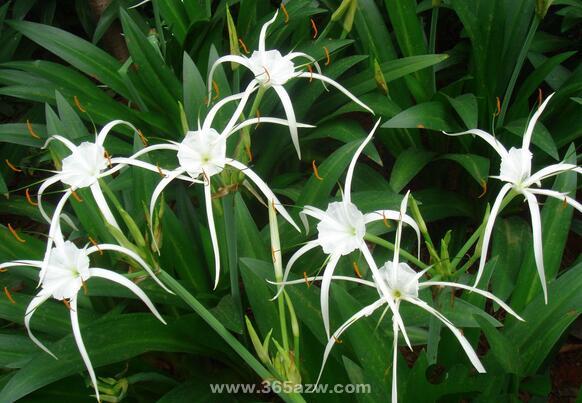
The spider lily, also known as the American spider lily, spider lily, and spider lily, is a perennial bulbous herbaceous plant of the genus Hymenocallis in the Amaryllidaceae family. Its leaves are handsome and robust, its scapes are hard and flat, and its flowers are uniquely shaped, giving it high ornamental value. It is very suitable for potted display and can be used for courtyard arrangements or as material for flower borders and flower beds.
Cultivation Methods for the Spider Lily
1. Soil: The spider lily has low soil requirements. It can be potted in leaf mold, or planted in clayey soil. Potted spider lilies can be planted in early spring, commonly using a mixed soil of equal parts peat soil, fertile garden soil, and river sand. The planting depth should be such that the top of the pseudobulb is level with the pot soil. For ground planting, choose deep, fertile, well-drained clayey soil, and planting in early May is preferable.
2. Watering: The spider lily prefers a moist soil environment and is not tolerant of drought. During the growing period, especially during high summer temperatures, water should be supplied abundantly to keep the pot soil moist and not let it become too dry. It dislikes waterlogging; after rain during the plum rain season, promptly pour off accumulated water from the pot. In winter, watering should be moderated to keep the pot soil relatively dry. Low temperatures combined with high humidity can easily cause the pseudobulb to rot.
3. Light: The spider lily prefers a semi-shaded environment and has strong shade tolerance. When summer light is too intense, it should be appropriately shaded or the pot moved to a semi-shaded spot. If placed in too shady a spot for a long time, the leaves of the spider lily will become thinner and the leaf color will darken, making the plant's form unattractive. It dislikes exposure to strong light, otherwise the leaves will turn yellow and the tips will scorch. From May to September, shading should be provided, or the plant should be placed in a spot with ample scattered light. At other times, it should be given sufficient sunlight.
4. Temperature: The spider lily prefers warmth and is not tolerant of cold. The most suitable temperature for growth is 21-27°C. Below 15°C, the spider lily's growth stops; below 10°C, the leaves turn yellow and wilt; at 5°C, the above-ground parts die back. The overwintering temperature for potted spider lilies should be above 15°C. If the above-ground parts die back, it can enter dormancy in the form of underground bulbs, and when the temperature rises the following spring, it can still sprout new leaves and grow.
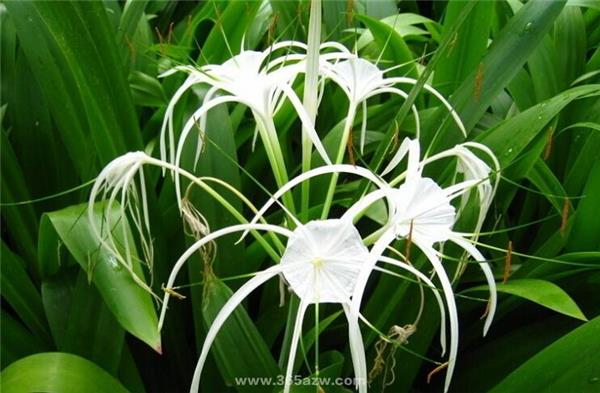
5. Fertilizing: During the growing period, the spider lily should be fertilized once every half month. After entering the bud stage, phosphorus and potassium fertilizer should be increased to make the flowers larger. Fertilizing should be paused during flowering. After flowering, apply a fertilizer mainly of nitrogen and potassium to promote stem and leaf growth and pseudobulb enlargement. If the growing environment is relatively shady, reduce the supply of nitrogen fertilizer and increase phosphorus and potassium fertilizer, which can keep the plant growing robustly without excessive vegetative growth. Stop fertilizing in winter.
6. Pests and Diseases: The spider lily is prone to brown spot disease during periods of high temperature and high humidity or in low-temperature seasons, and attention should be paid to prevention and control. When brown spot disease occurs, small round brown spots appear on the leaves, then gradually expand, with dark brown edges and gray-black centers, until the spots connect and the leaves die. When only a few are found, remove and destroy the diseased leaves. In severe cases, spray with a 75% mancozeb wettable powder 500-fold dilution for control.
7. Pruning: After the spider lily finishes flowering, promptly cut off the scapes to prevent seed formation from consuming nutrients and affecting the plant's growth. If indoor space is small, the above-ground leaves can be cut off before winter arrives, and the potted plant placed in a dry, shaded spot with the room temperature kept at 5-10°C, then repotted and grown in sunlight the following spring.
8. Repotting: Potted spider lilies should be repotted once every 2-3 years in April of spring. They prefer fertile, moist, organic-rich, well-drained clayey soil. The substrate can be prepared from materials such as leaf mold, garden soil, peat soil, and plain sand. Planting should not be deep; the top of the pseudobulb should be level with the pot soil, but small bulbs can be planted slightly deeper.
The Flower Language of the Spider Lily
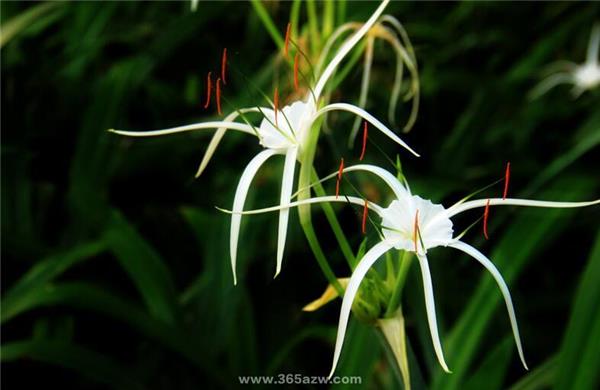
The flower language of the spider lily is: naturally beautiful. People blessed by the spider lily essentially possess irresistible charm, combining many virtues in one, and are a standard heartthrob. Unfortunately, others only appreciate her appearance and cannot see her efforts, leading to the misunderstanding that she is merely a beautiful vase.
The spider lily's flower motto: An idle heart is the source of all ruin.
The Uses and Benefits of the Spider Lily
1. Ornamental. The spider lily has handsome leaves, large flowers, pure white petals with slender, curved tips, and a fragrance. Its leaves are emerald green and set off together, appearing fresh and elegant, with relatively high ornamental value.
2. Home decoration. The spider lily has pure white flowers, bright green leaves, and a unique flower shape, standing gracefully and giving a fresh feeling. Used in places such as the home living room or study, it appears relatively elegant and natural, making it a good flowering plant for decorating the home environment.
3. Freshening the air. The spider lily has a certain environmental protection effect and can adsorb dust in the air to some extent, helping to purify the home's air and make the home fresher.
4. Medicinal use. The bulbs of the spider lily contain various alkaloids such as lycorine and pretazettine. It is pungent and warm in nature and flavor, with effects of relaxing muscles and invigorating blood circulation, reducing swelling and relieving pain. It can be used to treat bruises and swelling, early-stage carbuncles, rheumatic joint pain, hemorrhoids, and more.
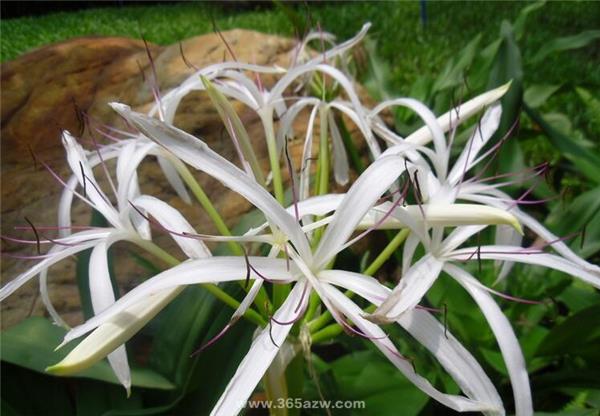
The above is the relevant introduction to planting spider lilies. You can use it as a reference for growing spider lilies.
The above is the relevant introduction to planting spider lilies. You can use it as a reference for growing spider lilies.