How to Grow Potted Lotus? A Detailed Guide to Planting Methods
Lotus, also known as lianhua, water hibiscus, water palace fairy, and other names, is a perennial aquatic herb of the genus Nelumbo. There are many varieties, divided into two major categories: ornamental and edible. Its character of emerging unsullied from muddy water is forever praised by people, and it has always been one of the subjects sung and painted by poets and scholars through the ages. Now let us take a look at the cultivation methods for potted lotus!
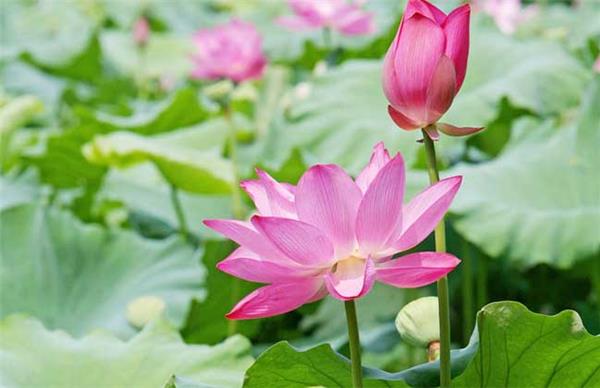
Propagation Techniques for Potted Lotus
1. Seed propagation: From May to June each year, rub the recessed end of the seed on rough ground until it breaks, then soak the seed to raise seedlings, changing the water frequently to keep it clean. Sprouts appear in about a week, and roots form two weeks after sprouting, at which point they can be transplanted. Plant one plant per pot, and keep the water layer shallow; do not submerge the lotus leaves in water.
2. Lotus rhizome division propagation: Mid-March to mid-April is the best time to repot and divide lotus rhizomes. Before planting, mix the pot soil into a paste. When planting, insert the top end of the seed rhizome diagonally into the mud along the edge of the pot at 20 degrees. For bowl lotus, the depth is about 5 cm. For large lotus, the depth is about 10 cm, with the head low and the tail high, the tail half tilted up so that water does not enter the tail of the rhizome. After planting, place the pot in sunlight so that fine cracks appear on the surface of the soil, which helps the seed rhizome bond fully with the soil. Then add a small amount of water, and after buds emerge, gradually deepen the water level, finally maintaining a water layer of 3-5 cm.
Planting Methods for Potted Lotus
1. Variety selection: For potted lotus, choose ornamental strains suitable for pot cultivation. Common ones include Fozuo, Chongtai, Bijiangxue, Dabilians, Yizhangqing, Jiaorong Sanbian, Shouxingtao, Xihu, and others.
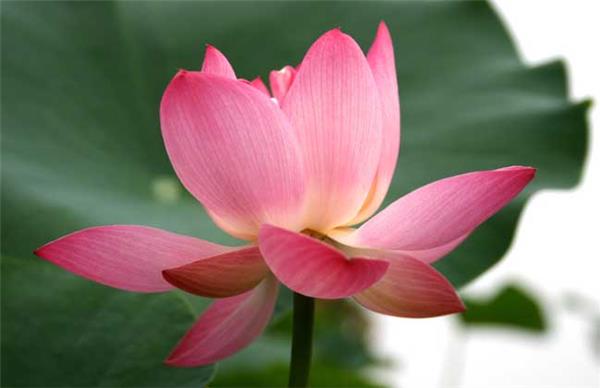
2. Pot selection: Potted lotus usually uses shallow lotus pots, wooden bucket pots, or shallow vats with a diameter of 60 cm or more. If using old pots, scrub them clean inside and out. If using a household water vat, because it is too tall, bricks and stones can be placed in the bottom layer of the vat to make it shallower; if the vat is too deep, there are often many leaves but few flowers.
3. Cultivation soil: The cultivation soil for potted lotus is generally pond mud or paddy field mud rich in humus. First crush the mud and sift it. If there are impurities, gravel, and so on, pick them out and make the mud sticky and muddy. Put it into the pot, generally 10-15 cm thick. At the same time, any one of sun-dried chicken and duck manure, dried human manure, soybean cake, rapeseed cake, chicken feathers, hair, green grass, and so on can be used as base fertilizer.
4. Planting time: Potted lotus can be planted around Qingming Festival, with late March being the best time. Too early makes the rhizome nodes prone to rot and the plant bloom poorly; even if it blooms, the flowers tend to be under the leaves, affecting ornamental value.
Cultivation Management of Potted Lotus
1. Soil management: Lotus requires fertile clay loam rich in humus. Soil that is too heavy and sticky affects the elongation of the rhizome runners and the enlargement of the rhizomes, while loose soil is prone to wind damage and hinders root development; neither is good for the growth of lotus. The soil used is usually lake or pond mud, or it can be prepared by mixing 4 parts garden soil, 3 parts loess, and 3 parts sandy soil. The best soil pH is 6.5-7.5.
2. Light management: Lotus loves strong light. Receiving 7-8 hours of light per day can produce more flower buds and continuous blooming. Avoid cultivating it in shade, and even when viewing flowers indoors, it should not stay indoors for more than a day. Household potted lotus must be placed on a balcony or in a courtyard, and at noon it should be moved to a shady place to avoid the scorching sun.
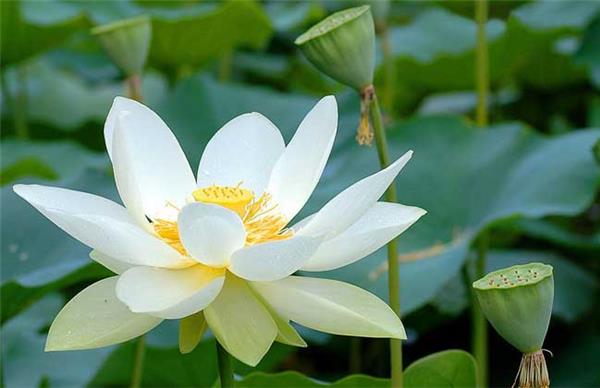
3. Temperature control: Lotus has strict temperature requirements. Generally, it begins to sprout at 8-10°C, the rhizome runners begin to elongate at 14°C, and 25-30°C is the most suitable temperature for the growth and development of lotus. Especially in weather with alternating rain and sunshine, plant growth is more favorable.
4. Reasonable fertilization: Potted lotus is usually given 200-500 g of chicken manure as base fertilizer according to pot size. One month after planting, apply once a liquid fertilizer mainly of decomposed soybean cake water or human urine and manure at a concentration of 10%. After the standing leaves emerge, apply 1-2 additional topdressings. During the flowering period, apply superphosphate once every 7 days.
5. Water management: In summer, when temperatures are high, lotus easily loses water. Add water 1-2 times daily to keep the water clean. If the water is found to be turbid, replace it. In late autumn and early winter, lotus enters dormancy, so it is not necessary to add water frequently; just maintain shallow water.
6. Pest and disease control: Common lotus pests include aphids appearing on floating leaves or small standing leaves and the cotton leafworm, Prodenia litura, occurring from July to August. They can be sprayed with 50% dimethoate emulsion at 1500-2000 times dilution or 2.5% derris extract at 500 times dilution.