What are the effects and functions of Potentilla discolor
Potentilla discolor has high therapeutic value in traditional Chinese medicine. This article summarizes the effects and functions of Potentilla discolor for your reference.
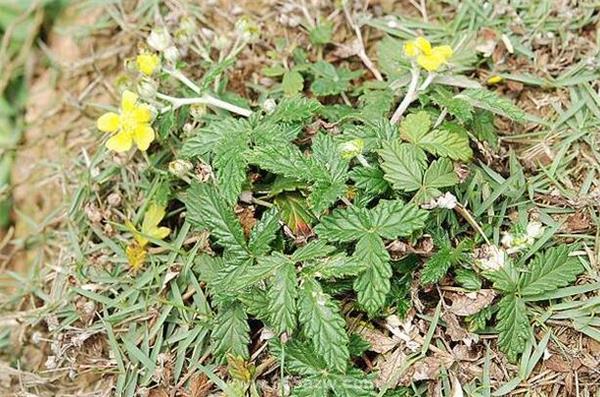
Introduction to Potentilla discolor:
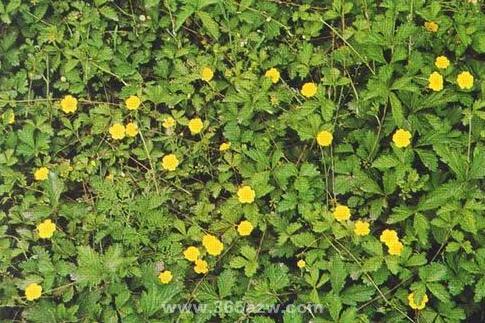
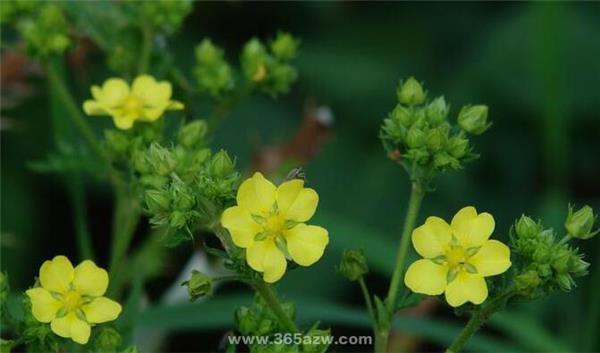
Potentilla discolor is a plant in the genus Potentilla of the rose family. Its leaf undersides are densely covered with white down, which is how it got its name. It is also known as Chinese pulsatilla, toadgrass, and tianqingdibai. The tender stems, leaves, and roots of Potentilla discolor can all be eaten in daily life. After blanching them in hot water and then soaking them in cold water for half a day to remove the bitter taste, they can be served cold, stir-fried, made into soup, used as filling, and so on. The whole plant can be used as medicine. It clears heat and removes toxins, cools the blood, and stops bleeding. It can treat dysentery, diarrhea, leukorrhea, malaria, hematemesis, hemafecia, traumatic bleeding, abdominal pain from bloody dysentery, chronic unremitting dysentery, hemorrhoidal bleeding, and swollen sores and toxic swellings.
Effects of Potentilla discolor:
Potentilla discolor has the effects of clearing heat, removing toxins, stopping bleeding, and reducing swelling. It mainly treats dysentery, malaria, pulmonary abscess, hemoptysis, hematemesis, bloody stools, abnormal uterine bleeding, swollen sores, scabies and tinea, scrofula and tuberculosis, and other conditions.
Modern medical clinical verification has shown that boiling Potentilla discolor together with Qiongzhen lingzhi and drinking the water has an effect on treating diabetes, mainly including lowering blood sugar, treating insomnia, and preventing and treating complications. It can also be combined with the root bark of Chinese wolfberry.
Potentilla discolor has antibacterial, antidiarrheal, immune-enhancing, and blood sugar-regulating effects. The main chemical substance involved in blood sugar regulation is quercetin.
Moreover, Potentilla discolor mainly contains tannins and flavonoids. Its decoction has an inhibitory effect on Shigella dysenteriae, Shigella flexneri, Staphylococcus aureus, and Salmonella typhi.
Functions of Potentilla discolor:
1. Components extracted from Potentilla discolor, including fumaric acid, gallic acid, protocatechuic acid, quercetin, naringenin, kaempferol, and isophthalic acid, have antibacterial effects on Shigella flexneri and Shigella dysenteriae. Gallic acid and quercetin are especially the most active, with minimum inhibitory concentrations of 59 ppm/ml and 37 ppm/ml, respectively.
2. Clearing heat and removing toxins: Sweet and bitter, with a cool nature. Sweetness can moderate toxicity, coolness can remove heat, and bitterness can dry dampness. It has the effects of clearing heat, removing dampness, removing toxins, and reducing swelling. It can be used to treat swollen boils and toxic swellings, damp-heat dysentery, scabies and tinea, ecthyma, and other conditions.
3. Cooling the blood and stopping bleeding: Its cool nature can clear blood heat, so it has the ability to cool the blood and stop bleeding. In addition, it can also remove stasis and generate the new, and disperse stagnation to stop bleeding, so its bleeding-stopping power is quite good. It can be used to treat various bleeding conditions such as reckless movement of hot blood, and is especially suitable for hematemesis and abnormal uterine bleeding.
How to select Potentilla discolor
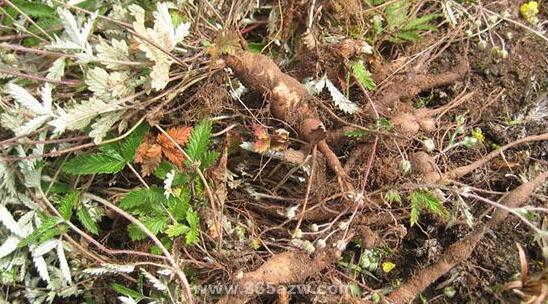
Dried whole plant with roots. The roots are spindle-shaped or conical, sometimes branched, about 5-8 cm long, with a dark brownish-red surface, twisted and shrunken, and the cork layer has no peeling marks. There is no obvious stem. The leaves are basal, odd-pinnately compound, with leaflets in opposite pairs, oblong, with short petioles. The terminal leaflet is relatively large and gradually becomes smaller downward. They are shrunken, mostly folded inward along the midvein. The upper surface is dark green, and the lower surface is grayish-white; densely covered with fine hairs, with coarse serrations at the edges. The root crown and petioles are all covered with white fine hairs. The texture is slightly brittle and easily broken. The odor is faint and somewhat unpleasant, and the taste is astringent. Those without flowering stems, grayish-white in color, and free of impurities are considered best.
The above is a related introduction to the effects and functions of Potentilla discolor. I hope it is helpful to you.