How to Grow Variegated Spider Plant? Detailed Guide to Cultivation Methods and Precautions
During the cultivation of variegated spider plants, yellowing leaves often occur. What issues should be noted when growing variegated spider plants?
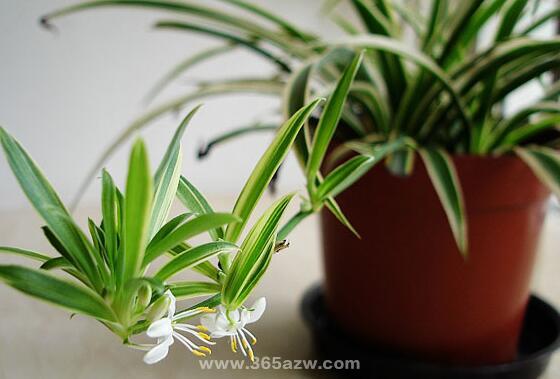
Cultivation Methods for Variegated Spider Plant
1. Propagation: Variegated spider plants can be propagated by cuttings, division, and sowing, and both spring and autumn are suitable seasons for propagation. Variegated spider plants have an extremely high survival rate and strong adaptability, making them very easy to cultivate and propagate. For cuttings, simply insert the new shoots 5-10 cm into the soil, and roots will form in about one week. After another 15 days or so, they can be transplanted into pots, watered thoroughly, and placed in a cool, shaded area for care.
2. Temperature: Variegated spider plants prefer a warm and humid climate environment and have relatively strong adaptability, but they are not cold-tolerant. The optimal temperature for the growth of variegated spider plants is 20-24°C. Above 30°C, growth stops, and the leaves easily turn yellow with dry tips, so temperature control should be noted. In winter, the minimum overwintering temperature for variegated spider plants is around 10°C.
3. Light: Variegated spider plants prefer a bright, semi-shaded environment. In spring and autumn, direct sunlight should be avoided, while in summer, when light is intense, shading must be noted, with about 50% shading during the day. In places with weak light, variegated spider plants grow more beautifully, with the yellow edges more pronounced and the leaves more glossy. However, in winter, they should receive more sunlight to keep the leaves tender and fresh green.
4. Water: Variegated spider plants prefer ample water year-round and have a certain drought tolerance. Spring and autumn are the peak growing seasons for variegated spider plants, so watering should be done in a timely manner to keep the potting soil moist, but waterlogging in the pot should be avoided. During the peak growing season, clean water should also be sprayed on the branches and leaves frequently to prevent the variegated spider plant from turning yellow and developing dry tips. In dry seasons and during summer high temperatures, water should be sprayed even more frequently around the plant and on the leaf surfaces.
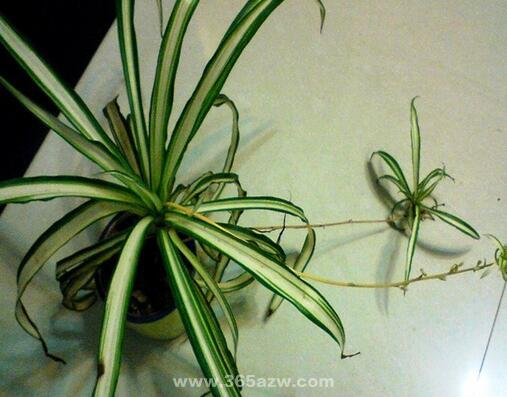
5. Pruning and repotting. Variegated spider plants grow quickly. As the plant continues to grow, in order to maintain a good plant shape and improve ornamental value, timely pruning of branches and leaves should be noted. Old leaves at the base of variegated spider plants should be cut frequently. If the clump grows too densely, some should be pruned appropriately to allow ventilation and good growth.
6. Disease and pest control. Because variegated spider plants grow rapidly and have extremely strong growth and reproductive capacity, they often easily form dense clumps with poor ventilation, making them susceptible to pests such as scale insects. In such cases, prevention should be the priority. Regularly prune, thin out branches and leaves, and maintain ventilation. If pests are already found, promptly spray pesticides to kill them.
Analysis of the causes of yellowing leaves in variegated spider plants and treatment methods:
1. Nutrient loss causing yellowing leaves in variegated spider plants: Various nutrient elements in the potting soil have been depleted, and the three key elements of nitrogen, phosphorus, and potassium have not been replenished in time. The plant lacks nutrients, and the leaves become yellow and thin.
Solution: Promptly replace with fertile loam soil and water with alum fertilizer water.
2. Insufficient sunlight causing yellowing leaves in variegated spider plants (yellowing due to lack of light): Although variegated spider plants are semi-shade-tolerant flowers, they still need at least four hours of diffused light per day; otherwise, chlorophyll decreases and the leaves turn yellow.
Solution: Variegated spider plants should be placed in the sunlight for a few hours each day when free time is available, but they should not be exposed to too much direct sunlight.
3. Excessive fertilisation causing yellowing leaves in variegated spider plants (yellowing due to fertiliser): Excessive fertilisation causes yellowing leaves. When fertilisation exceeds the plant's needs, the leaves initially become glossy and uneven, then the root system rots and the leaves turn yellow.
Solution: Stop fertilising, water more with clean water, or repot and clean the roots, replacing with new soil.
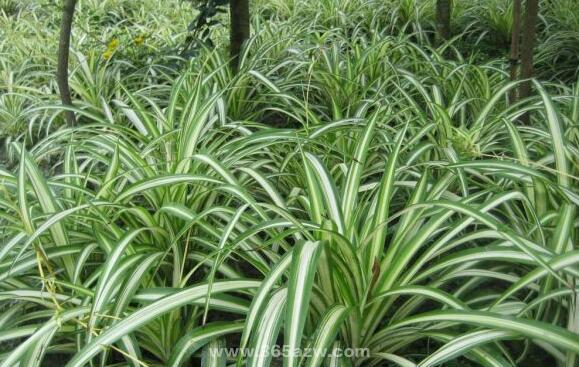
4. Long-term lack of fertiliser causing yellowing leaves in variegated spider plants (yellowing due to fertiliser deficiency): Variegated spider plants are foliage plants that quite like fertiliser. If fertiliser and water are insufficient, spider plants easily age, the leaves turn yellow, and they lose ornamental value.
Solution: When fertilising, it is best to apply organic fertiliser liquid once every 7-10 days. For variegated varieties such as those with yellow or gold centres, less nitrogen fertiliser should be applied to avoid the variegated leaf colour fading or even disappearing. Appropriately apply some organic fertiliser made by fermenting bone meal and eggshells. After these organic fertilisers are fully fermented, take an appropriate amount of the diluted liquid and apply it once every 10-15 days. This can make the flowers and leaves of spider plants brightly coloured.
5. Root rot causing yellowing leaves in variegated spider plants: Long-term waterlogging in the potting soil that does not dry out makes root respiration difficult, causing leaves to turn yellow.
Solution: Loosen the soil and control moisture in a timely manner. Fifth, long-term watering without thorough soaking. The roots of spider plants lose water, and the lower old leaves turn yellow. Water thoroughly and keep the potting soil warm and moist.
6. Pests and diseases causing yellowing leaves in variegated spider plants: The condition that occurs is generally root rot caused by waterlogging in the potting soil and poor ventilation.
Solution: At this time, promptly spray pesticides for control.
Propagation Methods for Variegated Spider Plant:
Spider plants can be propagated by cuttings, division, sowing, and other methods.
1. Cutting propagation method: Cutting propagation can be carried out at any time from spring to autumn. Spider plants have strong adaptability and a high survival rate, and are generally very easy to propagate. For cuttings, simply take a stolon 5-10 cm long with new shoots and insert it into the soil. Roots will form in about one week, and after about 20 days it can be transplanted into a pot, watered thoroughly, and placed in a cool, shaded area for care.
2. Division propagation method: For division propagation, the spider plant can be lifted out of the pot, old soil and rotten roots removed, the old roots cut apart so that each divided plant retains three stems, and then each can be transplanted and grown separately. You can also cut off the clustered stems and leaves on the spider plant's stolons (which are actually a new young plant with leaves above and aerial roots below) and directly plant them into a flower pot for cultivation.
3. Seed propagation method: Seed propagation of spider plants can be carried out in March each year. Because the seeds are not large, the covering soil after sowing should not be thick, generally 0.5 cm is sufficient. At a temperature of 15°C, the seeds can sprout in about 2 weeks. After the seedlings take shape, transplant and grow them.
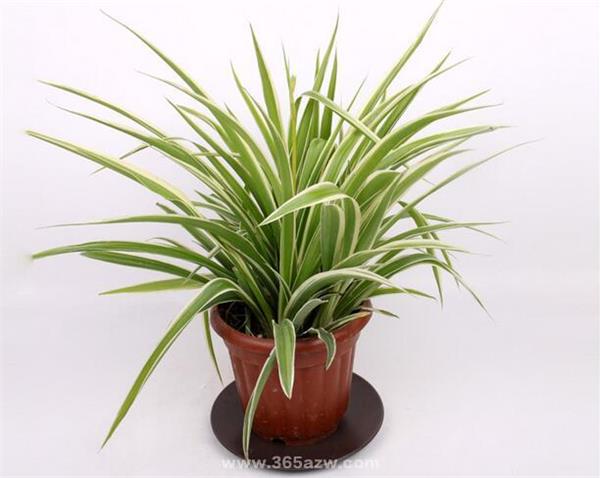
The above is a relevant introduction to the cultivation methods of variegated spider plants. We hope you enjoy today's article.
Generally very easy to propagate. For cuttings, simply take a stolon 5-10 cm long with new shoots and insert it into the soil. Roots will form in about one week, and after about 20 days it can be transplanted into a pot, watered thoroughly, and placed in a cool, shaded area for care.2. Division propagation method: For division propagation, the spider plant can be lifted out of the pot, old soil and rotten roots removed, the old roots cut apart so that each divided plant retains three stems, and then each can be transplanted and grown separately. You can also cut off the clustered stems and leaves on the spider plant's stolons (which are actually a new young plant with leaves above and aerial roots below) and directly plant them into a flower pot for cultivation.
3. Seed propagation method: Seed propagation of spider plants can be carried out in March each year. Because the seeds are not large, the covering soil after sowing should not be thick, generally 0.5 cm is sufficient. At a temperature of 15°C, the seeds can sprout in about 2 weeks. After the seedlings take shape, transplant and grow them.
The above is a relevant introduction to the cultivation methods of variegated spider plants. We hope you enjoy today's article.