How to grow Cymbidium orchids? Cultivation methods and precautions
Cymbidium orchids are ornamental potted plants. Cymbidium orchids are prone to leaf spot disease. What are the cultivation methods and precautions for Cymbidium orchids?
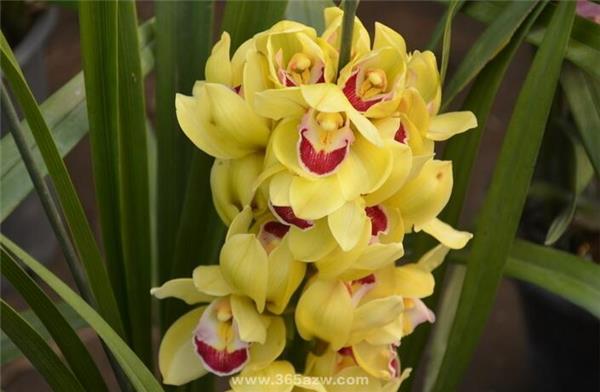
Cultivation methods for Cymbidium orchids:
1. Propagation: Division propagation is commonly used. Division is mostly carried out after the plant flowers but before the new shoots have grown large, during this brief dormant period. Before division, the plant should be dried appropriately, and the operation carried out when the roots turn slightly white and soft. Vigorous plants are usually divided once every 2-3 years. Each divided clump of orchid seedlings should carry 2-3 pseudobulbs, one of which must be newly formed in the previous year.
2. Temperature: It likes strong light, and the suitable growth temperature is 10°C~25°C. In winter it should be moved to a low-temperature greenhouse for cultivation.
3. Humidity: It is very fond of moisture, but attention must be paid to ventilation, otherwise it is prone to anthracnose. The humidity for small seedlings should be 80%-90%, and the humidity for medium and large seedlings should be 60% to 85%.
4. Fertilization: During the growth period, the ratio of nitrogen, phosphorus and potassium is 1:1:1; during the flower-forcing period the ratio is 1:2:2 to 3. A fertilizer solution pH of 5.8-6.2 is suitable.
5. Watering: In production, sprinkler irrigation is usually used. Water once a day in May and September, twice a day in July-August, and once every 2 to 3 days from October to April of the following year. The number of waterings should be adjusted at any time according to the size of the seedlings and the weather conditions.
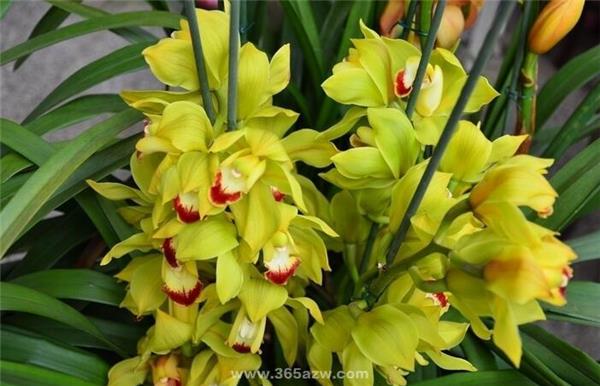
Precautions for growing Cymbidium orchids
(1) Compared with other orchids, Cymbidium orchids prefer more light, but cannot be exposed to direct sunlight. Small seedlings need 70%-80% shading, large seedlings 60%; in spring and autumn, 40%-50% shading is suitable, in summer 60% shading, and after late autumn more light is suitable to promote flower bud differentiation and bud formation and flowering. The growth of Cymbidium orchids requires relatively high air humidity and sufficient moisture. The suitable relative air humidity for small seedling growth is 80%, and the water pH should preferably be pH 5.4-6. During the peak growth season, keep the substrate moist, and frequently spray water on the plants and roots to maintain air humidity, which is beneficial to growth and development. After flowering there is a dormant period, and watering should be reduced.
(2) Among all kinds of orchids, Cymbidium orchids are the type that likes fertilizer the most. The flower bud differentiation period of Cymbidium orchids is in August-September, at which time there must be an obvious temperature difference to promote flower bud differentiation, that is, around 25°C during the day and around 12-15°C at night. If the night temperature exceeds 15°C when the flower buds are sprouting, the flower buds will wither. Good ventilation is a favorable condition affecting the growth and development of Cymbidium orchids. If ventilation is poor, especially in summer, it is not conducive to the normal growth and development of Cymbidium orchids, affects flower bud differentiation, and results in the phenomenon of only growing leaves without flowering.
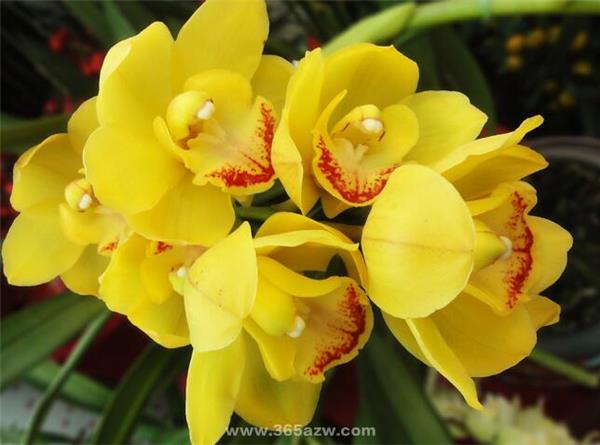
Cymbidium orchid leaf spot disease
Symptoms: It occurs near the leaf tips or at the front part of the leaves of Cymbidium orchids, producing small black spots that enlarge into irregular lesions. The edge of the lesion is dark brown, the middle is light gray, and there are small black dots. In severe cases, it can spread to the entire leaf, which finally withers and falls off.
Occurrence pattern: The pathogen overwinters as mycelium and pycnidia on diseased leaves or diseased residues. The following year, conidia are produced and emerge from the ostiole of the pycnidia, spread by wind and rain, and invade through wounds or stomata, causing primary infection and re-infection. The disease is likely to occur at a temperature of 25-27°C after rain. The lesions sometimes perforate.
Control methods: 1. Careful maintenance, paying attention to improving the cultivation conditions of the orchids so that they have ventilation and light. 2. Promptly cut off lesions when found, and remove or burn them in a centralized manner. 3. When the disease occurs, spray 27% copper hydroxide suspension or 12% copper rosinate emulsifiable concentrate 600 times solution, 30% copper oxychloride suspension 600 times solution, 50% chlorothalonil wettable powder 500 times solution, 53.8% Kocide 2000 dry suspension 1000 times solution. Once every 10-15 days, for 2-3 treatments.
2. Cymbidium orchid gray mold
Symptoms: It mainly infects floral organs, and sometimes also harms leaves and stems. After the petals or sepals are infected, small translucent water-soaked spots appear within 24h, and the lesions then turn brown; sometimes there is a ring of white or pale pink around the lesion. The number of lesions on each flower varies, and the petals rot in a dark brown color. When humidity is high, fluffy growths, namely the conidiophores and conidia of the pathogen, grow from the rotting flowers.
Occurrence pattern: The pathogen overwinters as sclerotia in the soil at a depth of 5-20 cm. In the following spring, when the temperature is 7-18°C and the relative humidity is above 88%, a large number of hyphae and conidia are produced on the sclerotia. The conidia are spread by airflow, water droplets or dew, and horticultural operations. This fungus is a weak parasite, and its optimum development temperature is 20-23°C. At a temperature of 20°C and a relative humidity above 90%, it is suitable for the disease to become epidemic.
Control methods: 1. Carry out routine disinfection of the flower shed where Cymbidium orchids are to be planted, to eliminate the pathogen. Spray newly introduced Cymbidium orchids with 25% prochloraz emulsifiable concentrate 800 times solution; disinfect the cultivation substrate, flower pots, and soil-manure blocks with 25% prochloraz 400 times solution, and use them after drying. 2. Isolate and cultivate diseased plants with gray mold.
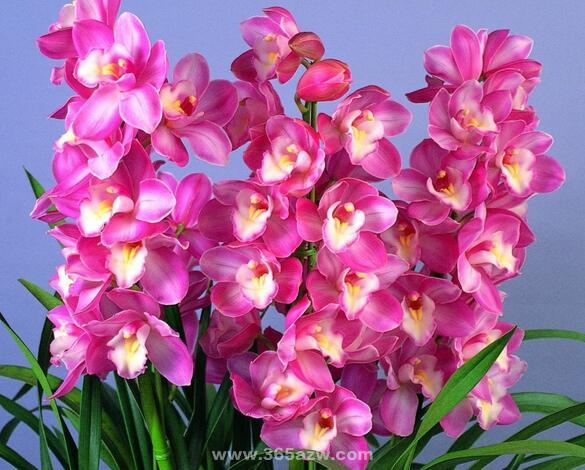
The above is the relevant introduction to the cultivation methods and precautions for Cymbidium orchids. I hope it is helpful to you.
The above is the relevant introduction to the cultivation methods and precautions for Cymbidium orchids. I hope it is helpful to you.