How to Grow Dahlias? A Detailed Guide to Planting Methods
Dahlias are brilliantly colorful, and many people love them. How do you grow a beautiful dahlia? Today let's take a look at what aspects to pay attention to when planting dahlias.
A Brief Introduction to Dahlias
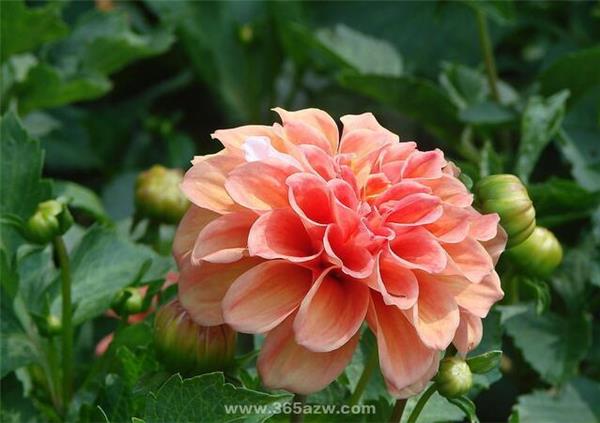
Dahlia, also known as dahlia pinnata, tianzhu peony, dongyang chrysanthemum, dahlia chrysanthemum, and sweet potato flower, is a plant of the genus Dahlia in the Asteraceae family. It is a perennial herb with large club-shaped tuberous roots. The stems are upright, much branched, and stout. It is native to Mexico, where people regard it as a symbol of generosity and magnificence, and therefore honor it as the national flower.
At present, it is cultivated in most countries around the world, and new varieties are released from time to time. According to statistics, there are now more than 30,000 dahlia varieties, making it one of the species with the most flower varieties in the world. Dahlia has numerous famous names for its flower colors and forms, which are rich and varied, making it one of the world's famous flowers; it can also promote blood circulation and disperse blood stasis, and has a certain medicinal value.
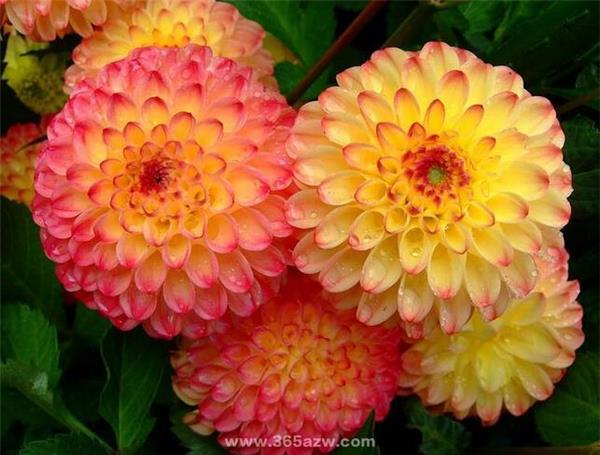
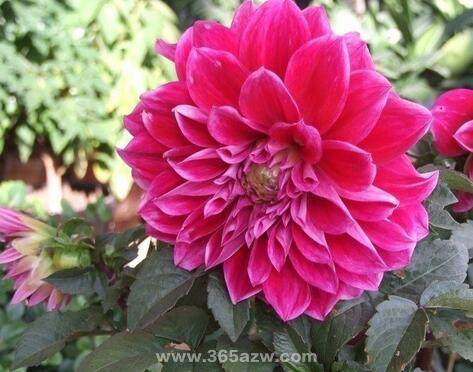
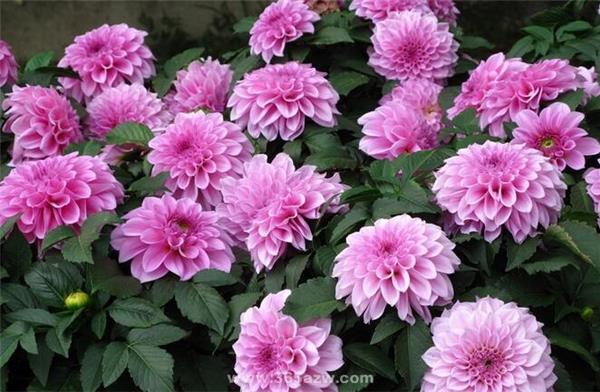
There are many flower forms of dahlia, which can be divided into sunflower type, orchid type, chrysanthemum type, round ball type, peony type, cactus flower type, lotus seat flower type, and so on. Dahlias are mostly double-petaled, with flower colors including red, yellow, orange, purple, white, and so on. All the colors are brilliant and colorful, intoxicating to behold. Among them, the more distinctive one is the thousand-petal flower with red stripes set in white petals. It is like red agate embedded in white jade, unusually enchanting and eye-catching.
Dos and Don'ts for Dahlia Care
Dahlias are very appealing, and many people like to grow them. Now let's introduce the dos and don'ts for dahlia care. It is advisable to choose short-stem varieties, and avoid planting tall-stem varieties; the pot should be deep and large with good permeability, and avoid using shallow, small, and light pots; it is advisable to use neutral sandy loam, and avoid using heavy clay; the soil should be moist, and avoid drought as well as waterlogging; it is advisable to apply light fertilizer frequently, and avoid raw fertilizer, concentrated fertilizer, and applying nitrogen fertilizer alone; it is advisable to place it in a sunny spot, and avoid shade; it is advisable to keep it warm and cool, and avoid high temperature, stuffiness, and frost; it is advisable to have good ventilation, and avoid strong winds.
Dahlia Planting Methods
1. Remove the dry root hairs. If there are too many tuberous roots, they can be divided (use a small pruning knife to separate them). Note to keep one adventitious bud and some lateral roots on each rhizome.
2. Dig a soil pit about 20cm deep, loosen the soil, and remove large stones and weed roots. If the soil is very sandy, enrich it with soil fertilizer or compost.
3. To provide the nutrients dahlias will need later, especially nitrogen fertilizer, mix in slow-release fertilizer while hoeing the soil. Note to apply the fertilizer according to the amount on the product instructions (organic fertilizer is also fine, and of course not adding any is also acceptable).
4. In order not to damage the tuberous roots, set up a support in a soil pit about 15cm deep before the dahlia takes root. Place the bulb flat at the bottom of the pit, with the bud close to the support.
5. Fill the pit with broken soil. To make the bulb and soil fully contact, gently tread the pit level with your foot, then water the pit thoroughly like a light rain.
6. In July, dahlias planted in early spring grow very quickly, like bamboo shoots after a spring rain, and it is time to set up supports if none were set up at planting time. To cultivate large and beautiful flowers, it is recommended to carry out pruning. Before the rhizome is overwhelmed by the weight of the leaves and flowers, set up a support at the foot of each dahlia. Be careful not to damage the bulb.
7. The support should preferably be 5cm from the rhizome. Use plastic or raffia fiber string to loosely tie the rhizome and support together with a knot. Be careful not to pull the rhizome and support too tight.
8. To cultivate large flowers, use a sharp small pruning knife to remove the leaf axils growing under the leaves, keeping only the flower buds growing on the rhizome. At the same time, remove small side branches.
9. Short dahlias do not need supports; the clustered branches and leaves can support the flowers. However, to prevent bolting and reduce the burden on the bulb, be careful to promptly remove faded flowers. Promptly removing faded flowers can also effectively promote the production of new flower buds.
10. In October, when the dahlia season has passed, use pruning shears or sharp scissors to cut off all the roots and stems 10cm above the ground. Do not touch the leaves, except of course the withered ones.
11. Wait until the plant has completely withered before pulling out the dahlia. If pulled too early, it may severely damage its storage and affect future propagation.
12. When the plant has completely withered, use a long-handled fork shovel and pull it out carefully, being careful not to damage its roots.
13. After air-drying in the open for several hours, remove the soil and dead leaves stuck to the tuberous roots, cut off the excess roots and branches (keep about 5cm), note down the variety name and color, and attach a label.
14. Store them in a wooden box and place it in a dry and ventilated place. If you are afraid of damage, you can store them in a mesh bag and hang it up. Be careful to regularly observe their state of health.
15. In places where there is very little frost and freezing, the dahlia tuberous roots can be left in the ground. Cut off all withered branches and leaves 5cm above the ground. Cover with a 20-30cm thick layer of dry leaves or straw.
Key Points for Pot Cultivation
(1) It likes moisture and fears waterlogging: water thoroughly at the right time and in the right amount, and be careful to avoid water accumulation;
(2) It likes fertility and fears excess: when planting dahlias, it is advisable to choose fertile, loose soil. In addition to applying base fertilizer, topdressing is also needed. Usually, from mid-to-late July until flowering, the leaves are dark green and spread out.
(3) It likes sunlight and fears shade: to ensure the robust growth of dahlias and enable them to bloom with bright flowers, they should be placed in a place with plenty of sunlight;
(4) It likes coolness and fears heat: the most suitable growing temperature for dahlias is around 20 degrees Celsius. In hot weather, be careful to avoid the damage caused by direct sunlight exposure, and take good shade protection measures;
The above is the relevant introduction to dahlias. I hope it is helpful to you.
In addition to applying base fertilizer, topdressing is also needed. Usually, from mid-to-late July until flowering, the leaves are dark green and spread out.(3) It likes sunlight and fears shade: to ensure the robust growth of dahlias and enable them to bloom with bright flowers, they should be placed in a place with plenty of sunlight;
(4) It likes coolness and fears heat: the most suitable growing temperature for dahlias is around 20 degrees Celsius. In hot weather, be careful to avoid the damage caused by direct sunlight exposure, and take good shade protection measures;
The above is the relevant introduction to dahlias. I hope it is helpful to you.