What are the benefits and effects of black nightshade? Read this to find out
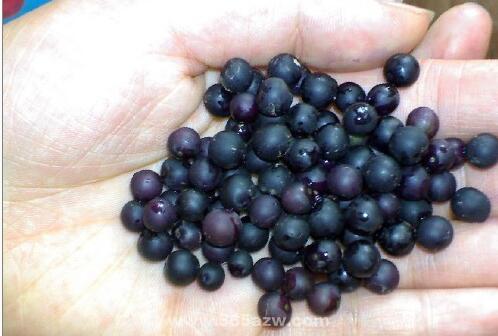
The fruit of black nightshade is black in color, which is why it is called black nightshade. Today let us take a look at what the benefits and effects of black nightshade are.
Benefits and effects of black nightshade
1. Black nightshade gets its name because its fruit grows plump, black and glossy after ripening. Black nightshade is very common in the north, generally growing wild. It is a good wild fruit and also has good thirst-quenching and refreshing effects. Black nightshade can be eaten directly as a fruit, and it can also be used as medicine. Black nightshade can also be soaked in liquor and drunk.
2. Black nightshade is especially rich in nutrients, particularly vitamin C, so black nightshade can have a very good beauty effect and can also prevent many diseases. Black nightshade can also clear heat and detoxify, promote diuresis, and help reduce swelling. In particular, if you have swollen and painful gums or mouth and tongue sores caused by excess internal heat, you can eat more black nightshade at such times.
3. If you have fever due to a cold, or tonsillitis, sore throat, or bronchitis and other upper respiratory symptoms, you can also eat more black nightshade, which can appropriately relieve the condition. However, black nightshade contains some solanine, so it should not be eaten in large amounts. If consumed excessively, it may cause symptoms of poisoning such as dizziness or vomiting.
Plant morphology of black nightshade
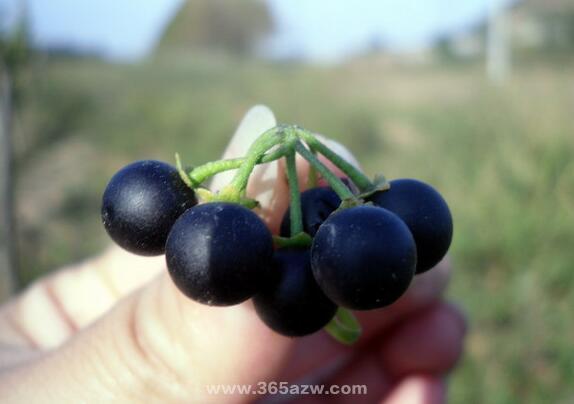
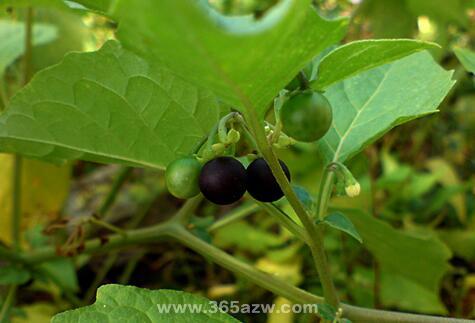
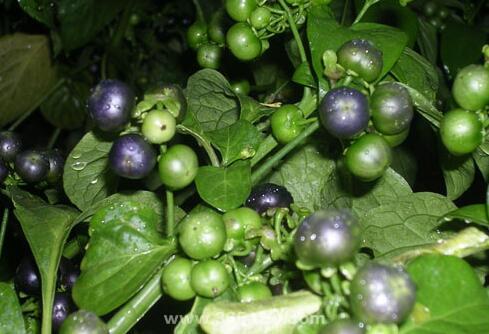
Morphology of black nightshade: the stem is erect or slightly prostrate in the lower part, often woody at the base, much branched above, slightly longitudinally angled, sparsely covered with fine hairs along the angles. Leaves alternate, petiole 0.5-2.5 cm long; leaf blade ovate, 2.5-13 cm long, 1.5-7 cm wide, apex acute, base cuneate or gradually narrowed to the petiole, asymmetrical, margin sinuate-toothed or entire, sparsely short-hairy on both surfaces, denser along the veins beneath. Umbellate cymes borne outside the axils, with 4-10 flowers; flower diameter about 1 cm; pedicels 0.5-1 cm long, drooping; calyx 5-lobed, lobes ovate-triangular, apex acute; corolla rotate, white, 5-parted, lobes ovate to elliptic, apex acute; stamens 5, inserted at the mouth of the corolla tube, filaments about 1 mm long, anthers yellow, about 2 mm long, closely pressed together around the outside of the pistil, dehiscing by apical pores; pistil 1, about 5 mm long, ovary superior, ovate, 2-locular, densely tomentose below the middle. Berry spherical, 4-6 mm in diameter, purplish black when ripe. Flowering period June to October, fruiting period July to November.
How to select black nightshade
The fruit is nearly spherical, wrinkled, 2-5 mm in diameter, dark brown, orange-red or yellow-green; at the apex there is a circular earthy-brown style scar, and sometimes a thin fruit stalk at the lower end. Dried fruit breaks easily, and after breaking, many yellowish-white round-flat seeds can be seen inside.
The above is an introduction to the benefits of black nightshade. We hope it is helpful to you.