How to grow Syzygium buxifolium? Please keep this care tips guide
Syzygium buxifolium is a common ornamental bonsai plant. As an ornamental plant, its care has strict humidity and temperature requirements, and when growing Syzygium buxifolium you must understand its growth habits in detail.
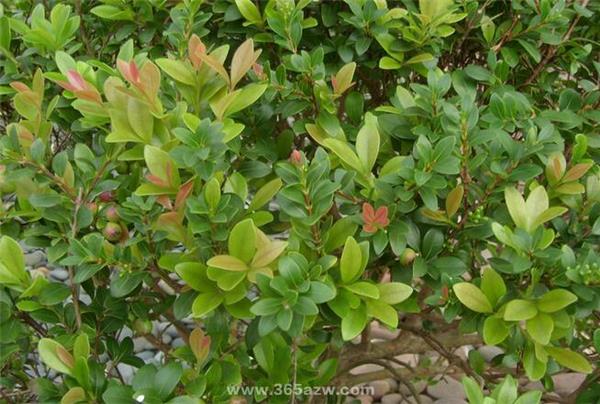
How to grow Syzygium buxifolium, its cultivation methods and precautions:
1. Growth habits: Syzygium buxifolium mainly grows in low mountain open forests or scrub. Growers have learned that planting this plant in deep soil rich in humus is more suitable for its growth and development. Since the seedlings of Syzygium buxifolium should be loosened and weeded in time after emerging, this can effectively promote its growth.
2. Fertilizing: When Syzygium buxifolium enters the flowering and fruiting stage, its fertilizer demand is relatively large. During the fruit swelling stage, phosphate and potassium fertilizers such as bone meal, superphosphate, ammonium dihydrogen phosphate, plant ash and potassium carbonate should be applied. Growers must not apply too much or too concentrated, otherwise it will cause excessive growth of branches and leaves, and may even lead to plant death. It is understood that Syzygium buxifolium is an acid-loving plant, and during the growing period a 0.2%-0.3% ferrous sulfate solution can be sprayed 3-5 times a year. When Syzygium buxifolium sprouts, spray a 0.1% urea solution 1-2 times; before and after flowering, spray a 0.1%-0.2% potassium dihydrogen phosphate solution once each time.
3. Watering: Growers should note that watering should not be too wet or too dry. Generally, in the hot summer season, water once in the morning and once in the evening; at the same time, water can be sprayed around the plant leaves, and appropriate shading should be provided at noon. During the vigorous growth period, more watering should be done appropriately. Growers can shorten the branches and leaves to a certain extent to make the plant look more beautiful; the best method is to properly control the amount of water.
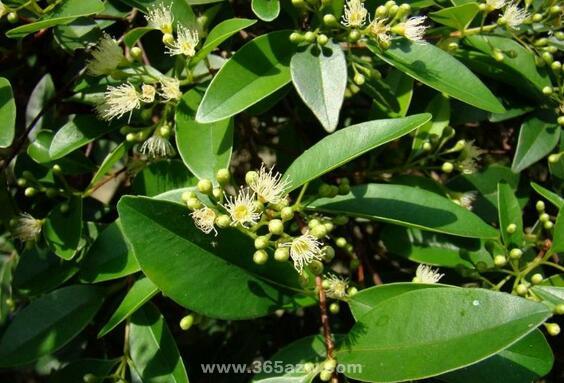
4. Pruning: Syzygium buxifolium has strong sprouting ability and is very tolerant of pruning. Usually, unnecessary leggy branches, crossing branches and overlapping branches can be pruned at any time, and excess buds removed to maintain a beautiful tree shape.
5. Repotting: Repot once every 2-3 years, preferably in spring between February and March, or after autumn. When repotting, prune some old roots, replace 1B2 of the old soil, and bank it with loose, fertile new potting soil.
6. Pest and disease control: Syzygium buxifolium has very few pests and diseases. Scale insects occasionally cause damage, and an 80% dichlorvos 1500-2000 times solution can be sprayed for control, or the insects can be brushed off with a brush.
Routine care of Syzygium buxifolium.
In addition to the same routine management as general tree bonsai, Syzygium buxifolium bonsai must also have the following aspects of care strengthened according to its particular characteristics.

First, set buds and accumulate branches at the right time. After the beginning of spring the following year, first remove the shade net and spread out the Syzygium buxifolium bonsai so it fully receives all-day sunlight. Then set the buds, remove axillary buds and basal buds, cut off overlapping branches and crossing branches, and use metal wire for the first directional bending and shaping, but do not cut them short; let them extend so that the branch pads reach a certain thickness, then shorten them according to the modeling needs.
Second, strengthen fertilizer and water management. According to the characteristic that Syzygium buxifolium likes heavy water and heavy fertilizer, cake fertilizer and human and livestock manure can be fully composted and then diluted with 70% water, and watered once every 10 days during the growing period. Watering should use the method of spraying in the morning and irrigating in the evening, that is, spraying water on the leaves in the morning and irrigating the roots in the afternoon; heavy water and heavy fertilizer promote thickening of the branches. After the bonsai takes shape, fertilizer can be properly controlled, but water must not be lacking. Once Syzygium buxifolium lacks water, the leaves will shrivel, and all previous efforts will be wasted, irreversibly.
Third, control flowering and fruiting. Generally, the organic matter required by plant flowers and fruits is more than 5 times that of branches and leaves. Syzygium buxifolium dug up in the same year will bloom and bear fruit after surviving, while the branches do not grow as thick as a toothpick. In order to promote branch growth, flower buds should be removed in time, and formed Syzygium buxifolium bonsai should also have their flowering and fruiting controlled.
Fourth, pay attention to cold and frost protection. Syzygium buxifolium will suffer frostbite or even freeze to death below 0°C. After the winter solstice it should be moved into a greenhouse for care, and around Qingming the following year it can be taken out depending on the weather, entering another year of care.
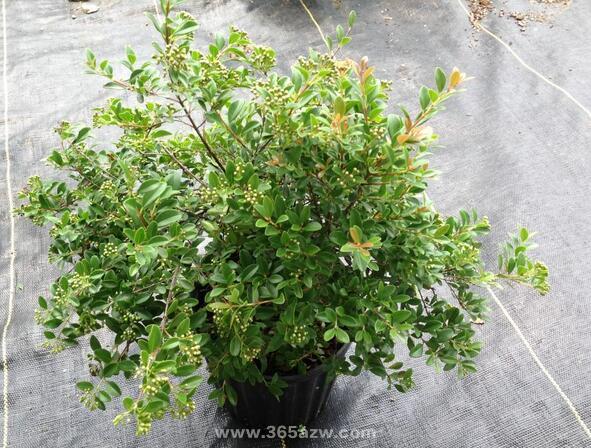
The above are the issues to note when cultivating Syzygium buxifolium, and I hope they are helpful to you.