How to Grow Four-Season Azaleas? Detailed Guide to Growing Methods and Precautions
Four-season azalea is a variety of the evergreen or semi-evergreen shrub azalea of the genus Rhododendron in the family Ericaceae, also known as the Belgian azalea. Its petals are narrow and long, the filaments are red, and the anthers are golden yellow. It blooms continuously throughout the four seasons and is an excellent flowering ornamental plant. It can be planted in groups or grown in pots for viewing. Now let us take a look at the growing methods and precautions for four-season azaleas!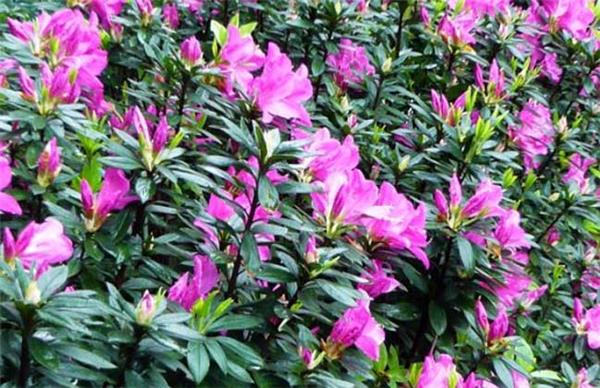
Propagation Techniques for Four-Season Azaleas
Four-season azaleas are mainly propagated by cuttings. In spring and summer, choose short and sturdy two-year-old branches, cut them into sections about 5 cm long, and keep 3 to 5 leaves at the top. Sand and perlite are good cutting media. Shade is required, and water should be sprayed frequently. After cutting, roots form in about 1 month, and the plants can be potted after 3 months. The survival rate can reach over 90%. The potting soil should be acidic culture soil of the same period, permeable and rich in organic matter, with a pH value of 5 to 6. It is commonly made by mixing humus soil, moss, and mountain soil in a ratio of 2:1:7.
Growing Methods for Four-Season Azaleas
1. Watering: Azalea roots are very fine and have poor absorption capacity, and water must be absorbed through the roots before it can reach the plant body. Therefore, except during the winter dormant period, azaleas should be watered frequently to keep them moist. Especially during the growing period after March each year, during the flowering period, and during the high-temperature period from July to September, the frequency of watering should be increased, preferably ensuring watering about twice a day. In autumn and winter, watering can be reduced appropriately. It should be noted that tap water used for watering flowers is best stored in a container for one to two days before being used to water the flowers.
2. Light: During the cultivation of azaleas, sufficient light should always be ensured, because only with sufficient light can the flowers bloom well. Of course, in hot summer, they should not be put out for direct exposure to the sun. Instead, shading should be strengthened to prevent sun damage. In addition, during the flowering season, appropriate protection should also be provided, and a shade net can be used for protection. They also cannot be exposed to strong sunlight during the flowering period.
3. Fertilizing: Proper fertilizing can make azaleas grow more robustly and rapidly. As with most indoor flower cultivation, the fertilizing principle for azaleas is also to apply thin fertilizer frequently, that is, apply a little less at a time and apply it more times. When old leaves turn green, during the flowering period, and after flowering, fertilize appropriately two to three times. During hot high-temperature weather, fertilizing must not be done. For fertilizing azaleas, grass juice water, fishy water, rapeseed cake, and similar materials can be used.
4. Placement: Large potted four-season azaleas are colorful and full of flowers when blooming. They can be placed at the entrances of hotels, shops, or government offices, appearing extremely noble, elegant, and magnificent, with an ornamental effect superior to that of sago palms and similar plants. Medium-sized four-season azaleas are dazzling when in bloom and can be placed on office desks or coffee tables indoors. If used to decorate conference rooms, they have an uplifting effect, as if entering a place where spring lasts all year. Small four-season azaleas are generally not for ornamental display and should be cultivated in a concentrated way, preferably in plastic greenhouses. After growing into medium-sized plants, they can be sold or used for viewing.
Precautions for Four-Season Azaleas
1. Pest control: Red spider mites are relatively common on four-season azaleas and are caused by dry heat. Red spider mites suck leaf sap, causing the whole plant to gradually turn yellow and wilt. In daily care, check the backs of leaves regularly. If reddish-brown spots resembling "mites" are found, these are red spider mites, and there will also be spider silk. At this time, the four-season azalea should first be isolated, and the backs of the infested leaves should be washed with relatively strong water through a rubber hose. After it dries slightly, more than ten fresh oleander leaves can be mashed, add five cigarette butts (only the tobacco, about the amount of one cigarette) and one chopped fresh red chili pepper, soak in 500 ml of water for 24 hours, then spray the stems and leaves every three days, and place in a ventilated place to dry, spraying three times in a row. In daily care, maintain moisture and air circulation.
2. Yellowing leaves: Yellowing leaves on four-season azaleas is a physiological disorder caused by a lack of iron, trace elements, and soil that is too alkaline. All azaleas like slightly acidic soil, which should be loose and well-draining, and must not become compacted. In severe cases, the soil should be replaced, using a mixture of equal parts packaged "potting soil", peat soil, and black mud (humus soil). In mild cases, several rusty iron nails can be buried in the soil.
3. Early withering of flower buds: The leaf tips and edges of four-season azaleas will also wrinkle, curl, and turn yellow-brown at the same time. This is caused by applying concentrated fertilizer when there are flower buds, or by hot stuffy conditions with poor ventilation, or by excessive dryness, or by compacted planting soil. When buds appear, fertilizing should stop, and the plant should be placed in a cool, airy, ventilated place with only sufficient scattered light, avoiding scorching sun. The potting soil should be kept appropriately moist and not dry, and the soil should be replaced once every year after the flowers fall. Damaged buds and leaves should be removed.
4. Brown spots on leaf edges: Brown spots on leaf edges are the main disease of four-season azaleas, called brown spot disease, caused by excessive moisture, lack of light, and hot stuffy conditions. Diseased leaves should be removed, and a 600-fold solution of "Daconil" should be sprayed once a week, three times in a row.
That is all for the related information on growing methods and precautions for four-season azaleas. I hope it is helpful to you!