Detailed Explanation of Redtwig Dogwood Cultivation Methods and Growing Techniques
Redtwig dogwood has great ornamental value; the entire redtwig dogwood plant is bright red throughout. What issues should be noted when growing redtwig dogwood? Let us take a look together below.
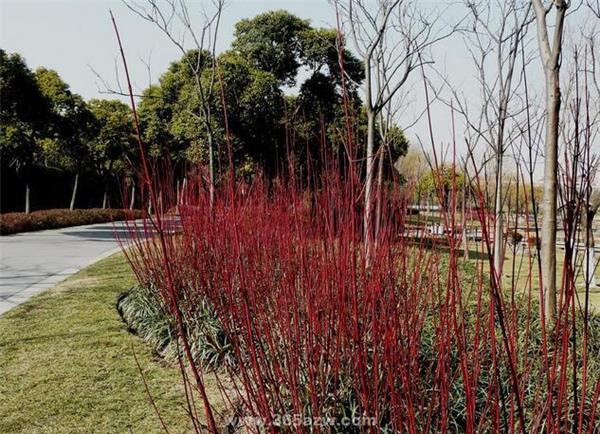
Redtwig dogwood is a deciduous shrub in the order Cornales, family Cornaceae. The old stems are dark red, and the branches are blood-red. The leaves are opposite and elliptical. The cyme is terminal, and the flowers are milky white. The flowering period is May to June. The fruit is milky white or blue-white, with a ripening period from August to October. It can be propagated by sowing, cuttings, and layering. The redtwig dogwood has bright red autumn leaves and small pure white fruits; after leaf fall, the branches are as brilliantly red as coral. It is a rare stem-ornamental plant and also a good material for cut branches. In gardens, it is often planted in clumps on lawns or interspersed with evergreen trees, achieving a red-and-green contrasting effect.
Growing Methods for Redtwig Dogwood
1. Habits: Redtwig dogwood is extremely cold-resistant, drought-resistant, and tolerant of pruning. It likes light and prefers relatively deep, moist, yet fertile and loose soil.
2. Propagation: Redtwig dogwood is propagated by sowing, cuttings, and layering. When sowing, the seeds should be stratified in sand and sown in spring. For cuttings, one-year-old branches can be selected, stratified in sand in autumn and winter, and then inserted in March to April of the following year. For layering, in May the branches can be ring-barked and buried in soil; after rooting, they are separated from the mother plant and transplanted the following spring.
3. Planting: When planting redtwig dogwood, apply 10-15 kg of decomposed compost or farmyard manure per hole.
4. Water and fertilizer: Redtwig dogwood is highly tolerant, and after planting and establishment, special fertilizer and water management are generally unnecessary. In early spring before budding, water with budding water; during the rainy season, pay attention to drainage; in autumn, apply farmyard manure once together with the winter watering.
5. Pruning: In early spring before budding, renewal pruning should be carried out, cutting back the previous year's branches to promote the growth of new branches and keep the branches bright red. When old plants show weak growth after many years, attention should be paid to renewal: leave 1-2 buds at the base and cut off all the rest; after new branches sprout, thin them appropriately, and the plant can recover in the same year.
Effects and Functions of Redtwig Dogwood
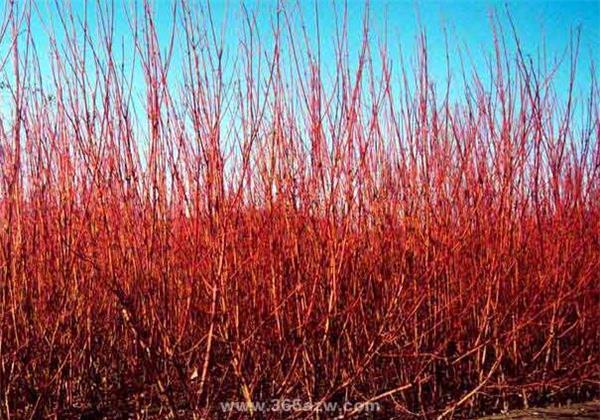
Medicinal effects of redtwig dogwood: Redtwig dogwood can be used as medicine. It can be harvested throughout the year, cut into sections, and dried in the sun for use. Clearing heat and detoxifying, stopping bleeding, and stopping diarrhea are its most important effects. It is commonly used in the treatment of human nephritis, rheumatoid arthritis, otitis media, and bloody stool and other diseases. For treatment, it can be decocted and taken internally, with a dosage of 6 to 9 grams. In addition, it can also be processed into fine powder for external use, and its therapeutic effect is also particularly outstanding.
Garden functions of redtwig dogwood: Redtwig dogwood holds an important place in the landscaping industry. In some garden scenic areas, it is often planted in clumps on lawns, and it is also often interspersed with some green trees to achieve a visual effect of alternating red and green. In particular, after its leaves fall, its fiery red branches and stems are the most alluring scenery in garden scenic areas. The seeds of redtwig dogwood have a high oil content, and after extraction they can be used in human industrial production.
Key Cultivation Points
1. It is extremely cold-resistant, drought-resistant, and tolerant of pruning. It likes light and prefers relatively deep, moist, yet fertile and loose soil.
2. When planting redtwig dogwood, 10 to 15 kg of decomposed compost should be applied per hole as base fertilizer, and thereafter a topdressing should be applied in trenches each spring or autumn.
3. In early spring, renewal pruning should be carried out at budding, cutting back the previous year's branches to promote the growth of new branches and keep the branches bright red.
4. When old plants show weak growth and the phenomena of rough bark and aging flowers appear during cultivation, attention should be paid to renewal. Leave 1 to 2 buds at the base and cut off all the rest; after new branches sprout, thin them appropriately, and the plant can recover in the same year.
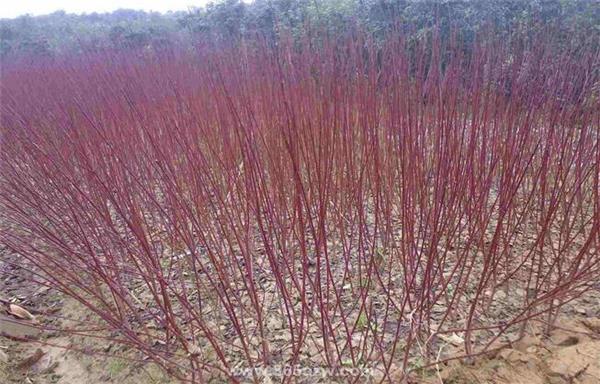
5. It can be propagated by cuttings, sowing, layering, and other methods. Cuttings: In late autumn, cut 1- to 2-year-old robust branches as cuttings, store them in sand in winter until late March of the following year, then insert them into soil; after rooting, apply a thin liquid fertilizer once a month. Sowing: Note that the seeds should be stratified in sand for 120 days and then sown in spring. Layering: In early May, ring-bark the branches, then bury them in soil; after rooting, separate them from the mother plant and transplant them the following spring.
6. It is prone to stem rot. In March at budding, spray 4 to 5 degrees Baume lime sulfur mixture; before the rainy season, spray 1:1:200 Bordeaux mixture; in autumn, leafhoppers may occur, damaging the branch bark and affecting ornamental value, so spray 1% dimethoate or 0.5 degrees Baume lime sulfur mixture.
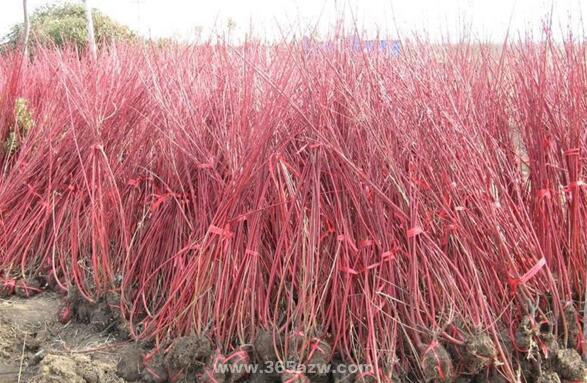
The above is the relevant introduction to growing redtwig dogwood. I hope it is helpful to you.