Flamboyant Tree (Delonix regia) Cultivation Methods and Detailed Explanation of Its Benefits and Effects
The flamboyant tree is mostly grown as a courtyard plant; it has a long flowering period and lush blooms, giving it high ornamental value. What issues should be noted when cultivating the flamboyant tree? Let us take a look together below.
Brief Introduction to the Flamboyant Tree
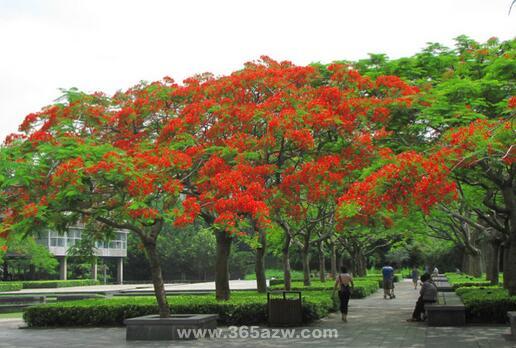
The medicinal use of the flamboyant tree mainly involves the bark of the leguminous plant Delonix regia. So what does the flamboyant tree look like?
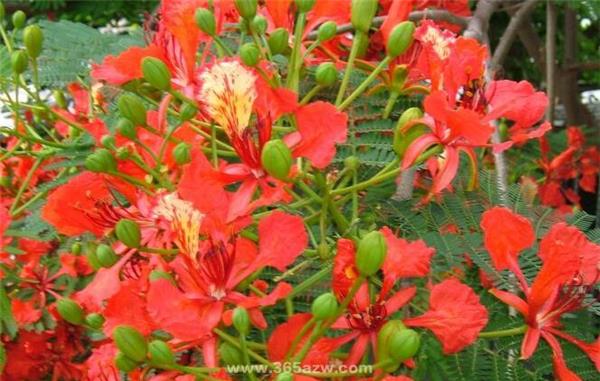
The flamboyant tree is a deciduous tree, reaching 20 m or taller. Bipinnate compound leaves, alternate, 20-60 cm long, with 30-40 pinnae, each pinna bearing 40-80 leaflets; leaflets oblong-elliptic, 7-8 mm long, 2.5-3 mm wide, rounded at both ends, green above, pale green beneath, sparsely covered with short soft hairs on both surfaces. Racemes terminal or axillary; calyx 2.5-2.9 cm long, united at the base into a short tube, with 5 calyx teeth, oblong-elliptic, abruptly acute at the apex; 5 petals, red, with yellow and white blotches, nearly circular, with long claws, 3.5-5.5 cm long including the claw, about 3 cm wide; 10 stamens, free, red; ovary nearly sessile, with numerous ovules. Pods linear, up to 50 cm long, about 5 cm wide, pendulous, woody. Containing numerous seeds. Flowering period May, fruiting period October.
Cultivation Techniques
Seed sowing is commonly used for raising seedlings. The thousand-seed weight is about 400 grams. The seed coat absorbs water with difficulty, so the seeds need to be scalded with 80°C warm water to promote germination; after natural cooling, continue soaking for 24 hours, then drain and set aside. Sow by the drill or dibbling method. Seedlings are relatively sensitive to frost; early on, a compound fertilizer may be applied, with less nitrogen fertilizer; after autumn begins, fertilization should stop to encourage early lignification. In winter, if the leaves have not yet fallen, they can be removed manually, and plastic film covering or individual wrapping can be used for frost protection. One-year-old seedlings can be lifted from the nursery and planted out.
Propagation Methods
The flamboyant tree is mainly propagated by sowing. The seeds mature in December; collect the pods, take out the seeds and store them dry, then sow in the following spring. Before sowing, soak the seeds in boiling water; after cooling, continue soaking for 1-2 days, changing the clean water 1-2 times in between. Germination begins 6-7 days after sowing, and all seedlings can emerge in a little over 20 days; one-year-old seedlings can reach about 1.5 m.
Cultivation Methods
Planting should be done in a sunny spot with fertile, deep, well-drained soil. After growing for 1-2 years, seedlings need to be transplanted once, preferably in early spring. The plant and row spacing is about 60 cm, and 3-year-old seedlings can be used for planting out. The planting site should be an open, sunny place, and during dry weather the plants should be watered thoroughly. The flamboyant tree has low soil requirements and can grow well even in relatively poor soil, because its roots have rhizobia that fix nitrogen and increase soil fertility; however, waterlogging will kill the rhizobia and affect plant growth. The trunk of the flamboyant tree will sprout branches and leaves at any time; if allowed to grow naturally, the plant shape will vary considerably, so frequent pruning is needed. The flamboyant tree is not cold-tolerant, and in northern regions it can only be cultivated and maintained in a greenhouse.
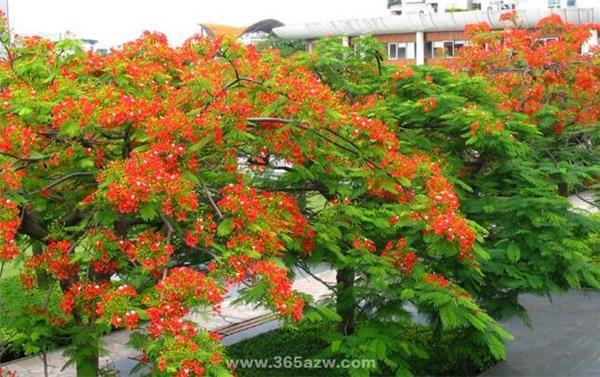
For transplanting, the survival rate is higher before sprouting in spring; it can also be planted in the rainy season, but part of the branches and leaves should be cut off to ensure survival. The plant has strong sprouting ability, and large seedlings can be cultivated by the trunk-cutting method. After planting out, loosen the soil and weed 2-3 times each year, water in a timely manner, apply one topdressing each in spring and autumn, and promptly remove root suckers to ensure good tree growth.
The pest found on the flamboyant tree is the noctuid moth and similar insects. The larvae of this pest feed on plant leaves and cause damage, often eating all the leaves of the host plant, seriously affecting the tree's growth and ornamental value. Pest damage on the flamboyant tree is most severe in July, August and September. The flamboyant tree noctuid is not harmful to humans, but some people will develop allergic symptoms because of it.
Control Methods
Seize the period when the larvae cluster to cause damage, and dust with powder in the early morning before the dew has dried. You can use 2.5% trichlorfon powder or 1.5% parathion (1605) powder, or 1.5% dimethoate powder for dusting, at 1.5-2 kg per mu.
The above are the cultivation methods for the flamboyant tree; we hope they are helpful to you.