Spring Azalea Growing Methods and Daily Care Precautions
The spring azalea is the yingshanhong, a type of rhododendron, and is deeply loved by people. What should be noted when growing spring azaleas? Let's take a look together today.

Spring Azalea Growing Methods
Soil
The spring azalea likes acidic soil and grows poorly in calcareous soil, so when growing spring azaleas, acidic soil is mostly used. It requires loose soil rich in humus with good drainage, avoiding clay or alkaline soil. Generally, several types of soil are mixed together.
Light and Temperature
The spring azalea likes a cool growing environment, and semi-shaded conditions are better. It is neither heat-tolerant nor cold-tolerant. The suitable temperature for growth is between 12°C and 25°C. It does not tolerate heat in summer; when the temperature exceeds 30°C, it enters semi-dormancy. It does not tolerate cold in winter; when the temperature is below 0°C, frost damage occurs, so attention must be paid to keeping it warm in winter. It likes diffused light and does not tolerate exposure to the sun. In summer, appropriate shading is needed, but be careful not to shade it excessively.
Watering and Fertilizing
The spring azalea likes moisture. During the growing season, keep the soil moist, not too dry and not waterlogged. When the air is relatively dry, you can spray water on the spring azalea plant to increase air humidity; during rainy periods, drainage should be done promptly to prevent the soil from becoming too wet and causing root rot.
Fertilizing the spring azalea should be done lightly and frequently, applying a diluted, well-rotted liquid fertilizer once every half month. Before flowering, phosphorus fertilizer can be applied 1 to 2 times to make the flowers large and vibrant.
Precautions for Growing Spring Azaleas
Shaping and Pruning
During the growing period, spring azaleas generally grow naturally and are rarely pruned. However, after the spring azalea has finished flowering, it needs to be tidied up, cutting off overly long, diseased, weak, deformed and damaged branches.

Pests and Diseases
Spring azaleas have relatively few pests and diseases, but during the growing period, prevention of pests and diseases is necessary, spraying some disinfectant agents; in summer, red spiders are prone to breaking out and need to be sprayed to kill them.
Propagation Methods
Spring azaleas are mainly propagated by seed propagation, cutting propagation, layering propagation and division propagation.
Differences Between Spring Azaleas and Summer Azaleas
Different shapes: the mao azalea is tall and robust, with young branches densely covered in brown bristles; the summer azalea is small, with slender branches and leaves, dense branching, and a full, neat crown.
Leaf shape: the mao azalea has large, long, rough and hairy leaves; the summer azalea has narrow, small leaves arranged closely together.
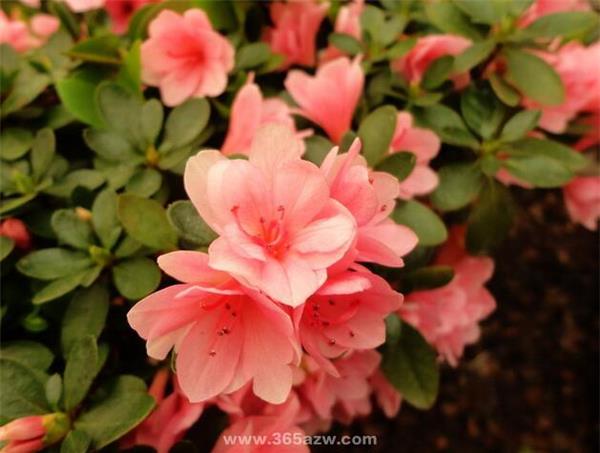
Flowers: the mao azalea has large single-petaled flowers, broadly funnel-shaped, rarely double-petaled, with flower colors generally red, purple, pink-white and compound colors; the summer azalea produces branches first and then flowers, with a flowering period from mid-to-late May to mid-June.
Spring azaleas are divided into two types: large-leaf large-flower and small-leaf small-flower; those that bloom in June are called summer azaleas; those whose flowering period falls between spring azaleas and summer azaleas are called spring-summer azaleas; and those introduced from the West are listed separately as a category called Western azaleas, abbreviated as xi azaleas.
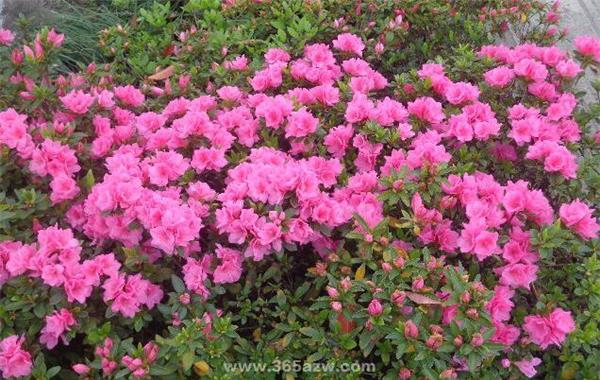
The spring azalea is a famous flowering plant with a bright red corolla. It has high ornamental value and also high medicinal value, promoting the flow of qi and blood circulation, tonifying deficiency, and treating internal injury cough, kidney deficiency deafness, irregular menstruation, rheumatism and other diseases. The roots and leaves are used medicinally; the roots are diuretic, help mend bones, dispel rheumatism, and treat bruises and abdominal pain; the leaves can stop bleeding; the fruit is also used medicinally.
During the bud stage of the spring azalea, buds should be removed in time so that nutrients are supplied in a concentrated way, promoting large and brightly colored flowers. Pruning branches is generally done in spring and autumn, cutting off crossing branches, overly dense branches, overlapping branches and diseased or weak branches, and removing spent flowers in time. For shaping, generally the natural tree shape is slightly modified by hand, following your own inclination and shaping according to the tree.
The above is the relevant introduction to growing spring azaleas. I hope everyone enjoys today's sharing.