What are the medicinal values of the night-blooming cereus? A detailed explanation in one article
The night-blooming cereus is a mysterious flower with a short blooming time. It not only has high ornamental value, but also has many medicinal values. Let us take a look below at what effects the night-blooming cereus has.
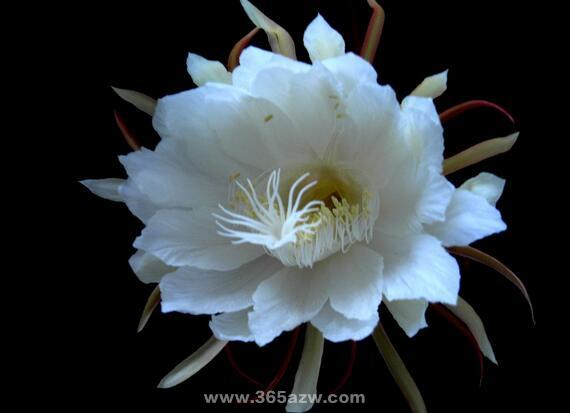
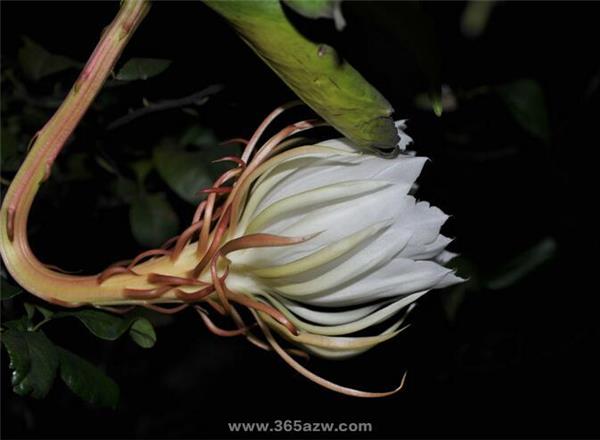
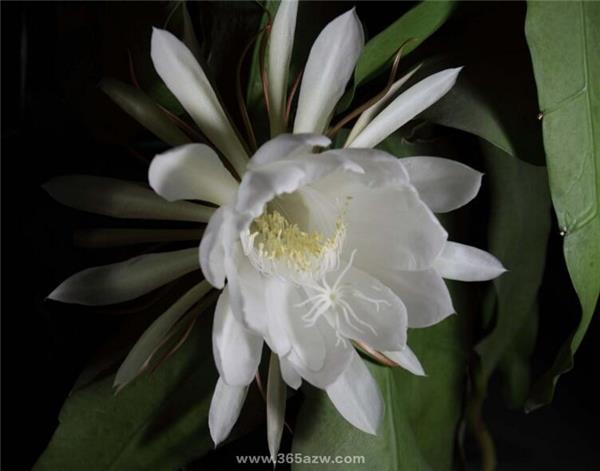
Night-blooming cereus (scientific name: Epiphyllum oxypetalum (DC.) Haw): an epiphytic succulent shrub, 2-6 m tall, with old stems cylindrical and woody. Branches numerous, leaf-like and laterally flattened, lanceolate to oblong-lanceolate, margins wavy or with deep rounded teeth, base acute, shortly acuminate or gradually narrowed into a stalk-like base, dark green, hairless, midrib thick, old plants producing aerial roots from branches. Flowers solitary in small areoles on the sides of branches, funnel-shaped, opening at night, fragrant, 25-30 cm long, 10-12 cm in diameter; receptacle green, slightly angled, covered with triangular short scales; petal-like perianth segments white, obovate-lanceolate to obovate, 7-10 cm long, 3-4.5 cm wide, margins entire or erose. Berry oblong, with longitudinal ribs, hairless, purplish red. Seeds numerous, ovate-reniform, glossy black, wrinkled, hairless.
Main values
Ornamental
This species is a famous ornamental flower, commonly known as "Beauty Under the Moon" and "Qiong Flower." Cactaceae, Epiphyllum genus. Whenever summer and autumn seasons come, when the sky is full of stars and the night is quiet, the night-blooming cereus opens, displaying its beautiful posture and elegant colors. While people are still sleeping in their dreams, the plain and fragrant night-blooming cereus has already closed and withered in an instant, hence the saying "a fleeting glimpse of the night-blooming cereus." Its wonderful flowering habit often wins the deep interest of flower enthusiasts.
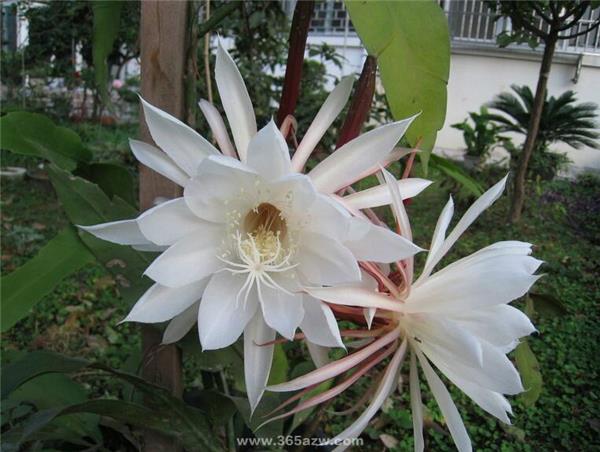
Medicinal values of the night-blooming cereus:
It has the effects of softening the stool and removing toxins, clearing heat and treating asthma. It mainly treats heat syndromes of the large intestine, constipation and bloody stool, swollen sores, pneumonia, blood streaks in phlegm, asthma, and other conditions. The flower has a strengthening effect and also treats high blood pressure and high blood lipids. Pick the flowers that are about to wither, briefly prepare them, and put them into a pot of shredded pork soup, and they become a sweet and slippery delicacy. Because the night-blooming cereus has the characteristic of blooming several to even dozens of flowers on the same day, they must be picked, sun-dried, and stored to avoid wasting nature's gifts.
Medicinal parts of the night-blooming cereus: mainly the flowers; tender stems can also be used as medicine.
Collection and processing of the night-blooming cereus: tender stems can be collected throughout the year; flowers are collected at night during the flowering season. Tender stems are mostly used fresh; flowers can be used either dried or fresh. To make the dried product, usually at night when the flowers are blooming, when the flowers have just opened or are about to open, pick them and dry them by dehydration for later use. Nature and flavor of the night-blooming cereus: slightly cold in nature, sweet and bland in flavor.
Main components of the night-blooming cereus: the flowers contain mucilage. Sugars. Effects of the night-blooming cereus: it has the effects of softening the stool and removing toxins, clearing heat and treating asthma.
It mainly treats heat syndromes of the large intestine, constipation and bloody stool, swollen sores, pneumonia with blood streaks in phlegm, asthma, and other conditions. The flower has a strengthening effect and also treats high blood pressure and high blood lipids. Usage: it can be boiled in water or stewed with lean pork and taken as food, or fresh material can be processed into a preparation and taken with honey. When stewing lean pork, usually add rice wine and clear water in equal halves; or add Rehmannia, Chinese yam, and cassia seed for combined use.
Contraindications: those with cold stomach should not take the fresh juice.
Toxicity: non-toxic, but it should not be taken as a single herb for a long time. Identification: it is easily confused with the three-angled lotus.
The above is the relevant introduction to the medicinal values of the night-blooming cereus. I hope it is helpful to you.