When Do Bromeliads Bloom? A Detailed Guide to Flower-Forcing Precautions
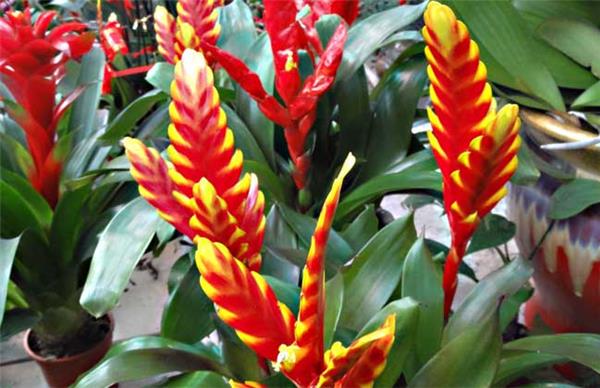
Bromeliads do not bloom in a fixed season; flowering is generally related to growth time and care. As long as the plant has been growing for more than 8 months (the time required varies by variety, ranging from 8 months to several years) and the plant is robust and large enough (including dead old leaves, it should have more than 20 leaves), it may bloom. Let us take a look below at when bromeliads bloom!
When Do Bromeliads Bloom?
When a bromeliad has grown more than 30 leaves under natural conditions, it can bloom on its own in a suitable environment, with the flowering period mainly in late spring and early summer. To make ornamental bromeliads bloom as soon as possible, most are artificially forced to flower. When some holidays are approaching, people artificially force them to flower so that people can see colorful ornamental bromeliad flowers during the holidays.
Artificial Flower-Forcing Methods for Bromeliads
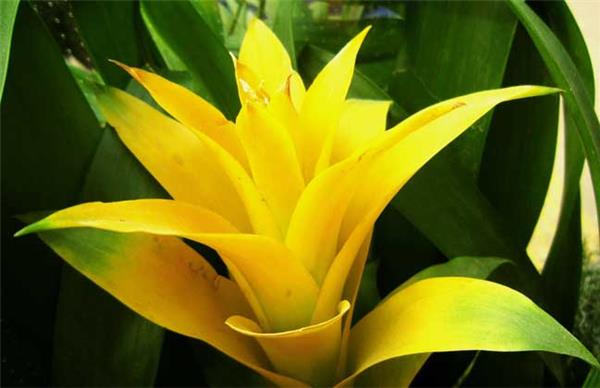
The most commonly used method for artificially forcing bromeliads to flower is treatment with a saturated acetylene solution. Use a hose to connect an acetylene gas cylinder to a water storage bucket, and evenly immerse the hose with holes in the water. Slowly release acetylene gas from the cylinder into the water at a pressure of 0.5 Pa; for 100 liters of water, the gas release time should be at least 45 minutes. When the water flowing out of the container has a strong odor, it can be used to force flowering. Pour the acetylene aqueous solution into the bromeliad's "leaf cup" after the water in it has been drained, using just enough to fill the "leaf cup." Repeat 3 times, with an interval of 2-3 days each time. Generally, flowering can occur 3-4 months after treatment.
Precautions for Forcing Bromeliads to Flower
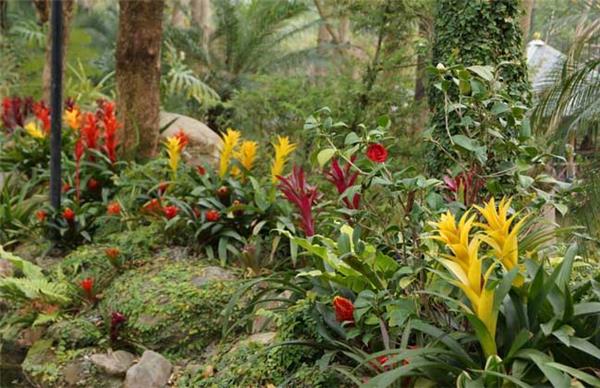
1. Select plants that have completed the vegetative growth stage and have at least 20 fully developed leaves, including dead old leaves, so that sufficient nutrients have been accumulated. If there are too few leaves and nutrients are insufficient, even if flower forcing succeeds, the flowers will not reach ornamental standards.
2. Generally, it should be done at a room temperature of about 20°C. The higher the temperature, the shorter the flower-forcing time; the lower the temperature, the longer the flower-forcing time. However, if the absolute daily minimum temperature is below 15°C, flower forcing is difficult to succeed.
3. Stop fertilizing two weeks before flower forcing and water only with clear water. Start fertilizing two weeks after flower forcing, applying less nitrogen fertilizer and more potassium fertilizer. This can prevent the formation of green flower spikes.
4. Do not close the acetylene gas valve during flower forcing, because acetylene gas easily evaporates from the water. If the valve is closed, the acetylene concentration in the water will gradually decrease, affecting the flower-forcing effect.