What are the precautions for growing the "kuqing flower"?
The "kuqing flower" is what we commonly call the silk tree flower (Albizia julibrissin) in everyday life. When planting the silk tree flower, you must pay attention to the supply and demand of its growing environment. Today let's take a look together at issues related to growing the "kuqing flower."
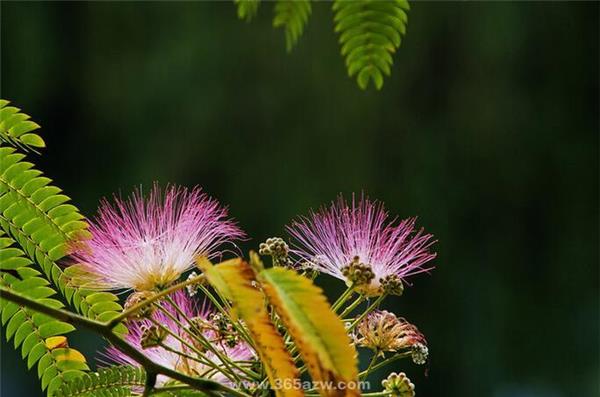
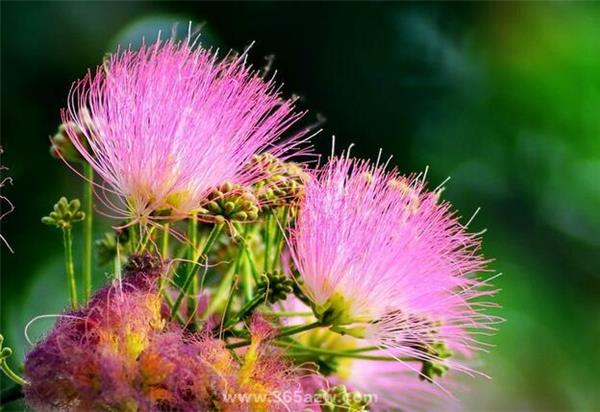
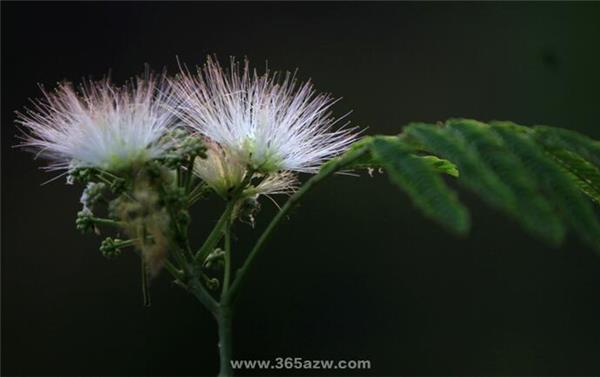
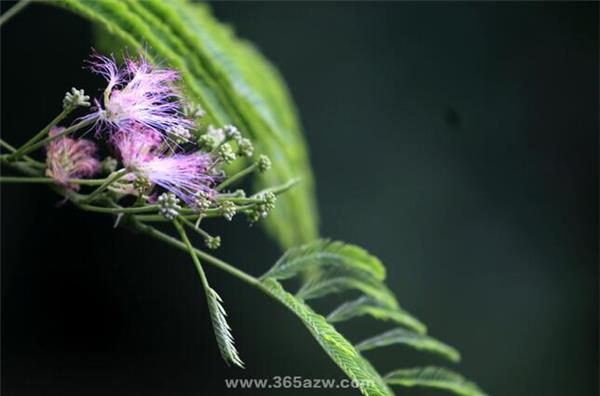
The "Albizia flower" has a head-like inflorescence, shrunk into a ball. The flowers are slender and curved, 0.7-1 cm long, pale yellow-brown to pale yellow-brownish, with short pedicels. The calyx is tubular, with 5 small teeth at the tip; the corolla tube is about 2 times the length of the calyx tube, with 5 lobes at the tip, the lobes lanceolate; stamens numerous, filaments slender, yellow-brown to yellow-brownish, united at the lower part, separate at the upper part, extending beyond the corolla tube. Slight fragrance, mild taste. The "Albizia flower" is also known as the silk tree flower, "Albizia flower," and night-closing flower; because it opens by day and closes by night it is called the night-closing flower. In the seventh month when the heat blazes, a tree of green leaves and red flowers sways in emerald green, bringing a bit of coolness. Approaching it, it happily blushes a stretch of crimson, like the red lips of a shy maiden blooming, and like the blush of a bashful girl's shame; it truly delights the eyes and stirs the heart, and annoyance and anger suddenly vanish.
Growing habits of the "kuqing flower":
Sunlight
The "kuqing flower" is a light-loving tree species, slightly shade-tolerant, so during the growing period be sure to provide sufficient sunlight, but when the summer light is too strong, also pay attention to shading.
Temperature
The "kuqing flower" likes a warm environment, but its cold resistance is very strong; in southern regions it does not need to be moved into a greenhouse in winter.
Soil
The "kuqing flower" has no strict soil requirements, but fertile, moist, well-drained sandy loam and limestone loam are best.
Water and fertilizer management
The "kuqing flower" is tolerant of dryness and not tolerant of waterlogging. During maintenance, do not water too much, to avoid causing waterlogging and damaging the root system. The "kuqing flower" can be managed extensively, and its requirements for water and fertilizer are not very high; even in poor areas it may grow very vigorously. But note that it does not like noise or dust, so when growing it you need to keep a good check on these.
Disease control of the "kuqing flower"
Disease control
Common diseases of the silk tree include wilt disease and canker disease. When transplanting large trees, reduce the time for lifting seedlings, transport, and planting; before planting, sterilize and disinfect the roots, and you can spray 40% carbendazim wettable powder at 500 times dilution, or 65% zineb wettable powder at 500 times dilution; when transplanting, you can dip the roots in 10% copper sulfate solution, and you can also spray rooting powder and other growth regulators at the same time to promote root germination and growth. For branch and trunk cut surfaces that have already been cut, apply a protective agent to prevent pathogens from invading. You can use 70% thiophanate-methyl wettable powder or 60% duofu wettable powder at 100 times dilution to spray or smear the trunk; or use 14.5% duoxiaoling water-soluble powder, 40% quintozene powder at 300 times dilution, as well as kangkuoning, thiophanate-methyl, carbendazim and other pesticides at conventional concentrations to irrigate the soil, irrigating once about every 8 days; 3-4 consecutive times can effectively curb the spread of the disease and gradually restore the plant; while using 70% thiophanate-methyl wettable powder at 300 times dilution, input into the plant by infusion, can improve the efficacy. While taking the above measures, irrigate the tree hole and the surrounding adjacent soil with 40% asomate at 50 times dilution and 40% quintozene powder at 300 times dilution for disinfection, to prevent the spread of pathogens.
Pest control
Pests include cottony cushion scale, longhorn beetles, inchworms, and leafhoppers. You can use 65% buprofezin wettable powder at 800-1000 times dilution spray to control cottony cushion scale. For leafhoppers during the nymph occurrence period, spraying 10% imidacloprid at 2000-3000 times dilution, and 1.8% abamectin at 2000-3000 times dilution, 40% omethoate emulsifiable concentrate at 1000-1500 times dilution or 20% fenvalerate at 2000 times dilution, as well as 20% fenvalerate emulsifiable concentrate at 3000 times dilution were compared in tests respectively, and all achieved good control effects.
The above is the relevant introduction to growing the "kuqing flower." Friends who want to grow the "kuqing flower" can use it as a reference.