What are the effects and functions of Cornus officinalis?
Cornus officinalis is a traditional Chinese medicinal plant with great nutritional value. What issues should be noted when cultivating Cornus officinalis? What are the effects and functions of Cornus officinalis?
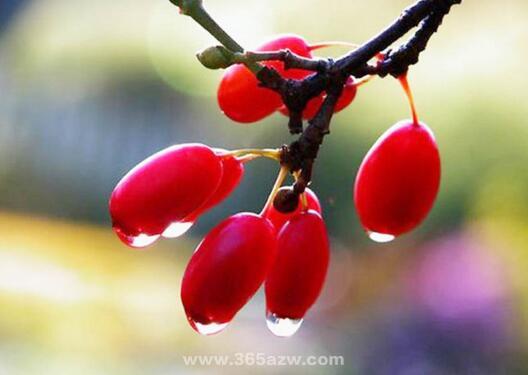
Introduction to Cornus officinalis
Morphological characteristics
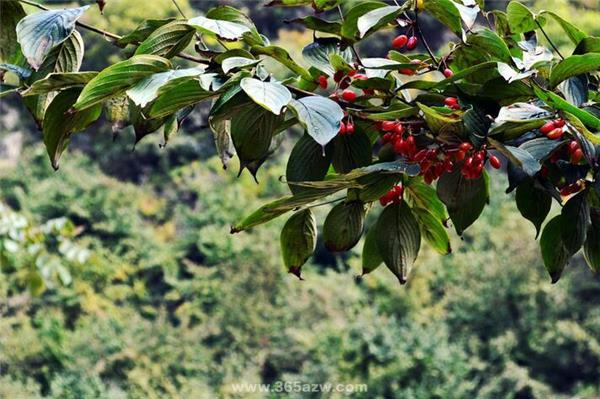
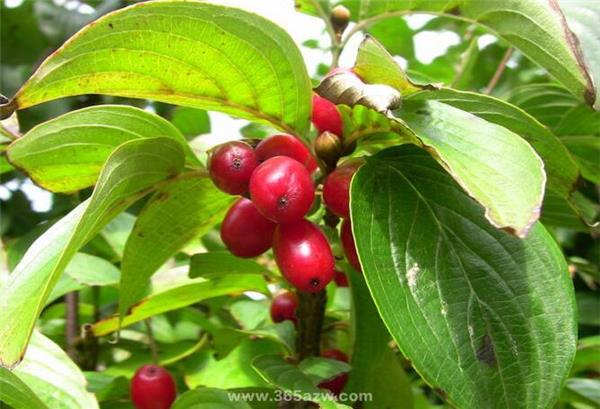
Deciduous tree or shrub, 4-10 m tall, bark grayish brown, branchlets slender cylindrical, hairless or rarely covered with appressed short pubescence; winter buds terminal and axillary, ovate to lanceolate, covered with yellowish-brown short pubescence.
Leaves opposite, papery, ovate-lanceolate or ovate-elliptic, 5.5-10 cm long, 2.5-4.5 cm wide, apex acuminate, base broadly cuneate or nearly rounded, entire, green above, hairless, light green below, rarely covered with white appressed short pubescence, vein axils densely covered with light brown tufted hairs, midrib prominent above, raised below, nearly hairless, lateral veins 6-7 pairs, curved inward in an arch, petiole slender cylindrical, 0.6-1.2 cm long, with a shallow groove above, rounded below, slightly covered with appressed sparse pubescence.
Umbels borne on the sides of branches, with 4 involucral bracts, ovate, thickly papery to leathery, about 8 mm long, purplish, slightly covered with short pubescence on both sides, falling off after flowering, peduncle stout, about 2 mm long, slightly covered with gray short pubescence, flowers small, bisexual, opening before the leaves, calyx lobes 4, broadly triangular, equal to or slightly longer than the disc, about 0.6 mm long, hairless, petals 4, ligulate-lanceolate, 3.3 mm long, yellow, revolute outward, stamens 4, alternating with petals, 1.8 mm long, filaments subulate, anthers elliptical, 2-locular, disc cushion-shaped, hairless, ovary inferior, receptacle obovate, about 1 mm long, densely covered with appressed sparse pubescence, style cylindrical, 1.5 mm long, stigma truncate, pedicel slender, 0.5-1 cm long, densely covered with sparse pubescence.
Effects and functions of Cornus officinalis:
1. Cornus officinalis treats uncontrollable sweating, cold limbs, weak pulse, and body weakness verging on collapse: Cornus officinalis 50-100 g, decocted in water, has a good effect of tonifying deficiency, reducing sweating and securing collapse. If used together with ginseng and prepared aconite, the effect is even better.
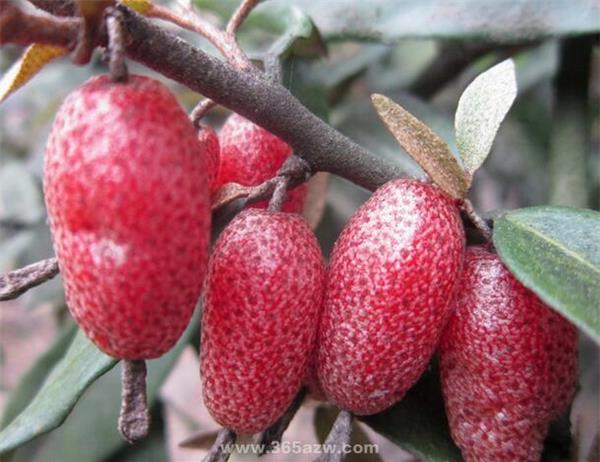
2. Kidney-deficiency vertigo: Cornus officinalis 20 g, goji berries 10 g, glossy privet fruit 12 g. Decocted in water, 1 dose per day. Quite effective for the elderly.
3. Frozen shoulder (scapulohumeral periarthritis): Cornus officinalis 35 g. Decocted in water and taken in 2 divided doses, 1 dose per day. After the condition improves, reduce the dose to 10-15 g, decocted as a soup or steeped as tea. It has a good effect, and generally takes effect after 4-5 doses.
4. Body weakness with excessive sweating: Cornus officinalis and codonopsis each 15 g, schisandra 9 g. Decocted in water, 1 dose per day. Effective for those who are weak and prone to catching colds.
5. Cornus officinalis treats kidney-deficiency low back pain, impotence and spermatorrhea: Cornus officinalis, psoralea, dodder seed, and Cherokee rose fruit each 12 g, angelica 9 g. Decocted in water, 1 dose per day. It has the effect of tonifying the kidney and strengthening the waist, securing essence and stopping spermatorrhea.
6. Functional uterine bleeding or menorrhagia: Cornus officinalis 30 g, Atractylodes macrocephala 30 g, raw astragalus 15 g, calcined dragon bone 25 g, raw white peony root 15 g, madder 10 g. Decocted in water, 1 dose per day. It has the effect of replenishing qi to control blood and securing the Chong vessel to stop bleeding.
7. Cornus officinalis treats enuresis: Cornus officinalis, raspberry, and poria each 9 g, prepared aconite 3 g, prepared rehmannia 12 g, decocted in water.
8. Cornus officinalis treats frequent urination and incontinence in the elderly: Cornus officinalis 9 g, schisandra 6 g, bitter cardamom 6 g, decocted in water.
9. Diabetes: Cornus officinalis 15 g, dark plum 10 g, schisandra 15 g, Atractylodes lancea 10 g. Decocted in water, 1 dose per day. It has the effect of promoting fluid production and quenching thirst.
10. Spontaneous sweating and night sweats: Cornus officinalis, Saposhnikovia divaricata, and astragalus each 9 g, decocted in water.
11. Cornus officinalis treats five types of low back pain, wind-cold in the lower jiao, and weakness of the waist and knees: achyranthes 1 liang (remove the sprouts), Cornus officinalis 1 liang, cinnamon heart 3 fen. Grind the above medicines into a fine powder. Before each meal, take 2 qian mixed with warm wine.
Cornus officinalis flesh medicinal diets
Cornus flesh porridge
Ingredients: Cornus flesh 15 g, japonica rice 60 g, appropriate amount of white sugar.
Preparation method: First wash the cornus flesh, remove the pits, put it together with japonica rice into a clay pot to cook porridge. When the porridge is almost done, add white sugar and cook briefly until ready.
Administration: Eat once each in the morning and evening.
Effects: Tonifies and benefits the liver and kidney, astringes essence and reduces sweating.
Applications: Dizziness and blurred vision due to liver and kidney insufficiency, tinnitus and sore waist, spermatorrhea, enuresis, uncontrollable weak sweating, kidney-deficiency vaginal discharge, frequent urination.
Precautions: 3-5 days is 1 course of treatment. After the illness is completely cured, the medication can be stopped, or it can be taken intermittently for a period to consolidate the therapeutic effect. It is not suitable for those with fever and difficult painful urination.
Cornus officinalis soup medicinal diet
Northern astragalus and cornus - strengthens the spleen and benefits yin
Prescription: Northern astragalus 4 qian, cornus flesh 2 qian.
Usage: Decoct 2.5 bowls of water down to 1 bowl, take warm after meals. If you have tried it three or four times and your body adapts to it, then taking it once a day is also fine. However, if you have a cold or flu, you must still temporarily stop taking it. For people with spleen deficiency and gastrointestinal indigestion problems, if they want a complete cure, the medication period may be relatively long. If brewing medicine every day feels troublesome, you might as well take these two medicines, northern astragalus and cornus flesh, according to the above proportion, increase them several times, decoct a concentrated juice, store it in the refrigerator, and take it over several days, once each morning, noon, and evening, using 3-4 soup spoons of the medicinal juice each time, mixed with boiled water. This method is not only suitable for people with spleen deficiency and excessive sweating, but people with insufficient kidney qi and weak middle qi may also try it.
Theory: Northern astragalus - strengthens the spleen and stomach, boosts qi and blood. Not only is its effect good, but it is also easy for the gastrointestinal tract of weak people to adapt to and accept. Northern astragalus has the effect of strengthening the spleen and stopping sweating for nighttime excessive sweating caused by "spleen weakness and yin deficiency." Children, the elderly, and the weak can also use it. However, when children take it, the dosage should not be too large; 2-3 qian each time is enough.
The above is the relevant introduction to the effects and functions of Cornus officinalis. I hope it is helpful to you.
The above is the relevant introduction to the effects and functions of Cornus officinalis. I hope it is helpful to you.