Methods and Precautions for Growing Lucky Bamboo in Water
Besides the verdant leaves that are worth admiring, the white roots of lucky bamboo (Dracaena sanderiana) are also a key ornamental feature. Therefore, many friends grow lucky bamboo in water to enjoy both the roots and the leaves. This article focuses on the growing methods and precautions for water-grown lucky bamboo.
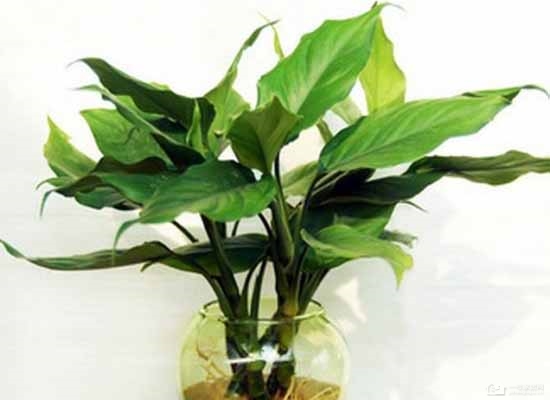
There are quite a few methods for growing lucky bamboo in water.
1. Root-washing method
This can be done in all four seasons, but the best times are spring and autumn. Specific steps:
① Choose a robust, well-grown lucky bamboo that has been cultivated in soil and already has ornamental value.
② Take the plant out of the pot and remove the soil around the roots.
③ Rinse off the soil in water, cut away some of the old roots, and to prevent root rot in the early stage of water culture and promote new root growth, soak in 0.5% potassium permanganate for disinfection.
④ Place the prepared lucky bamboo plant into a prepared container, add tap water to cover 2/3 to 1/2 of the root system, and grow new roots.
2. Water cutting method
This is generally done in spring and autumn, because late autumn and early spring cannot reach the temperature required for rooting, and in the high-temperature summer season the cuttings are prone to rotting from microbial infection. For water cutting, select a strong branch about 1 cm in diameter, keep the aerial roots on the stem nodes, cut it into 10 cm long sections, disinfect the cut with potassium permanganate, let the sap flowing from the wound dry, then insert into plain sand or water, maintain a relatively high air humidity at about 25°C, and in about 20 days the base of the cutting will root and sprout to form a plant material suitable for water culture.
During the healing and rooting period of water cuttings, respiration is relatively vigorous, so there must be an adequate oxygen supply. Therefore, at the beginning of water cutting, change the water frequently to keep the water clean and meet the cuttings' oxygen needs. When changing the water, rinse the cuttings and container with clean water, and especially strengthen the rinsing of the cut. After rooting, it can be transferred to normal water culture care.
3. Division method
Division is usually carried out in spring when growth begins. Spring division reduces damage to the plant and allows the divided plants to recover normal growth more quickly. First take the plant out of the pot, shake off most of the potting soil, straighten out the tangled root system, expose the tiller shoots and roots, then as needed use a sharp knife to divide the mother plant's stem into several clumps, disinfect the wounds (apply plant ash or sulfur), clean them, and then carry out water culture care.
The following key points should be noted when growing lucky bamboo in water:
1. Plant selection
Generally there are now mainly two methods. One is to take branch cuttings from a planted lucky bamboo for water cutting, and new roots can sprout in about 10 days. The other is the root-washing water culture method, which means washing the roots of a soil-grown lucky bamboo and then growing it in water. You can rinse repeatedly with tap water, but be careful not to damage the roots.
2. Water quality selection
For the water source used in lucky bamboo water culture care, choose disinfected tap water that meets national drinking water standards, including its salt concentration; the total concentration of added inorganic salts should be ~; the total concentration of added inorganic salts should be ~; the total concentration of added inorganic salts should be ~; the total concentration of added inorganic salts should be
3. Water amount selection
For root-washed lucky bamboo, no nutrient solution is needed in the early stage of water culture. This is because the roots are injured (they will inevitably be injured to some extent when the soil is removed), and the water should not be added too much, just slightly covering the roots.
4. Use of nutrient solution
For water-cultured Dieffenbachia (Dieffenbachia picta), nutrient solution can be added after about 3 weeks. The first time should be a small amount, and afterward it can be applied as appropriate according to growth. The pH value of the water culture nutrient solution is 6.0 to 7.0, and its height in the bottle should not exceed 50% of the root height. Replace with fresh nutrient solution 1 to 2 times per week; the higher the ambient temperature, the more frequently the fresh nutrient solution should be replaced.
5. Humidity care
Lucky bamboo likes relatively high humidity and dislikes dryness. During the growth period, water should be sprayed on the stems and leaves frequently.
For water-cultured lucky bamboo, whether it survives depends on selecting robust plants, and even more on scientific cleaning and disinfection after division; otherwise bacterial infection will occur and affect its survival rate.