Master the propagation methods of Anthurium and let Anthurium successfully take root in the home
Is Gardenia poisonous? The reason many friends ask the same question may come from two sources: first, Gardenia is a common garden ornamental plant and is grown indoors; second, Gardenia has a strong fragrance, and it is said that flowers that are too fragrant are often poisonous. So, is Gardenia really poisonous?
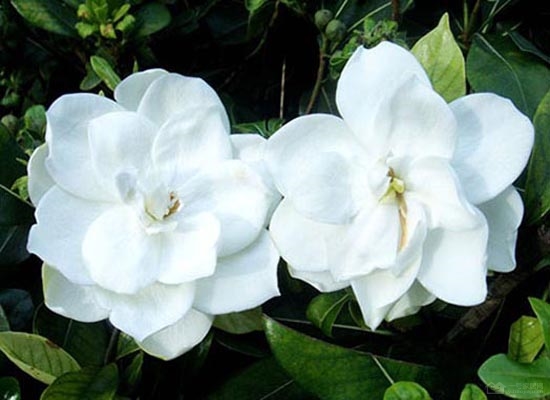
It is understood that Gardenia contains triterpene compounds, gardenic acid A, B and geniposidic acid. In addition, it also contains carbohydrates, protein, crude fiber and a variety of vitamins. Its floral fragrance is rich, and it can be worn as a corsage; the fruit can be used as a yellow dye; the wood is hard and fine, and can be used for carving; the roots, leaves and fruit can all be used as medicine. It is cold in nature and bitter in taste, and has the effects of clearing heat and detoxifying, cooling the blood and purging fire.
From this it can be seen that Gardenia is not poisonous. Botanical experts also support this view: Gardenia is not only non-toxic, but also has many benefits:
1. "Compendium of Materia Medica" says it "improves complexion; used in the face cream in 'Qianjin Yi'." "Diannan Materia Medica" says it "purges lung fire, stops lung-heat cough, stops nosebleeds and eliminates phlegm." The fruit, leaves and roots of Gardenia can be used as medicine, generally brewed as tea or decocted in water. Gardenia contains gardenoside, dehydroxylated gardenoside, paederoside methyl ester and a small amount of shanzhiside, and has effects such as clearing heat and promoting diuresis, cooling blood and detoxifying, treating jaundice, painful and difficult urination with blood, red and swollen painful eyes, fire-toxin sores, and lowering blood pressure. Among these, the Gardenia fruit used as medicine mainly treats high fever from febrile disease, restlessness and insomnia, excess-fire toothache, mouth and tongue sores, nosebleeds and vomiting blood, conjunctivitis, sores and abscesses, jaundice-type infectious hepatitis, favism, and blood in urine; for external use it treats bleeding from trauma, sprains and contusions. The root used as medicine mainly treats infectious hepatitis, bruises and injuries, and wind-fire toothache.
2. Gardenia has ornamental value. Both its flowers and leaves are evergreen throughout the four seasons, with green leaves and white flowers, fragrant and elegant, very pretty and lovely. It is suitable for placement in front of steps, by ponds and along roadsides, and can also be used as a hedge and for potted ornament; the flowers can also be used in flower arrangements and worn as decoration.
3. Gardenia can purify the air. Gardenia is resistant to sulfur dioxide and can absorb sulfur to purify the atmosphere; 0.5 kg of leaves can absorb 0.002-0.005 kg of sulfur.
It is said that a strong floral fragrance has two functions: first, to attract insects for pollination; second, to prevent damage from pests. But this cannot prove that flowers that are too fragrant must be poisonous.