A Detailed Guide to Growing and Caring for Red Lilac
Red lilac is generally planted on lawns or along roadsides. It has high ornamental value and also has certain medicinal value, as it can be used to make medicines and spices. What issues should be noted when growing red lilac? Let us introduce them in detail below.
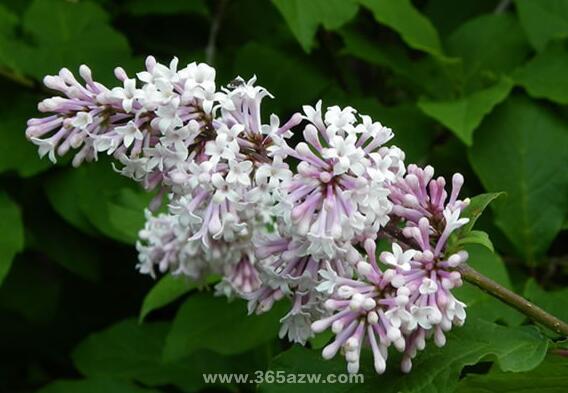
Red lilac is a shrub reaching up to 4 m tall. The branches are upright, stout, grayish brown, with lenticels; the branchlets are light grayish brown, hairless or slightly pubescent, with lenticels. The leaves are ovate, elliptic-ovate, broadly elliptic to obovate-oblong, dark green above and powdery green beneath. Today the editor will briefly introduce the uses of red lilac.
Red lilac is also known as Baijie and Qingke. It warms the middle, warms the kidneys, and directs qi downward. It warms the middle and directs qi downward; it warms the kidneys and supports yang. Indications: treats hiccups and vomiting, nausea, dysentery, cold pain in the heart and abdomen, abdominal masses, hernia, and tinea. The medicinal source is the flower bud of the dicotyledonous plant clove, a plant of the family Myrtaceae.
An ether extract of red lilac at 1% concentration, an aqueous extract, or a Sabouraud medium containing 8% clove decoction all have inhibitory effects on various pathogenic fungi such as Trichophyton schoenleinii and Candida albicans. At higher concentrations, it also has an inhibitory effect on Cryptococcus neoformans. The alcohol extract is similar to the ether extract, but the aqueous extract is weaker.
The water or alcohol extract has a paralyzing or killing effect on pig roundworms in vitro. Dogs infected with roundworms that orally received clove oil at 0.5-1.0 g/kg showed an deworming effect, but a single dose could not expel all the roundworms. Red lilac oil is superior to the decoction.
Red lilac is an aromatic stomachic that can relieve abdominal bloating, enhance digestive capacity, and reduce nausea and vomiting. Red lilac oil (a small amount dropped in) can disinfect a dental cavity and destroy its nerve, thereby relieving toothache.
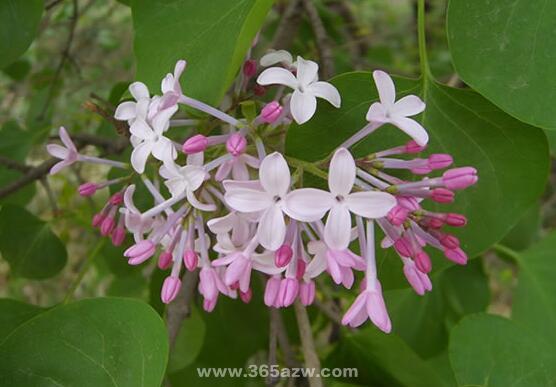
Clove oil distilled from red lilac stems is used to make antiseptics, spices, mouthwash, local anesthetics for toothache, and synthetic vanillin; it can also be used as a flavor enhancer and strengthener. It can also be used in cooking, cigarette additives, incense additives, tea making, and so on.
Red lilac can be used medicinally. In traditional Chinese medicine, clove flower buds are also used as medicine under the drug name Gongdingxiang; it is warm in nature and pungent in taste. It has a rich fragrance and a spicy taste and is often used to flavor food. The volatile oil obtained by distilling the roots, bark, branches, fruits, and flower buds of the clove tree is also used medicinally.
Red Lilac Growing Methods
1. Fertilizing: Generally, no fertilizer or only a small amount of fertilizer is applied. Excessive fertilizing must be avoided, otherwise it will cause excessive vegetative growth, thereby affecting flower bud formation and instead reducing flowering. However, after flowering, some phosphorus, potassium, and nitrogen fertilizers should be applied.
2. Watering: After planting, water thoroughly, then water once every 10 days, and loosen the soil after each watering to preserve moisture. Irrigation can vary by region. In North China, April to June is the season when lilac grows vigorously and blooms, so 2-3 thorough waterings are needed each month. After July, when the rainy season begins, attention should be paid to drainage and waterlogging prevention. By mid-November, before winter begins, sufficient water should be given.
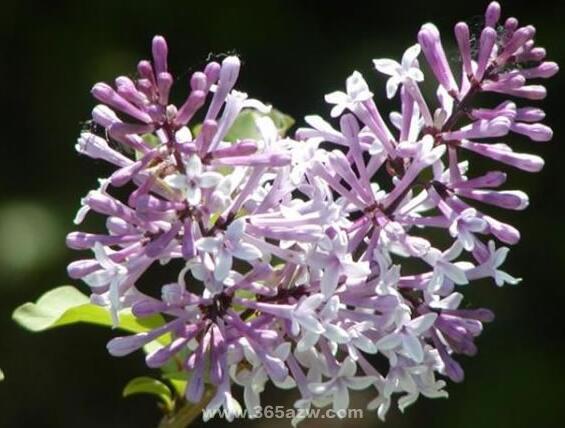
3. Pruning: When planting large 3-4 year old saplings, the aboveground branches and trunk should be heavily pruned, generally by cutting the trunk at 30 cm above the ground, and the following year they can produce abundant flowers. Pruning is generally carried out before spring bud break, mainly removing thin and weak branches and overly dense branches, while reasonably retaining good renewal branches. After flowering, the remaining flower spikes should be cut off.
Pest and Disease Control of Red Lilac
Red lilac is prone to seedling damping-off, sudden wilt, black leaf, root rot, and so on. When the seedlings grow 2-3 true leaves, drench the roots with 55% Dexon at 500 times dilution or 50% carbendazim at 600 times dilution, or spray with 50% carbendazim at 800 times dilution. For black leaf disease, Tonghua Dansheng can also be sprayed. When the seedlings can reach more than 30 cm at most, and 2-year-old seedlings are more than 60 cm, they can leave the nursery and be cut for planting.
Landscape Uses of Red Lilac
Regarding the ornamental value of red lilac, we must mention its landscape value. Red lilac is generally planted on lawns or along roadsides and used as part of the scenery.
Of course, it can also be transplanted and cultivated. The survival rate of red lilac is very high, and there is almost no need to worry that it will die from transplanting, so we often plant red lilac for its landscape value.
The above is the relevant introduction to growing red lilac. We hope it is helpful to you.