Propagating Gardenia from Old Branch Cuttings: The Water Propagation Method for Gardenias
The gardenia symbolizes hope and joy for a beautiful future, and embodies the essence of resilience in life. The reason the gardenia possesses these fine qualities is that it forms its buds in winter and does not bloom until summer, and its leaves stay green year after year without withering through wind, frost, snow and rain. So how do you propagate gardenia from old branch cuttings? Let us now learn about the water propagation method for gardenias!
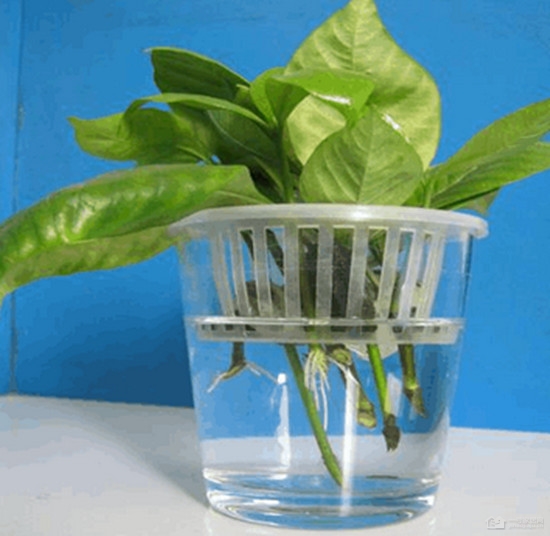
If you want to grow gardenias, what is the simplest method? The answer is cuttings. Among all types of cuttings, I have never seen anything easier than propagating gardenias - going straight to water propagation and transplanting the gardenia after it has rooted is really very convenient.
Time for taking cuttings:
If you use water propagation, you can actually do it all year round, because indoors you can create the environment and temperature. The best periods are from early June to early August and from early October to mid-November. During these periods you can use either soil cuttings or water propagation, and these two periods are called summer cuttings and autumn cuttings respectively. In summer and autumn the temperature is relatively high, so rooting is very easy; in winter it is a bit worse. Tools needed: a water-holding container (a cup, any bottle or jar, well, even a mineral water bottle will do), preferably a transparent glass one, so you can see how clear the water is and change it at any time. You can observe the growth of the roots. If the container is large, you can choose several branches and put them in the bottle together like a flower arrangement; if there are too few, they need to be fixed in place.
Selecting branches:
This step is actually the most important one. Do this step well and you are halfway to success. For gardenia branches, choose 1-2 year old branches; ones that are too young rot easily, while ones that are too old root with difficulty. Bright green bark, no pests or diseases, and vigorous growth are the most basic requirements. There are many varieties of gardenia; common gardenias include "Large-flowered Gardenia", "Oval-leaf Gardenia", "Small-leaf Gardenia", "Narrow-leaf Gardenia", "Variegated-leaf Gardenia" and so on. I personally prefer "Large-flowered Gardenia", whose flowers are large and pure white with a rich fragrance, so from a group of young and middle-aged gardenia trees with fragrant flowers and large blooms I chose two-year-old new-growth Large-flowered Gardenia branches for cuttings. It is recommended to choose several branches and propagate them in water together.
Operating steps:
The selected branch should generally keep three nodes. Remove the leaves on the lowest node, and keep only 1-2 leaves on the upper two nodes to reduce transpiration and help photosynthesis. Cut the bottom node downward 1-2 cm away into a horseshoe shape; if the branch is taken from the middle section, cut the upper node flat 1-2 cm away. The roots grow starting from the slanted cut. Insert the trimmed branch into the prepared bottle. Since this is water propagation, there is no need to consider a growing medium; you only need to put clean water in the container and change it at any time to prevent the cut from rotting.
Propagating gardenia by cuttings, that is, growing gardenias, is one method used to cultivate gardenias. It is worth noting that when propagating gardenias by cuttings, it is better to use old branch cuttings, preferably branches one to two years old or more; the success rate of such cuttings is much higher than that of softwood cuttings.