How to grow a bird's nest fern? A detailed guide to care methods
The bird's nest fern is a common ornamental plant. Here is a detailed introduction to the issues to watch out for when growing a bird's nest fern.
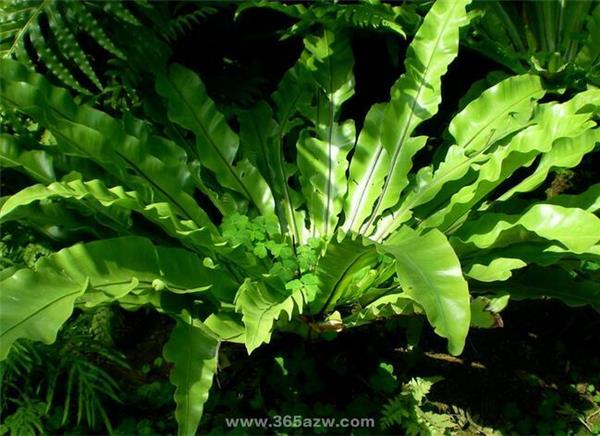
The bird's nest fern can be planted directly on artificial trees or wooden sections, but it must be misted frequently to maintain high air humidity. The bird's nest fern prefers warm, humid conditions and semi-shade with fairly strong indirect light. Under conditions of high temperature and high humidity it can grow all year round, and its optimum growth temperature is 20-22°C. It is not cold-tolerant, and its winter overwintering temperature is 5°C. During the peak growth periods of spring and summer it needs more watering, and the leaves should be misted frequently to keep them glossy.
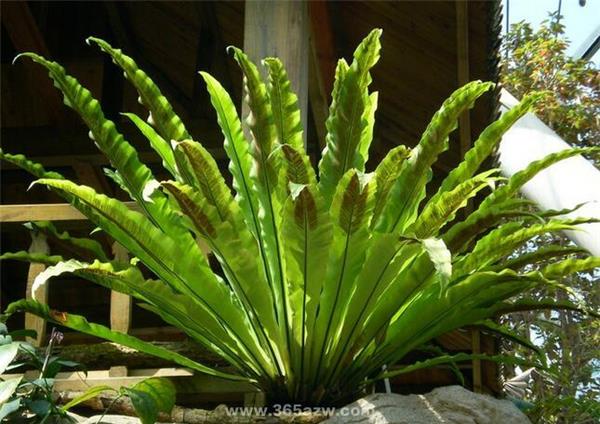
Ferns have stood out among foliage plants in recent years and are deeply loved by people. This is especially true of the bird's nest fern shaped by artificial means, whether hung as a single clump in a hanging basket to bring a clear, cool air to the room, or attached at different points on a shortened palm trunk or tree fern trunk in plants of different sizes, resembling a multi-headed sago palm. It has both the fierce, heroic spirit of the sago palm and the elegant, free-flowing quality unique to ferns themselves. Its ribbon-like leaves drift lightly like the green robes of ancient flying apsaras, and its clumping epiphytic plants hang from the ends of trees like bird's nests.
The bird's nest fern is an epiphytic fern, a perennial shade-loving herbaceous foliage plant. Bird's nest ferns can be grown hydroponically, and when growing a bird's nest fern hydroponically, you usually need to be familiar with a few care points:
1. For hydroponic bird's nest fern, choose a smaller single plant, then use the potted root-washing method.
2. During the growing season, the bird's nest fern should be misted frequently to raise air humidity.
3. Be sure to add fertilizer in time; when fertilizer is lacking or the temperature is too low, the leaf edges of the bird's nest fern turn brown.
4. Hydroponic bird's nest fern needs only indirect light and must not be exposed to scorching sun, so avoid direct light in summer.
5. With winter temperatures above 8°C, the bird's nest fern can overwinter.
6. In summer, change the water for the bird's nest fern about once every 20 days; in winter the interval can be longer.
Hydroponic care methods for the bird's nest fern
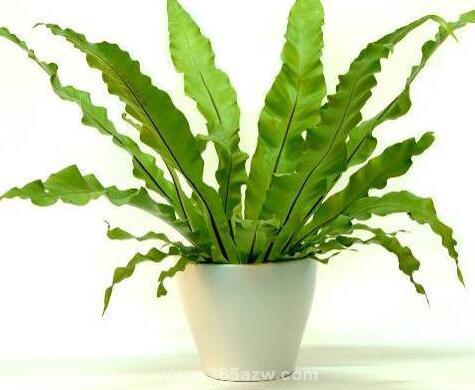
Temperature: The optimum growth temperature for the bird's nest fern is 16°C-27°C. When the temperature drops below 10°C, the bird's nest fern stops growing and loses its leaf gloss. In winter it is best to keep the temperature above 15°C; if conditions do not allow this, at least keep it no lower than 5°C, otherwise the leaf edges of the bird's nest fern turn brown or the plant may even freeze to death.
Light: The bird's nest fern prefers semi-shade and cannot tolerate strong direct light. During the growing period it does not need strong direct light and mainly needs indirect light. This means natural light coming in through windows and other places, scattering naturally indoors. In summer, try to avoid direct sunlight.
Humidity: In daily care, spray clean water on the leaves and around the bird's nest fern to maintain humidity; you can spray clean water twice a day. Or wipe the leaves with a towel, which both increases humidity and cleans the leaves of the bird's nest fern.
Ventilation: The bird's nest fern grows well in an environment with air circulation. Where a hydroponic bird's nest fern is placed, doors and windows should be opened regularly to create air convection so that fresh outside air enters the room.
Nutrient solution: Generally, the hydroponic nutrient solution sold on the market can be used. What to note is that tap water should be left to stand for a day, until its temperature is close to room temperature and the chlorine and other substances in the water have fully evaporated, and then the nutrient solution should be added in proportion.
Changing the water: If using tap water, first leave it to stand for a day so the chlorine dissipates and the temperature is moderate. In summer, change the water for the bird's nest fern about once every 20 days; in winter the interval can be longer. If the water quality is clean and the bird's nest fern is growing vigorously with no root rot, an even longer interval is fine, but the water lost to evaporation should be topped up in time.
Notes on the bird's nest fern
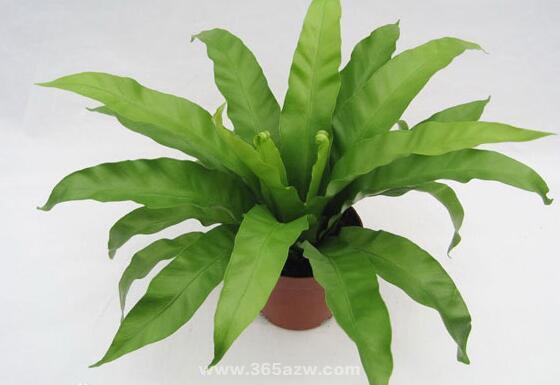
When the bird's nest fern grows larger, small branches will appear. In late spring you can use a small knife to separate the roots and plant them elsewhere. When dividing and transplanting, note that the potting soil must not be too wet, otherwise root rot will occur. Some leaves of a newly transplanted bird's nest fern can be cut off to help it survive, and as the bird's nest fern grows, the leaves will gradually return to their original appearance. The leaves of the bird's nest fern are delicate, so prevent sunscald and frost, but do not leave it without light for long periods; it can be placed in a spot with good indirect light.
The above is a relevant introduction to growing the bird's nest fern. I hope it is helpful to you.