How to grow Dianthus? A detailed guide to Dianthus cultivation methods
Dianthus flowers are small and delicate, very pleasing to the eye, and deeply loved by people. What issues should be noted when growing Dianthus as a potted plant? Here is a detailed introduction for everyone.
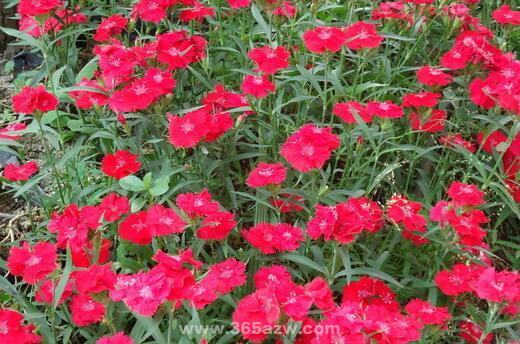
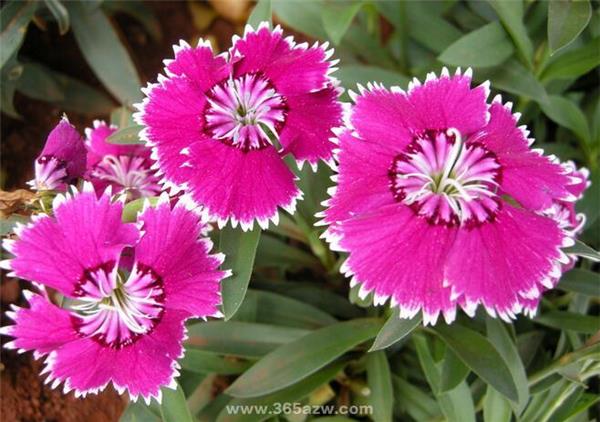
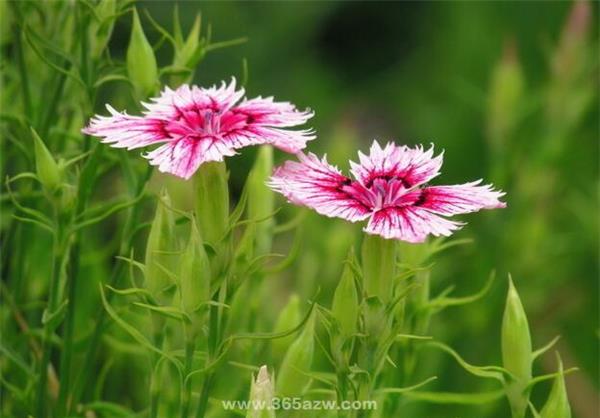
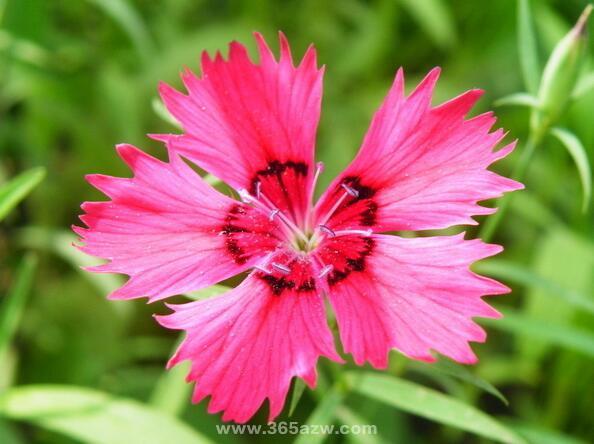
Dianthus is cold-tolerant and drought-tolerant, but not tolerant of intense heat; in summer it often grows poorly or withers, so shading and cooling should be provided during cultivation. It prefers full sunlight, dry conditions, good ventilation, and a cool, moist climate. It requires fertile, loose, well-drained loam or sandy loam containing lime; it dislikes waterlogging and likes fertilizer. It tolerates alkaline soil fairly well. But because its stems have nodes and swell like bamboo, it is named "stone bamboo" (Dianthus). Dianthus is a perennial herbaceous plant, evergreen. However, it is generally cultivated as an annual or biennial. In the north, it is sown in autumn and blooms the following spring; in the south, it is sown in spring and blooms in summer and autumn. Dianthus plants are 30-40 cm tall, erect and clustered. The stems are erect, jointed, and much branched; the leaves are opposite, linear or linear-lanceolate. The calyx tube is cylindrical; flowers are single or several clustered at the stem tip, forming a cyme, with a flower diameter of 2-3 cm. Flower colors include bright red, pink, purple-red, pure white, red, and mixed colors; single-petaled with 5 petals or double-petaled, with serrated tips and a slight fragrance. On the upper surface of the petals, the middle-lower part forms a beautiful black ring pattern; when in full bloom, the petal surface is like a disc shimmering with velvety luster, colorful and splendid. The flowering period is from April to October, concentrated in April to May. The capsule is oblong or long-round, and the seeds are flat-round and dark brown.
Dianthus cultivation methods:
1. Soil: It requires well-drained, humus-rich, clayey soil with good fertilizer retention and slightly alkaline. A culture soil mixed with 6 parts garden soil, 2 parts compost, and 2 parts sandy soil can be used.
2. Watering: Dianthus grows vigorously and is relatively drought-tolerant. In rainy and overly wet areas, the soil tends to compact, and the root system develops abnormally due to poor ventilation, so during the rainy season pay attention to loosening the soil and draining water. In addition to timely watering during the peak growing and flowering seasons, at ordinary times water less, just enough to keep the soil moist.
3. Temperature: The suitable temperature for Dianthus growth is 15-20°C. In winter it should be placed in a greenhouse, with the temperature kept above 12°C. The air humidity should preferably be kept at around 75%. Appropriately spraying water before flowering to regulate humidity can prevent the buds from splitting open prematurely.
4. Fertilizing: Dianthus likes fertilizer. Before planting, apply a sufficient amount of baked fertilizer and bone meal. During the growing period, continue to apply liquid fertilizer as a top dressing, generally once every 10 days or so with rotted, diluted fertilizer water, and apply one top dressing after flower harvesting.
5. Light: Ensure 6-8 hours of light every day. In midsummer, Dianthus is in a semi-dormant state, and at this time care should be taken to avoid exposure to strong sunlight. The potting soil must not be waterlogged, otherwise the roots are prone to rot.
6. Pest and disease control: Common diseases of Dianthus include calyx rot, rust, gray mold, bud rot, and root rot. Zineb can be used to control calyx rot, and oxycarboxin to control rust. To control other diseases, use zineb, carbendazim, or captan for soil treatment before planting. When harmed by red spider mites or aphids, generally use a 40% dimethoate emulsion at 1000 times dilution to kill them.
Potted Dianthus care:
The suitable temperature for potted Dianthus growth is 15-20°C. In winter it should be placed in a greenhouse, with the temperature kept above 12°C. During the growing period it requires sufficient light and should be placed in a sunny spot; in summer, scattered light is suitable, avoiding exposure to strong sunlight. When the temperature is high, provide shade and cooling. It requires fertile, loose, well-drained loam or sandy loam containing lime; it dislikes waterlogging and likes fertilizer. Sufficient base fertilizer is required, with 2-3 plants per pot. When the seedlings grow to 15 cm tall, remove the terminal buds to promote branching. After that, pay attention to appropriately removing axillary buds; otherwise, too many branches will disperse nutrients and make the flowers small. Appropriately removing axillary buds concentrates nutrients and can promote larger and more colorful flowers.
During the growing period, potted Dianthus should be placed in a sunny, well-ventilated place for care, keeping the potting soil moist, and applying a rotted, diluted liquid fertilizer about once every 10 days or so. In summer, when there is too much rain, pay attention to drainage and loosening the soil. Before flowering, promptly remove some flower buds in the leaf axils, mainly to ensure that the terminal flower buds bloom. In winter, water less; if the temperature is kept at 5-8 degrees, it will continue to bloom through winter and spring.
The above is the relevant introduction to Dianthus cultivation. I hope it is helpful to you.