What are the benefits and effects of mugwort leaves? A detailed guide
Mugwort (Artemisia argyi) has certain medicinal value and can also be used to make various mugwort dishes. What are its benefits and effects? Let's find out together.
Benefits of mugwort
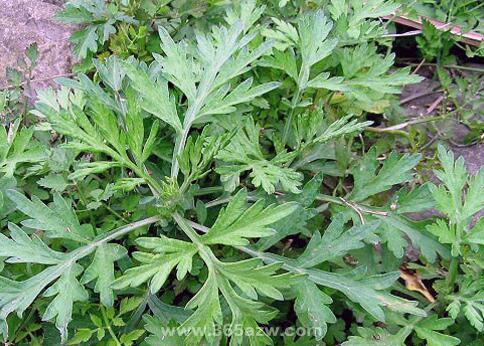
Mugwort is bitter, drying, pungent and dispersing, and can warm the meridians, regulate qi and blood, stop cold pain, and expel cold-dampness, among other effects, making it a fine remedy in gynecology. It is often used to treat conditions such as cold-induced irregular menstruation, cold and painful epigastric and abdominal regions, and cold womb infertility, for example in Ai Fu Nuan Gong Wan. Mugwort can also be used to treat metrorrhagia and leukorrhea, excessive deficiency-cold, and threatened miscarriage, such as in Jiao Ai Tang. A decoction used as an external wash is very effective for treating weeping eczema and scabies, and for removing dampness and relieving itching.
Mugwort has antibacterial and antiviral effects, and has very obvious effects on relieving cough, calming asthma and expelling phlegm; its effects on stopping bleeding and anticoagulation, sedation and anti-allergy, and protecting the liver and promoting bile flow are very significant. Therefore, our common mugwort recipes include mugwort soup, mugwort tea, mugwort porridge and so on. Mugwort has quite a few benefits and effects, and long-term consumption of mugwort can enhance the body's resistance to disease.
Besides being edible, mugwort can also be used to soak the feet. Soaking the feet in mugwort is very beneficial to health, as it can relieve fatigue, treat insomnia, reduce stress and have various other effects. From the above we can see that mugwort has a great many benefits and effects. Therefore, the editor suggests that for the sake of your health you can often use mugwort to make various dishes to eat, or use mugwort to soak your feet, as this will be of great help to your health.
How to boil mugwort leaves in water
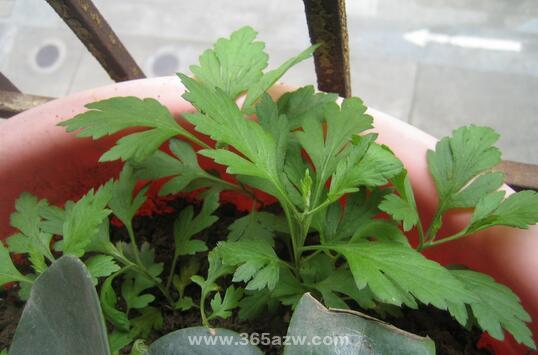
Mugwort leaves are a very familiar plant among the people. Some people use mugwort leaves to make ciba (glutinous rice cakes), and others make ai mi guo and so on. The method of boiling mugwort leaves in water has existed since ancient times. The water boiled from mugwort leaves can be drunk and can also have various other uses, such as bathing, soaking the feet and so on.
There are two ways to boil mugwort leaves in water: one uses dried mugwort leaves, and one uses fresh mugwort leaves. Generally speaking, if the mugwort water is for external use, it is recommended to use sun-dried mugwort leaves. Put the mugwort leaves into water, and after the water comes to a boil, simmer over low heat for half an hour until the flavor becomes strong. If it is to be drunk, then fresh mugwort leaves can be used, following the same method. The main effects of mugwort water are to warm the meridians and disperse cold; after being stir-fried it has a bleeding-stopping effect, and used externally it can remove cold-dampness. Mugwort water has existed since ancient times, and is especially a method that many elderly people trust very much, which shows that mugwort water has its unique effects.
How to eat mugwort
Mugwort qingtuan (green rice balls)
Ingredients:
An appropriate amount of mugwort leaves, 200 g glutinous rice flour, 100 g rice flour, an appropriate amount of peanuts, an appropriate amount of white sesame seeds, an appropriate amount of sesame seeds, an appropriate amount of lard (rendered), an appropriate amount of white sugar.
Method:
(1) Fresh mugwort leaves, keep the leaves and remove the stems, blanch in boiling water and then scoop out;
(2) Cut into small sections, add an appropriate amount of water and blend into a paste with a food processor;
(3) Prepare the glutinous rice flour and rice flour and place them in a large basin, add the mugwort paste and an appropriate amount of sugar water (sugar boiled with water until dissolved, then left to cool), knead into a smooth dough, and roll into a long strip;
(4) Cut into equal small portions with a small knife, take one portion and shape it into a circle, and wrap the filling inside;
(5) Pinch the opening closed and shape into a round raw piece;
(6) Place on a lotus leaf;
(7) Dip the surface in water and dot with toasted black sesame seeds;
(8) Place in a steaming pot that is already releasing steam for 15 minutes and it is ready.
Mugwort Qingming guo
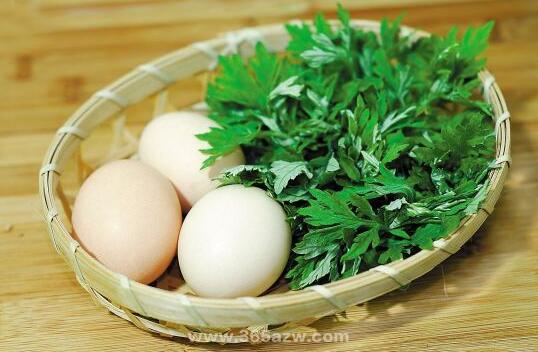
Ingredients:
Rice flour, glutinous rice flour, mugwort leaves.
Method:
(1) Cut the savory filling into dice, season well and stir-fry in oil until cooked.
(2) Blanch the mugwort leaves in hot water, press out the bitter juice, and rinse with cold water. Repeat the above process twice.
(3) Add a little alkali, boil the mugwort until soft in boiling water, pour it together with the liquid into the rice flour and mix well.
(4) Add the glutinous rice flour and knead evenly again.
(5) Knead into a jade-green dough (cover with a wet cloth).
(6) Roll into a strip.
(7) Divide into small balls.
(8) Shape by pinching.
(9) The round ones are sweet filling, and the dumpling-shaped ones are savory filling. Steam the wrapped Qingming guo over high heat for 6 to 8 minutes and they are ready.
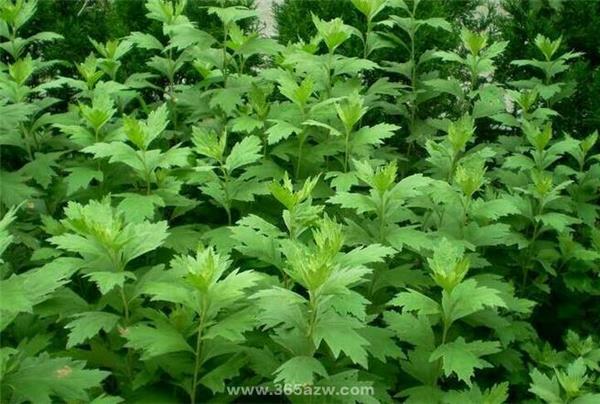
The above is a relevant introduction to the benefits and effects of mugwort. We hope it is helpful to you.