What are the pruning methods for the rubber plant? A step-by-step guide to correct pruning
The rubber plant, also known as the rubber tree, Brazilian rubber, etc., is a large tree of the genus Ficus in the mulberry family, native to Brazil, and now widely cultivated in tropical regions of Asia. It has high ornamental value and is extremely suitable for indoor decorative arrangements. Small and medium-sized plants are often used to beautify living rooms and studies, while medium and large plants are suitable for placement on both sides of the entrance halls of large buildings and in the center of lobbies. Let's take a look together at the pruning methods for the rubber plant!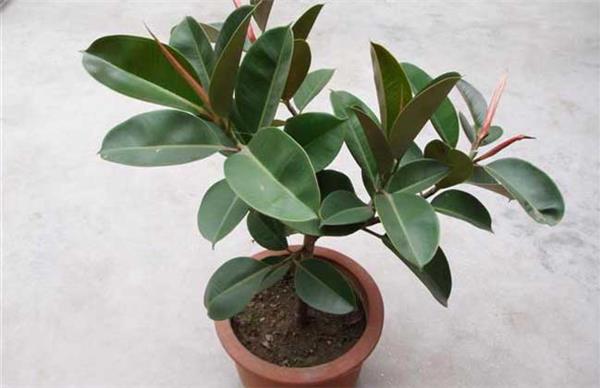
Pruning season for the rubber plant
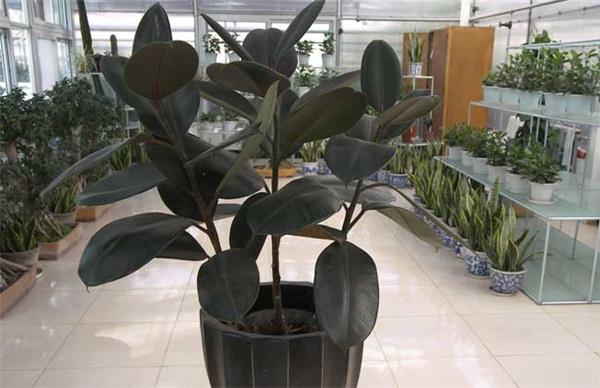
Pruning the rubber plant should pay attention to "pruning branches in winter, controlling side branches in summer". That is, in winter, heavily prune strong trees and lightly prune weak trees, focusing on removing upright, strong competing branches from the base. For summer pruning of the rubber plant, heavily control strong vigorous branches, control the strong and keep the weak, adjust the tree's vigor to a balanced state, and master the principles of tipping strong side branches, heavily pruning strong branches, lightly pruning weak branches, and keeping more small branches, so as to achieve the pruning goals of highlighting the trunk and promoting faster tree growth.
Pruning height for the rubber plant
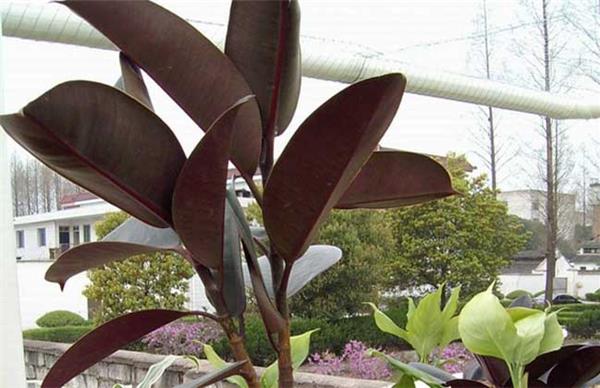
The pruning cut on the rubber plant should be smooth, and splitting of the bark must be strictly prevented. A stubble height of 1-2 cm is appropriate. Too high or too low will affect wound healing and tree growth. The best pruning seasons for the rubber plant are early spring or late autumn and winter. In early spring, it is best before sap flow begins. If pruned when the tree is sprouting, the tree body transpires quickly, loses water, and consumes more nutrients, which is not conducive to tree growth. If pruning the rubber plant in summer, be careful not to prune branches on cloudy and rainy days, so as to avoid the wounds being soaked in water and infected with disease.
Pruning techniques for the rubber plant
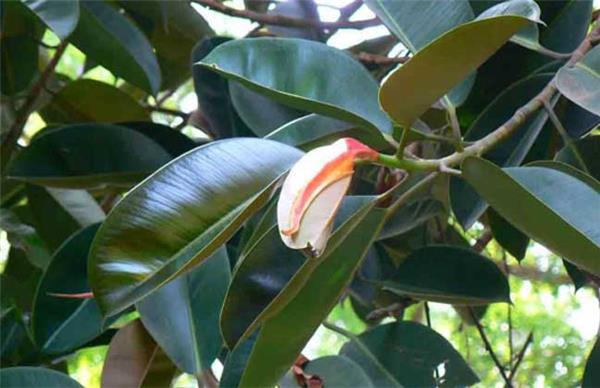
In the shaping and pruning of the rubber plant, it is sometimes also necessary to highlight the growth of the trunk or main branches, and to thin out overly dense branches or branches that affect the shape. Commonly used shaping and pruning methods to highlight the trunk and main branches include bud rubbing and branch thinning. That is, remove buds that have just begun to sprout, to achieve the purpose of suppressing side branch growth. The principle is to eliminate side branch growth in the bud stage, so that nutrients are concentrated to supply the growth of the main branches. That is, use pruning shears to cut off branches from the base. This is often used to thin out overly dense branches. Branch thinning is a remedial measure for bud rubbing, that is, because bud rubbing was not timely, side branches have already formed, and in order to strengthen the growth of the trunk or meet shaping needs, some superfluous side branches are thinned out.
Pruning and care for the rubber plant
After pruning the rubber plant, in order to prevent excessive loss of latex from the cut and affect survival, the wound should be promptly coated with plant ash. Insert the prepared cuttings into a cutting bed with river sand or vermiculite as the substrate. After insertion, keep the cutting bed at relatively high humidity, and frequently sprinkle water on the ground (but do not let it accumulate), to increase air humidity. At a temperature of 18-25°C and under semi-shaded conditions, roots can form in about 2-3 weeks.
The above are the pruning methods for the rubber plant shared with you by the editor. We hope it is helpful for your cultivation of the rubber plant!