What to Do When Oxalis Leaves Turn Yellow? Cause Analysis and Solutions
Oxalis is a herbaceous plant. During cultivation, yellowing leaves often occur. How should this situation be handled?

Oxalis is a perennial herb, with sparse soft hairs all over; the stem is creeping or ascending, much branched. The leaves are alternate, palmately compound with 3 leaflets, obcordate, and the leaflets are sessile. The flowers are yellow. It likes sunny, warm and humid environments. In hot summer regions it should be given half shade. It has strong drought resistance and is not cold-tolerant. It can grow in ordinary garden soil, but grows most vigorously in sandy loam rich in humus. It has a short dormant period in summer. The whole plant is used as medicine, with effects of clearing heat and detoxifying, reducing swelling and dispersing stagnation.
Causes of Oxalis Leaves Turning Yellow
Lack of water
Oxalis likes a warm and humid environment, especially during the growing period when it needs a large amount of water, usually requiring watering once a day. If watered too little, the plant's roots and stems cannot store nutrients, and the leaves lack water. When exposed to sunlight, the water in the leaves evaporates, the plant becomes weak, and yellowing and wilting start from the leaves and spread downward until the whole plant dies.
Sun scorching or lack of light
If Oxalis is suddenly moved from a semi-shady spot into direct sunlight, it will cause leaf scorch and yellowing, and the whole plant will gradually wilt. In another case, if the plant is kept indoors with insufficient light for a long time, its leaves will also turn yellow.
Oxalis leaves turning yellow
Leaf spot disease
Leaf spot disease mainly harms the leaves, causing brown patches on the leaves, which makes the plant's leaves dry up.
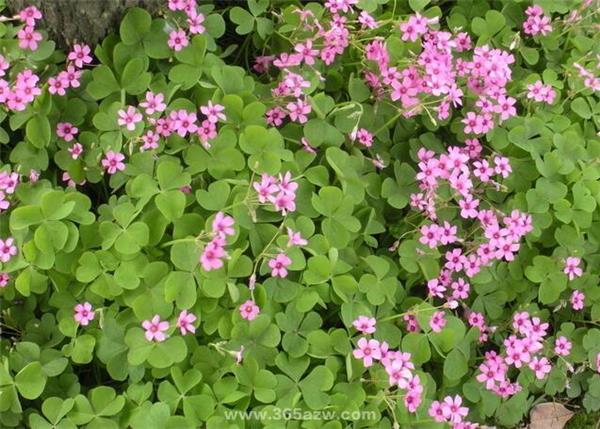
Prevention and control methods for Oxalis leaves turning yellow
Rehydrating by the soaking-pot method
Usually, the plant lacks water not because it was not watered, but because the watering method is wrong. The soaking-pot method should be used. Find a small basin, fill it with 3-4 cm of water, and place the Oxalis pot into it. Water seeps in through the drainage holes at the bottom of the flowerpot, and after about half a day, the leaves and stems will recover somewhat.
Appropriate light
Oxalis has strict requirements for sunlight; too much or too little will cause problems. Place the plant on a well-ventilated balcony, let it receive light every day, and appropriately rotate the angle of the pot to ensure even sun exposure. When the sunlight is strong, you can put a plastic bag over the flowerpot to weaken the sunlight.
Growing environment requirements for Oxalis
Chemical control
When watering and supplemental light bring no improvement, you can spray copper hydroxide suspension or benomyl solution, once every 2-3 days, and improvement will appear after 3-5 times.
Dormancy of Oxalis bulbs:
Autumn-planted varieties of Oxalis generally go dormant from April to July. During this period, if most leaves are found to be yellow, watering can be stopped. After the above-ground part completely withers, the bulbs can be lifted after another 1-2 weeks. If you do not want to lift the bulbs, that is also fine: put the pot in a shady place, keep the potting soil dry, do not water, and wait until after September to water, and the bulbs will wake up again.
7 Methods for storing Oxalis bulbs:

After the Oxalis bulbs are dug up, they need to be stored in a cool, ventilated place, letting them rest for a period, and then they will wake up on their own.
The bulbs do not need cold storage, because low temperatures will only break the bulbs' natural dormancy pattern, making them mistakenly think autumn has arrived and wake up earlier instead. But bulbs that wake up at this time are simply not suited to the high outdoor temperatures.
There are the following types of containers for storing Oxalis bulbs:
a Sealed plastic bags
Advantages: the material is transparent, making observation easy, and labels can be stuck on the bags to distinguish varieties.
Disadvantages: not breathable, but you can cut off the two bottom corners for ventilation. However, if you are storing tiny bulbs, you can poke a few small holes in the bag with a needle to help the bulbs breathe.
b Mesh bags
Advantages: attractive, breathable
Disadvantages: hard to attach labels; if the sprouts after waking are too long, they will grow into the mesh, and the sprouts are easily broken when taking them out.
c Seed bottles
Advantages: relatively intuitive, convenient for observation and labeling
Disadvantages: average breathability, and can only store smaller Oxalis bulbs.
d Handmade paper boxes
Advantages: attractive, breathable, easy to label, convenient for observation
Disadvantages: time-consuming. When you do not have many varieties, you can make them yourself and enjoy the fun of DIY.

The above is the relevant introduction to Oxalis leaves turning yellow. I hope it is helpful to you.