What are the precautions for growing Ophiopogon japonicus 'Nanus'?
Ophiopogon japonicus 'Nanus' is a perennial herbaceous plant. What problems should be noted when growing it? Let us take a look together next.
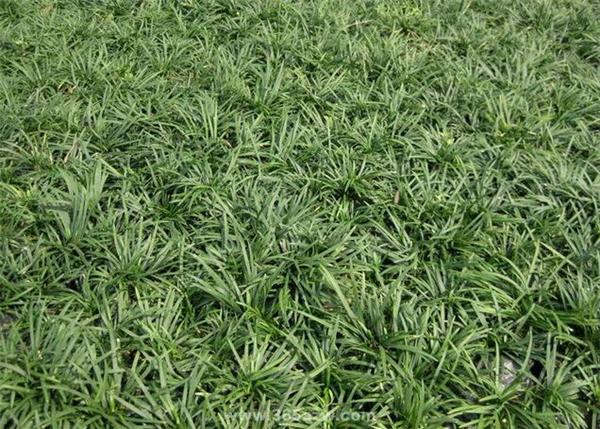
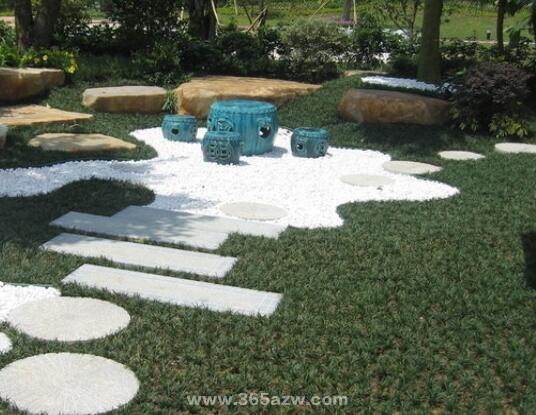
Ophiopogon japonicus 'Nanus' is a perennial herb of the genus Ophiopogon in the Liliaceae family. It has tuberous roots and a well-developed root system; the roots can reach more than 20 cm in length, are milky white and slightly thick, and there is almost no stem. The plant is short, clustering into hemispherical clumps, about 10 cm tall. The leaves are simple, tufted, 10-20 cm long and 0.2-0.3 cm wide, narrowly linear, with an acute base, a blunt tip, and rough margins, dark green, smooth on both surfaces, the lower surface more or less powdery white, with 5-7 veins. The inflorescence is a raceme, with 10 flowers per bract, the scape upright, light purple to white. The capsule is about 0.5 cm in diameter, and the seeds are dark blue. This species is a dwarf variety of Ophiopogon japonicus. There is also a white-spotted variety, Ophiopogon japonicus 'Argenteomarginatus', also known as 'Silver Dragon', whose leaves are 45-90 cm long, with many white spots running lengthwise along the veins, and the leaf surface is hairy and not smooth. It is propagated by division; dividing into units of about 3 buds each is sufficient. Because the roots are fleshy and contain nutrients and water, it does not matter if they are not planted immediately after division; they can be stored in a shaded place for about a week. It grows and multiplies rapidly, and once planted on the ground it can quickly grow into a dense, carpet-like turf, with a particularly excellent effect on soil and water conservation. It has strong shade tolerance and is more tolerant of trampling than ordinary turf, making it an excellent ground-cover planting material.
Morphological characteristics of Ophiopogon japonicus 'Nanus'
Roots and stems
Ophiopogon japonicus 'Nanus' is a perennial herb with tuberous roots and a well-developed root system; the roots can reach more than 20 cm in length, are milky white and slightly thick, and there is almost no stem. The plant is short, clustering into hemispherical clumps, about 10 cm tall.
Leaves
Ophiopogon japonicus 'Nanus' has simple, tufted leaves, 10-20 cm long and 0.2-0.3 cm wide, narrowly linear, with an acute base, a blunt tip, and rough margins, dark green, smooth on both surfaces, the lower surface more or less powdery white, with 5-7 veins.
Flowers
Ophiopogon japonicus 'Nanus' has a raceme inflorescence, with 10 flowers per bract, and an upright scape, light purple to white.
Fruit
The capsule of Ophiopogon japonicus 'Nanus' is about 0.5 cm in diameter, and the seeds are dark blue. There is also a white-spotted variety, Ophiopogon japonicus 'Argenteomarginatus', also known as 'Silver Dragon', whose leaves are 45-90 cm long, with many white spots running lengthwise along the veins, and the leaf surface is hairy and not smooth.
The flowering period of Ophiopogon japonicus 'Nanus' is May to July.
Cultivation and management of Ophiopogon japonicus 'Nanus':
Whether potted or planted in the ground, Ophiopogon japonicus 'Nanus' is relatively simple and requires no meticulous management. However, it requires a well-ventilated semi-shaded environment, and the soil should be kept moist at all times. In the dry season in the north, water should be sprayed frequently so that the leaves can be glossy green and shiny. If the air is too dry, the leaf tips often dry out.
It is not tolerant of drought and is relatively tolerant of waterlogging, but if the potting soil is waterlogged for a long time, the fleshy roots and underground stems will also rot. Because it grows rapidly, in addition to applying sufficient base fertilizer when planting, topdressing should also be done during the growing period, preferably with a liquid fertilizer once a month. Take care to remove weeds; potted plants should be placed under a shade shed in summer, avoiding direct sunlight.
In a shaded environment, the leaves of Ophiopogon japonicus 'Nanus' are emerald green. When planting in the ground, it should be planted in a shady place and under trees. Potted plants should be placed under a shade shed to avoid direct sunlight. Ophiopogon japonicus 'Nanus' has strong cold resistance; in the south it can overwinter outdoors and remain evergreen, while in the north it should be moved indoors in winter, with the temperature kept above 5°C and at the lowest not below 1°C. Although low temperatures will not freeze the root system, the leaves will turn yellow.
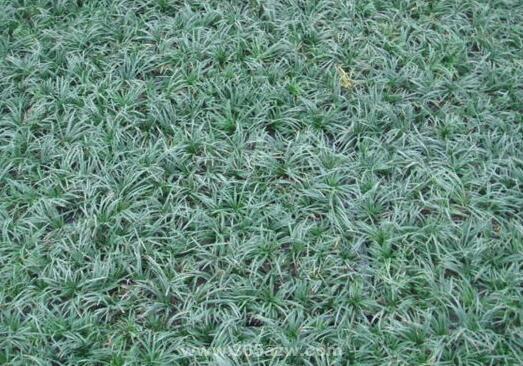
Ophiopogon japonicus 'Nanus' should be maintained in shade. Apply liquid fertilizer twice in June; no topdressing is needed in other seasons. The pot should be kept moist. In the dry season in the north, water should be sprayed frequently so that the leaves can be glossy green and shiny. For ground planting, apply organic fertilizer, water thoroughly, and frequently remove weeds and irrigate to keep the soil moist, and never let it suffer drought. However, do not water too much; especially if water accumulates during the flowering period, the underground stems and fleshy roots will also rot. In winter, potted Ophiopogon japonicus 'Nanus' can be displayed indoors or stored for overwintering in a cold room that does not freeze; at this time, watering and fertilizing should be stopped.

The above is the relevant introduction to growing Ophiopogon japonicus 'Nanus'. I hope it is helpful to you.