How to grow a Saraca dives? Introduction to Saraca dives cultivation methods
The Saraca dives is a special tree in Buddhism. Many Buddhist believers think this plant can eliminate sorrow. Next, we will introduce the cultivation methods of this tree.
Introduction to Saraca dives
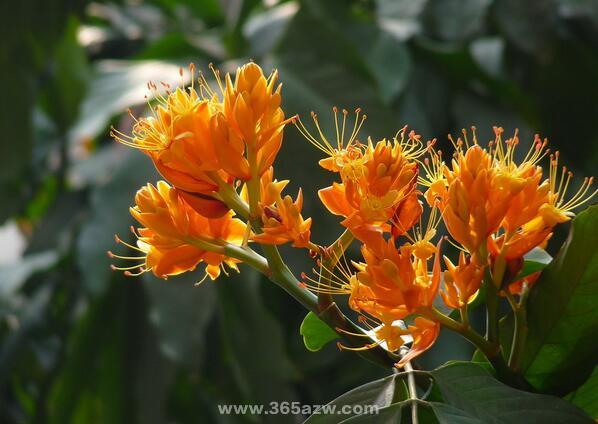
A rare tree from Buddhist legend, with pinnate compound leaves. The petioles are so soft that they cannot support the leaflets, so the young leaves hang down, and on closer look they resemble a purple Buddhist monk's robe soaked by rain. It blooms every year from March to May. When in bloom, flowers cover the trunk and thin branches everywhere, and the torch-like golden inflorescences cover the entire crown, looking like a golden pagoda from afar.
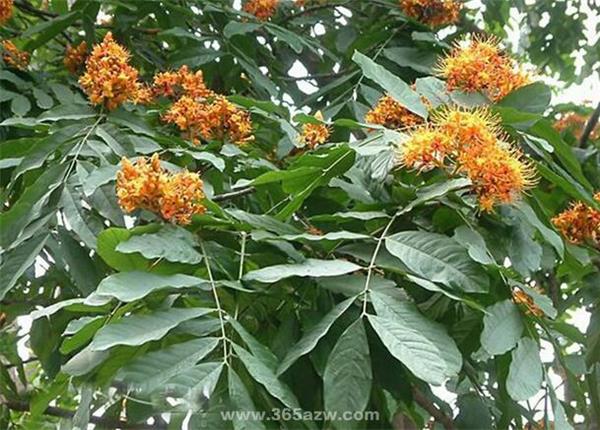
The flowers of Saraca dives look like four petals, but are actually the calyx, as the petals have degenerated. The leaves are pinnately compound with three to six pairs, and the edges of each leaflet are wavy, 10 to 16 cm long and three to four cm wide. When it blooms, the newly emerged leaves are soft and drooping, showing a beautiful red color. The seeds mature in autumn.
Hinduism regards the Saraca dives as a sacred tree. For example, among the five arrows held by Kamadeva, the god of love, one is made from the Saraca dives. People all believe this tree can eliminate sorrow, so it is called the Saraca dives.
In addition, the Kanikara tree mentioned in Buddhist scriptures is also considered another name for the Saraca dives.
Culture related to Saraca dives
On January 17, 1986, Prince Norodom Sihanouk, Chairman of Democratic Kampuchea, and his wife Princess Monique Sihanouk personally planted a Saraca dives. It is said that at that time Cambodia was in the midst of continuous war, and the people were living in dire suffering. Prince Sihanouk planted this Saraca dives to express his wish that the Cambodian people could live and work in peace and enjoy a carefree life.
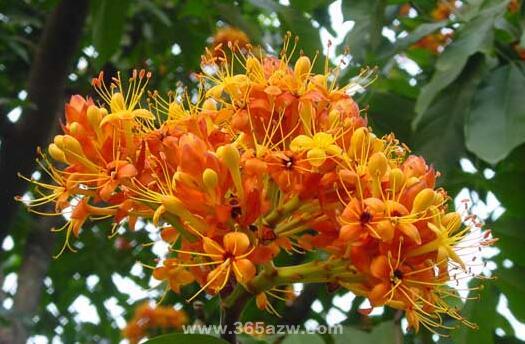
The Saraca dives is a beautiful flowering tree. Its flowers are crimson red, and when in full bloom they are like clusters of flames, dazzling to the eye. It is suitable as a main landscape feature in gardens, for avenue trees and urban street trees, and is a garden tree species that combines greening, beautification and color enhancement. It can also be widely used for greening and planting in courtyards.
Cultivation techniques for Saraca dives
Seed propagation
It is commonly propagated by sowing seeds. The thousand-seed weight is about 400 grams. The seed coat absorbs water with difficulty, so the seeds need to be treated with warm water at 80°C to promote germination; after cooling naturally, continue soaking for 24 hours, then drain and set aside. Sow by the drill method. Seedlings are relatively sensitive to frost. A compound fertilizer can be applied early, with less nitrogen fertilizer. Fertilization should stop after early autumn to promote early lignification.
When 2-year-old seedlings are 50-60 cm tall, they can be lifted from the nursery and planted out in the field. If the planting site is somewhat acidic, lime should be applied in layers when preparing the land to neutralize the acidity. Before planting, apply decomposed barnyard manure or sieved waste as base fertilizer. After planting, water thoroughly and set up a support stake. During the vigorous growth period in spring and summer, apply nitrogen fertilizer once a month, and stop fertilizing after early autumn to help the seedlings overwinter and resist cold. After the trunk has formed, pay attention to pruning and shaping, and appropriately control its growth to cultivate a beautiful crown. Large 3-4-year-old seedlings can be cultivated and lifted from the nursery for landscaping use, and they rarely suffer from pests and diseases. After flowering, prune and shape once, but do not prune heavily or severely; keep the old branches so they can bloom again the next year.
Propagation methods
Propagation by cuttings, sowing or air layering is all suitable in spring.
It is commonly propagated by sowing. The seeds mature in August and should not be exposed to the sun or piled up for fermentation. It is best to sow them as soon as they are collected, as they do not store well. If stored in moist sand, the germination capacity can be maintained for half a year. Spring to summer is the suitable sowing period, and the suitable germination temperature for the seeds is 24-28°C. They begin to germinate in late September. After germination, the seedlings overwinter in the sand bed, and attention should be paid to cold protection. Move the seedlings after the weather warms in the following spring.
The above is the relevant introduction to Saraca dives cultivation. I hope it is helpful to you.