What are the effects and actions of Chinese arborvitae (Platycladus orientalis) leaves?
The leaves of the Chinese arborvitae tree are very effective for certain diseases of the body. What are the effects and actions of Chinese arborvitae leaves? Next, we will introduce them in detail for everyone.
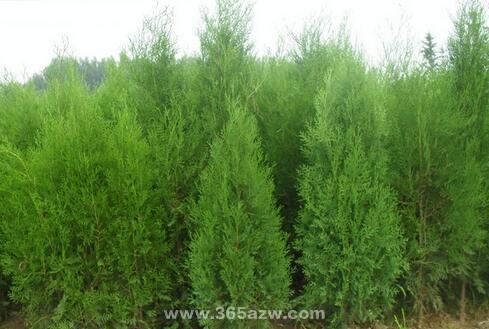
Chinese arborvitae leaves are the tender branches and leaves of Platycladus orientalis, a plant of the Cupressaceae family. On the surface, the leaves can be seen growing opposite each other, and the cross-section is yellow-white. The texture is loose and brittle, easily broken. It has a slight fragrance and a bitter, astringent taste. It is one of the hemostatic medicines, with effects such as stopping bleeding, darkening the hair and beard, and relieving cough and asthma.
Chinese arborvitae leaves can treat hair loss and white hair, so how do you use Chinese arborvitae leaves to wash your hair?
1. First, you need to make sure whether what you are using is genuine Chinese arborvitae leaves. If possible, it is best to use wild ones; the artificially cultivated kind in parks has very little medicinal effect.
2. With this method, it is best to keep your hair short.
3. When using them, try to remove the branch parts of the Chinese arborvitae leaves and use only the leaves.
4. You can first boil the water, then soak the Chinese arborvitae leaves in the hot water. Do not boil the Chinese arborvitae leaves in water again. Wait until the water clears and cools to a warm temperature, then wash your hair.
As long as you persist over the long term, the results will definitely be visible.
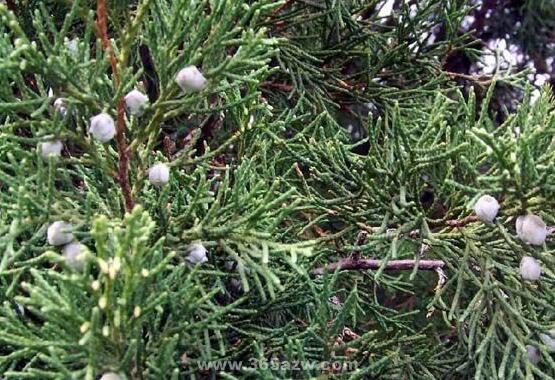
Chinese arborvitae leaves are the tender branches and leaves of Platycladus orientalis, a plant of the Cupressaceae family. The medicinal material Chinese arborvitae leaves is mostly branched, small and of varying lengths, and scale-like. The color is reddish-brown. On the surface, the leaves can be seen growing opposite each other, and the cross-section is yellow-white. The texture is loose and brittle, easily broken. It has a slight fragrance and a bitter, astringent taste. It is one of the hemostatic medicines, with effects such as stopping bleeding, darkening the hair and beard, and relieving cough and asthma.
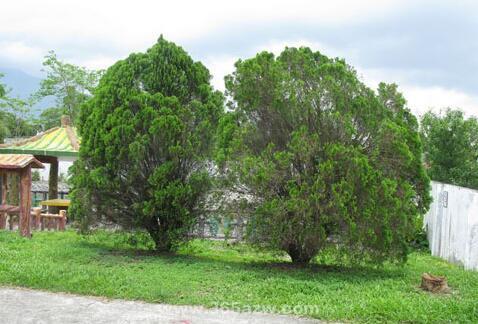
The effects and actions of Chinese arborvitae leaves
1. Functions and indications
Cools the blood, stops bleeding, dispels wind-dampness, and dissipates swelling and toxins. Treats vomiting blood, nosebleeds, blood in the urine, bloody dysentery, intestinal wind, abnormal uterine bleeding, wind-dampness arthralgia, bacillary dysentery, hypertension, cough, erysipelas, mumps, and scalds.
2. Treating baldness
Soak fresh Chinese arborvitae leaves in 60% alcohol. After 7 days, filter out the medicinal liquid and apply it to the areas of hair loss, 3 times daily. After treatment, hair growth was seen in all cases. If continuous application can be maintained and the drug concentration appropriately increased, hair growth can become denser, and at the same time the hair is less likely to fall out.
3. Treating whooping cough
Use 1 liang of fresh Chinese arborvitae leaves (including young branches), add water and decoct into 100 milliliters, then add 20 milliliters of honey. If dried material is used, decoct each liang into 150 milliliters, and add another 30 milliliters of honey. Dosage: 10 to 15 milliliters each time for those under 1 year old, 15 to 30 milliliters for 1 to 3 years old, and 30 to 50 milliliters for those over 4 years old, all taken 3 times daily. Take continuously for 1 to 3 weeks according to the needs of the condition. The earlier the treatment, the higher the efficacy and the shorter the course of treatment. When preparing this medicine, a preservative may be added as appropriate; otherwise, after more than 4 days it will turn sour or produce white foam. Fresh Chinese arborvitae generally has a better effect.
4. Treating pulmonary tuberculosis
1. Intravenous drip: Add 20 to 30 milliliters of 100% Chinese arborvitae leaf injection to 150 milliliters of 10% glucose solution, and finish the drip in about 1 hour;
2. Intravenous injection: Add 20 to 30 milliliters of 100% Chinese arborvitae leaf injection to 30 milliliters of 10% glucose solution, and complete the injection in about 15 minutes. After more than 1 month of treatment in 64 patients, 9 cases were clinically cured, 6 cases markedly improved, 32 cases improved, 12 cases showed no change, and 5 cases worsened. The course of treatment is generally 2 months. It has a relatively good effect on fresh tuberculosis lesions and the infiltrative stage, and a relatively poor effect on old tuberculosis and thick-walled fibrous cavitary type. No toxic reactions were observed during use.
5. Treating chronic bronchitis
Take 3700 grams of Chinese arborvitae leaves, decoct in water and concentrate into a thick paste at a 1:2 ratio; separately grind 300 grams of Chinese arborvitae leaves into fine powder, mix it into the thick paste, dry it, and press it into tablets, each tablet weighing 0.5 grams. Take 4 tablets each time, 3 times daily, after meals, for 10 consecutive days as one course of treatment. Alternatively, use 1.5 liang each of Chinese arborvitae leaves and Gnaphalium affine (that is, cudweed) to make tablets, and take them in three divided doses after meals each day, for 10 consecutive days as one course of treatment. Side effects include upper abdominal discomfort, abdominal distension, nausea, vomiting, poor appetite, dry throat, dizziness, and so on. They do not require management and can disappear on their own within a short time. A small number of patients experienced itchy rash or swelling of the eyelids, face, and lower limbs, which may be a drug allergic reaction and disappeared on its own after stopping the medication.
The above is a relevant introduction to the effects and actions of Chinese arborvitae leaves. We hope it is helpful to you.