How to Grow Melaleuca leucadendra? Detailed Guide to Cultivation Methods and Precautions
Melaleuca leucadendra is a plant with a distinctive shape. What should be noted when cultivating Melaleuca leucadendra? Here is a detailed introduction for everyone.
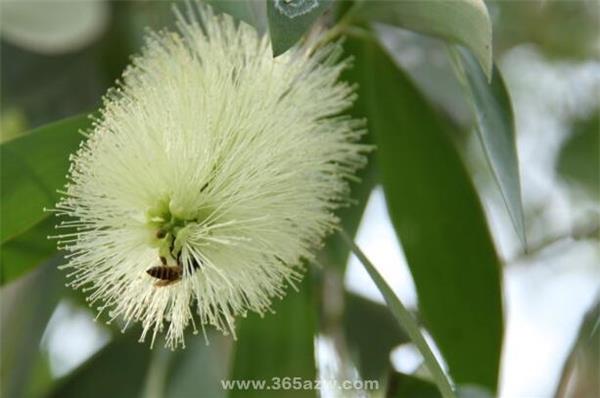
Melaleuca leucadendra is an utterly fascinating tree, its bark layered one sheet upon another, as if it were about to shed old clothes and change into new ones. Melaleuca leucadendra can be written on, and can even be used as an eraser. The flowers of Melaleuca leucadendra are also peculiar, the blossoms covering the whole tree like thousands upon thousands of little brushes.
Melaleuca leucadendra really deserves its name, meaning "thousand-layered white." First, its appearance matches: it has thousands upon thousands of layers of bark that never finish peeling. Second, Melaleuca leucadendra offers us many insights; it inspires us to be tolerant and magnanimous, and it also guides us to pursue simplicity and beauty.
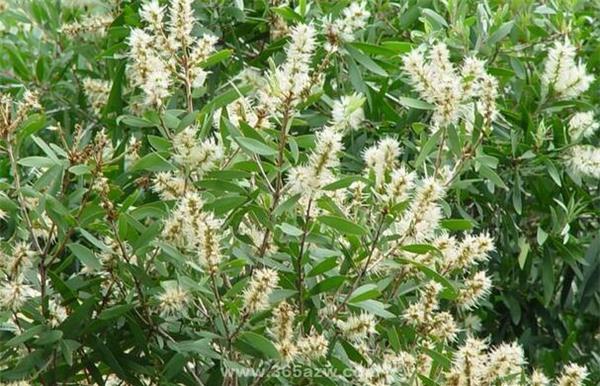
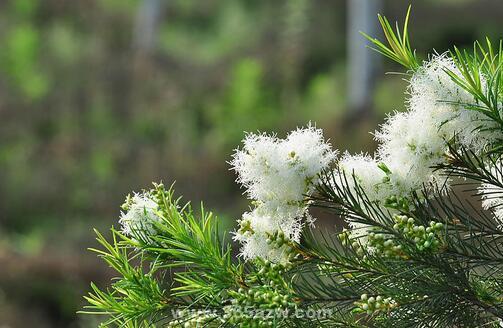
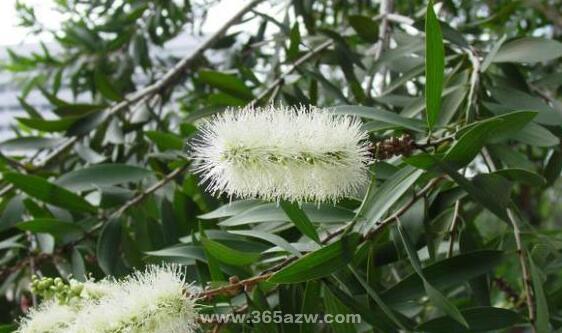
Evergreen tree, bark grayish-white, thick and spongy. Leaves simple, alternate, long elliptic-lanceolate, 5-15 cm long, entire, with 5-7 parallel longitudinal veins. Flowers milky white, stamens united into 5 bundles, each bundle with 5-8 filaments, terminal spikes, 6-12 cm long. Flowering period January to February. Native to Australia, highly adaptable, able to withstand both drought and waterlogging, cultivated in South China, mostly used as street trees and shelterbelt species. The branches and leaves can be used to extract aromatic oil, for medicinal use and as a preservative.
Cultivation Methods for Melaleuca leucadendra
Key Points for Cultivation
1. Light-loving: maintain in full sunlight
2. Water-loving but afraid of waterlogging: do not water if the potting soil is not dry; when watering, water thoroughly
3. Fertilizer-loving: for top dressing, you can make your own liquid fertilizer, take the supernatant and dilute with water to water the plant, applying light fertilizer frequently.
4. The placement position should be fixed; do not move it back and forth, nor expose it to unsettled cloudy and sunny conditions.
Potted Plant Management
For bonsai, few saplings are needed; you can propagate them yourself by cuttings. The detailed method is: in the growing season, cut robust terminal branches, 8-10 cm long, let them dry slightly, then insert them into a prepared sand bed, keeping the seedbed moist; they will root after about 3 weeks. Single-leaf cuttings can also be used: after cutting the leaf, let it dry and insert it into the sand bed; it will root after 4 weeks. When the roots are 2-3 cm long, they can be potted.
Potting Soil Preparation
Use clean sandy loam mixed with an appropriate amount of sterilized humus soil, and blend in nitrogen, phosphorus and potassium fertilizers, but not too much, to avoid excessively lush growth that makes it hard for the bonsai pot to contain.
Careful Management
First, water at the right times. During the long dry season, water 2-3 times a week to keep the potting soil moist. In the rainy season with high temperatures, watering must be strictly controlled. After autumn, growth gradually slows, temperatures gradually drop, evaporation gradually decreases, and watering can be gradually reduced.
Second, when planted outdoors, guard against prolonged rain washing and poor drainage, otherwise excessive water accumulation at the roots can easily cause root rot and death.
Third, move it out in summer and in in winter, out early and in late, and take care to prevent freezing. In northern regions, from October to April of the following year, the weather is cold, and Melaleuca leucadendra bonsai should be moved indoors or into a greenhouse for care; from May to September it can be moved outdoors. In southern provinces, winter daytime temperatures are relatively high, so it can be moved outdoors, but there will be frost at night, so it should be moved back indoors.
Fourth, pay attention to ventilation and light. If Melaleuca leucadendra is kept for a long time in a dark place without air circulation, the leaves will turn yellow and drop. It should be placed in a semi-shaded, ventilated spot for care.
That is all for today's introduction to Melaleuca leucadendra cultivation methods. I hope everyone enjoys today's article.