Detailed Guide to the Cultivation Methods and Precautions for the Chestnut Rose
What issues should be noted when cultivating the chestnut rose? Here is an introduction for everyone.
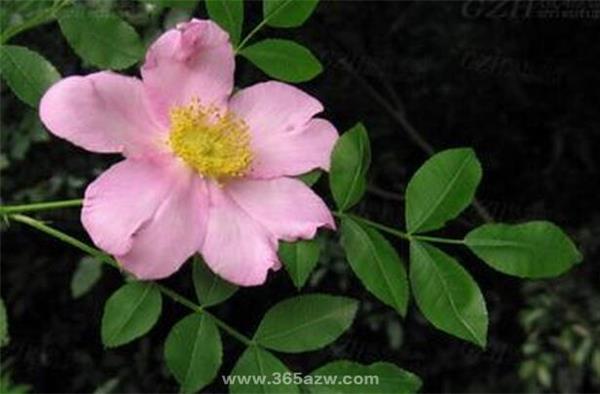
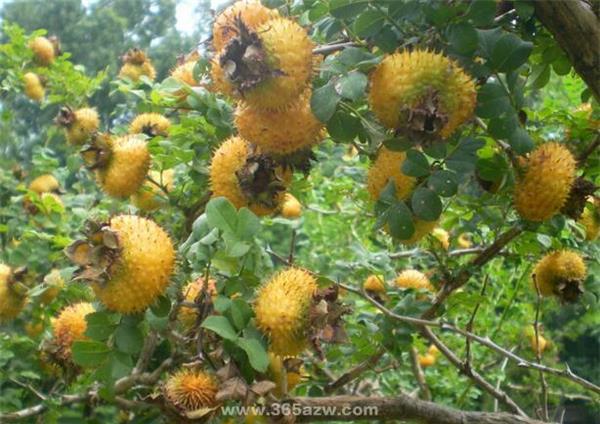
The chestnut rose, also known as cili, muli zi, cili zi, etc., is a spreading shrub in the genus Rosa of the family Rosaceae. Its flowers are elegant and beautiful, with a ring of golden-yellow anthers densely set among the pink petals, making it very distinctive. Its yellow thorns are quite wild in charm, and it has high ornamental value. It is suitable for clump planting for greening on slopes and roadsides, and is also used as a hedge material.
Propagation methods of the chestnut rose
1. Sowing: The chestnut rose usually has its seeds collected in September, and can be sown in autumn or stored in sand until spring sowing the following year. Generally, germination occurs 20-25 days after sowing. Seeds can be used for raising seedlings, but because seed cultivation is relatively difficult for survival, it is generally not recommended to use seeds for cultivation. In production, softwood cuttings from the current year are mostly used for raising seedlings, as they root easily. Rare and valuable varieties are more difficult to root from cuttings.
2. Cuttings: Cuttings of the chestnut rose can be taken in early spring or during the plum rain season. Using softwood cuttings from the current year makes it easy to root seedlings. After cutting, be sure to keep the cutting medium in a moist state, but do not let it become overly wet, otherwise it will cause rot. At the same time, attention should also be paid to air humidity; plastic film can be used to cover and maintain humidity, but ventilation must be provided within a certain period.
Cultivation methods of the chestnut rose
1. Light: The chestnut rose likes a warm environment with sufficient sunlight, and can tolerate cold and shade. Therefore, when cultivating the chestnut rose, it should be given sufficient light and kept at a suitable growing temperature.
2. Watering: During maintenance, the chestnut rose needs to be ensured sufficient water, but note that during summer drought it should be given plenty of water. During the flowering period, sufficient water supply should also be ensured so that it can bloom abundantly and beautifully. In the rainy season, pay attention and do good drainage work; do not allow waterlogging, so as to avoid root and stem rot.
3. Fertilizing: In order for the chestnut rose to grow healthily, sufficient fertilizer and water must be ensured. During the comfortable growing period, it needs frequent fertilizing, and it can be fertilized once a month. When the temperature is higher and it is relatively dry, some light fertilizer can be applied. In winter, reduce fertilizing. In addition, after flowering, one or two applications of quick-acting fertilizer can be given.
4. Pruning: Pruning is essential. Whether it is pruning overlong branches, overly dense branches, dead branches, diseased branches, spent flowers, or excess buds, it is all very necessary. Pruning can make the chestnut rose's plant shape more attractive and help with ventilation and light penetration, so that the plant grows and develops better, reduces some opportunities for pests and diseases, lowers nutrient consumption, and leads to better flowering.
Pest and disease control of the chestnut rose
1. Powdery mildew: Leaves, petioles, young shoots, and flower buds can all be affected. In the early stage of the disease, spray 20% triadimefon emulsifiable concentrate at 1000 times dilution, or 20% triadimefon-sulfur suspension concentrate at 1000 times dilution, or 50% carbendazim wettable powder at 800 times dilution. If resistance to the above fungicides develops, switch to spraying 12.5% myclobutanil emulsifiable concentrate or 30% triflumizole wettable powder at 3000 times dilution. Before budding in early spring, spray lime sulfur mixture at 2-3 degrees Baume or 45% crystalline lime sulfur at 40-50 times dilution to kill overwintering pathogens.
2. Black spot: Black spot mainly attacks the leaves, petioles, and young shoots of the chestnut rose. When the leaves are initially affected, small purple-brown to brown spots appear on the upper surface, and after expanding they are mostly round or irregular dark brown lesions. When black spot occurs on the chestnut rose, pesticides such as carbendazim, thiophanate-methyl, and daconil can be sprayed.
3. Anthracnose: Anthracnose mostly occurs sporadically and can be controlled at the same time when preventing and treating black spot and leaf spot. In late autumn and early winter, clean the garden in time, collect diseased fallen leaves, and burn them in a centralized manner. Strengthen maintenance, prune appropriately, and thin out overly dense branches to ensure good ventilation and light penetration. When necessary, spray 20% longkejun suspension concentrate at 500 times dilution, or 78% kebo wettable powder at 600 times dilution, 75% daconil wettable powder at 600 times dilution, 50% shibaogong or shibaike wettable powder at 1000 times dilution, or 25% tanteling wettable powder at 500 times dilution.
4. Scarab beetles: Scarab beetles mainly damage roots, leaves, flower buds, and other parts, seriously affecting flower yield and quality. Use light trapping, poplar and willow trapping, shaking off and catching, etc. When the damage is severe, spray 2.5% deltamethrin at 2000-3000 times dilution or 50% phoxim at 1000-1500 times dilution. The effects are all relatively good, but it must never be sprayed during the flowering period.
5. Leaf rust: Leaf rust is a common disease of the chestnut rose, and both leaves and new branches may be affected. Severe cases can cause large-scale leaf drop, causing the ornamental plant to lose its ornamental value, or even die. If this disease is found, it should be treated promptly. Triadimefon at 800 times dilution can be sprayed on the leaves once a week for 3-4 consecutive treatments, and the disease can basically be cured.
The above is the relevant introduction to chestnut rose cultivation. I hope everyone will enjoy the article shared today.
The above is the relevant introduction to chestnut rose cultivation. I hope everyone will enjoy the article shared today.