How to Grow String of Pearls? A Detailed Guide to Cultivation Methods
String of Pearls is a succulent plant with a particularly distinctive shape that is deeply loved by people and is mostly grown as an ornamental plant. What issues should be noted when growing String of Pearls? Next, we will introduce them in detail.
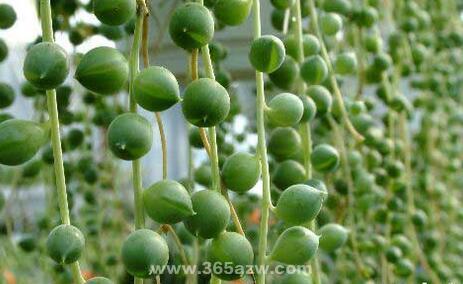
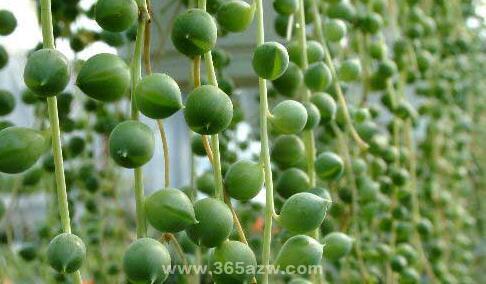
String of Pearls is also called String of Beads, Green Bell, String of Bells, Green String Plant, etc. It is a perennial evergreen creeping fleshy herbaceous plant. The stems are slender, and the whole plant is covered with white powdery bloom. The leaves are alternate, relatively sparse, heart-shaped, dark green, thick and juicy, and very much like beads, hence the elegant names Buddha Beads, Green Grapes, and Green Bell. The capitulum is terminal, 3-4 cm long, curved hook-shaped, with flowers white to light brown. Flowering period: December to January of the following year.
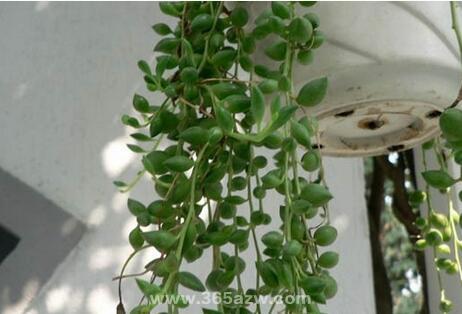
String of Pearls is very peculiar. It does not have leaves like ordinary flowers; instead, on its thin vines, small emerald-green balls grow at intervals, just like strings of green pearls, making it very endearing. According to records, String of Pearls is also called Green String of Beads. It is a cactus-type plant and can root when touching soil. The leaves are heart-shaped and dark green, thick and juicy, and very much like beads, hence the elegant names Buddha Beads, Green Grapes, and Green Bell. Planting String of Pearls in a small pot and placing it on a table makes it crystal-clear and lovely, while hanging or trailing cultivation is elegant and unique. It both decorates and beautifies the indoor environment and adjusts people's mood.
String of Pearls propagation methods:
(1) Cuttings: Carry out from April to June or in autumn. Cut 6-8 cm long stem sections with leaves, with the stem tip being the best, place them in a cool place to dry for 12 days, and after the cut surface is dry, insert them obliquely into the substrate or lay them flat on the substrate. After insertion, keep the room temperature at 15-22°C, semi-shade, and moisture. After 2-3 weeks, they can take root and survive. Because the plant is not tolerant of high temperature and heat, it is not suitable to take cuttings in summer; otherwise, the cuttings are very likely to rot and cause cutting failure.
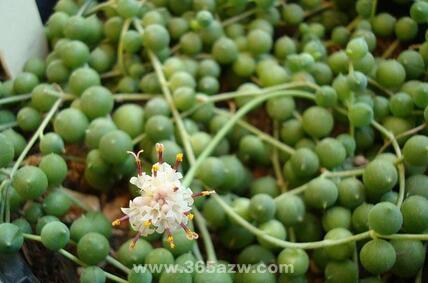
(2) Division: Usually carried out in spring together with repotting. Stems and vines lying across the pot surface easily produce adventitious roots. Branches that have rooted can be cut off and planted to become new plants.
Key points for growing and caring for String of Pearls
(1) Temperature: It likes a climate with warm winters and cool summers. The most suitable temperature for growth is 15-28°C. It is slightly cold-tolerant and can overwinter above 0°C, but in winter it is best to keep it above 5°C. It is also not tolerant of high temperature. When the weather is hot in summer, the plant grows poorly and enters semi-dormancy. Measures such as shading, spraying water on the leaves, and strengthening ventilation should be taken to create a relatively cool environment.
(2) Light: It likes semi-shade and avoids direct strong sunlight. From May to September, shading should be provided, or the plant should be placed in a place with sufficient scattered light. At other times, it needs sufficient sunlight.
(3) Watering: Because the leaves are fleshy, it has a relatively strong drought tolerance. It avoids excessive moisture and waterlogging. Too much watering or poor drainage will make the potting soil too wet and easily cause root rot. During the spring and autumn growing seasons, watering should follow the principle of alternating dry and wet, preferring dry over wet. In summer, watering should be reduced to avoid the potting soil becoming too wet; when it is stuffy and hot and also wet, root rot is very likely. In winter, watering should be controlled even more, keeping the potting soil relatively dry.
(4) Fertilizing: It does not need much fertilizer, so fertilizing should not be excessive. Usually in April, when the plant has just started growing, apply 1 topdressing mainly of nitrogen fertilizer to promote the growth of branches and leaves. May to June is the period when the plant grows best and fastest, so 1-2 more topdressings mainly of nitrogen fertilizer should be applied. In summer, the plant grows slowly, so fertilizing should be stopped. In autumn, after the weather turns cool, although the plant begins to grow rapidly again, because winter is already near, in order to improve the plant's cold resistance, nitrogen fertilizer should be stopped and 12 applications of phosphorus and potassium fertilizer should be applied. During winter dormancy, fertilizing should be stopped.
(5) Pruning: When the trailing branches and vines become too long, they can be cut short to encourage new branches to sprout. Every spring, withered and yellowed stems and leaves should be cut off.
(6) Potting and repotting: Because the root system is shallow, the plant is small, and it is not tolerant of moisture, the flower pot should be small and somewhat shallow. If the pot is large and holds a lot of soil, the potting soil will remain moist for a long time after watering, which can easily lead to root rot. Generally, for pot cultivation, flower pots with a diameter of 8-10 cm can be used, planting 3-5 plants per pot; for hanging pots, use flower pots with a diameter of 12-15 cm, planting 5-7 plants per pot. Newly potted plants should not be watered too much, otherwise the roots will easily rot. Repotting is needed once every 1-2 years. It likes fertile, loose, and well-drained loam. The substrate can be prepared from materials such as leaf mold, peat soil, garden soil, and coarse sand. Because the root system is relatively shallow, when potting, more broken brick crumbs and broken pot pieces should be placed at the bottom of the pot as a drainage layer.
(7) Pest and disease control: There are harmful pests and diseases such as root rot, powdery mildew, and whiteflies.
The above is the relevant introduction to String of Pearls. We hope it is helpful to you.