Cultivation Methods and Care Tips for Mahonia
Mahonia is a traditional Chinese medicinal plant. What issues should be noted when cultivating Mahonia? Next, we will introduce them in detail for everyone.
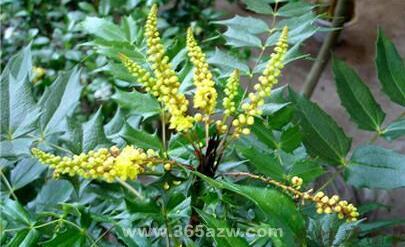
Morphological Characteristics of Mahonia
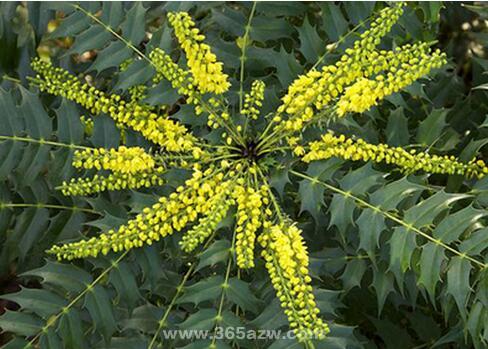
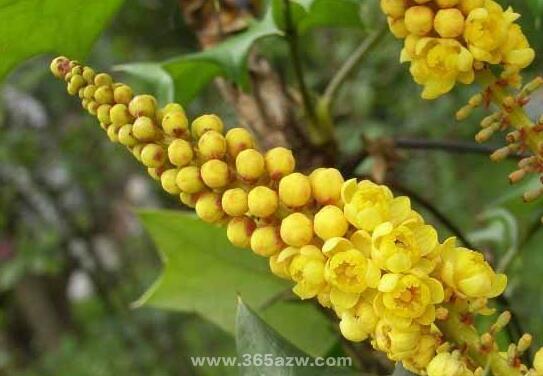
Mahonia can reach up to 4 m in height, usually within 2 m; leaves are obovate to obovate-lanceolate; flowering period is July-September; 4-10 racemes are clustered, flowers are yellow, inflorescence length is 3-7 cm; pedicels are 2-2.5 mm long; fruiting period is September-November; berries are spherical, 4-6 mm in diameter, purple-black, with a layer of white powder on the outside.
Growth Habits of Mahonia
Mahonia is a warm temperate plant with strong cold resistance and does not tolerate summer heat. It prefers a warm and humid climate, is robust, shade-tolerant, and avoids exposure to scorching sun. It has a certain degree of cold resistance and is also relatively drought-resistant. In its place of origin, it mostly grows in shady and damp canyons and under forests, and is a shade plant. It prefers acidic humus soil with good drainage, is extremely intolerant of alkaline soil, and fears waterlogging.
Propagation Methods of Mahonia
Seed Sowing and Seedling Raising
Wild Mahonia is becoming increasingly scarce. This method is used in garden nursery production when a large number of seedlings are propagated. For seed sowing and seedling raising of Mahonia, the main things to master are the seed collection time, seed treatment method, thickness of soil covering after sowing, and careful management after sowing.
In May, when the fruits are ripe, pick the oval berries, pile them up briefly, then mix and rub them with fine sand, or soak the seeds in warm water, rinse off the fruit peel, pulp, and empty shriveled seeds, then remove the plump seeds, dry them in the shade, place them in a cloth bag, and hang them in a cool, ventilated, dry place for storage. After winter begins, store the seeds in sand at low temperature until the following spring, sow in March, cover with 1-2 cm of soil after sowing, water thoroughly, and place in a semi-shaded place. They germinate in about 1 month. It is also possible to sow directly after seed treatment is completed, sowing in a semi-shaded environment in rows in the seedbed, covering with 3~5 cm of soil.
The suitable temperature for seed germination is 15-25°C, and germination and emergence can occur in about 50 d. The seedbed should be level, the soil particles should be fine and crumbly, and furrows should be opened for sowing. First-year seedlings can generally reach 8~10 cm in height. During overwintering, slight cold protection is needed, and they should remain in the bed for another year of cultivation. Only in the 2nd year can they be transplanted with increased spacing. Seedlings generally need to be cultivated for 4-5 years before they can bloom and bear fruit.
Cuttage
For small-scale propagation, cuttage can be used. Hardwood cuttage is suitable from February to March, and from May to June, semi-hardwood branches can be used for cuttage. Cut 1-2-year-old robust branches into cuttings about 15 cm long, insert 2/3 into a sandy loam seedbed, keep the seedbed moist, begin building a shade frame in May, and spray water every day on sunny days to maintain moisture. Roots can form about 2 months after insertion. Softwood cuttage can be carried out during the plum rain season. Select fully developed current-year branches, or use one-year-old branches, 15~20 cm long. Keep the seedbed temperature at 25~30°C. Roots can form after one month, and the survival rate can reach more than 90%. If the branches are treated with a rooting agent, the rooting rate can reach more than 90%.
Division
Division can be carried out from mid-October to mid-November or from late February to late March, and can also be done in combination with spring repotting. Dig up clustered plants grown in the ground, or remove large clustered potted plants from the flowerpot, cut or tear apart from the weak part where the rhizome joins, with each cluster carrying 2-3 stems and a portion of intact roots. After slightly pruning the leaves, plant them in the ground or pot them.
Rapid Propagation
With the expansion of the production scale of Chinese patent medicines, the demand for Mahonia plants is increasing day by day, and wild Mahonia is facing a serious resource shortage. Mahonia is usually propagated asexually, so rapid propagation of Mahonia through biotechnological means and achieving large-scale production will be an effective way to resolve this contradiction. It has certain reference value for carrying out research on artificial propagation of Mahonia and will provide a basic theoretical basis for the rapid propagation of Mahonia.
The Effects and Functions of Mahonia:
1. Antibacterial effect: A 25% water decoction of Mahonia bealei has a mild inhibitory effect in vitro on Staphylococcus aureus, Escherichia coli, and Pseudomonas aeruginosa.
2. Alkaloids such as jatrorrhizine thiocyanate, tetrahydrojatrorrhizine-N-methyl thiocyanate, and palmatine thiocyanate can promote the spontaneous movement of isolated intestinal segments at low concentrations (0.001-0.002%), and at high concentrations (above 0.01%) can cause increased tension and inhibited movement. On isolated frog hearts, jatrorrhizine first inhibits and then excites, while palmatine causes mild excitation. On anesthetized rabbits,
3. Stabilizing blood pressure: Intravenous injection of these alkaloids can cause a temporary or mild decrease in blood pressure. There is no obvious effect on the blood vessels of the hind limbs of toads. Their hypotensive effect seems unrelated to the central nervous system (no blood pressure reduction occurs when injected into the vertebral artery, and the pressor reflex caused by blocking carotid artery blood flow and occluding the trachea is unaffected), and it is also unaffected by atropine, but it can inhibit the pressor effect of adrenaline.
4. Anti-cancer: In a screening test for anti-cancer activity in vivo using Ehrlich ascites carcinoma, it was found that the component isosinomenine contained in it has an anti-cancer effect.
5. Others: It has no effect on the sciatic nerve, gastrocnemius muscle specimens, body temperature, blood sugar, etc., and does not cause hemolysis. Mahonia japonica contains berberine; for its effects, see Coptis chinensis.
That is all for today's introduction to Mahonia. We hope everyone will enjoy the content of today's article.
That is all for today's introduction to Mahonia. We hope everyone will enjoy the content of today's article.