What are the cultivation methods and precautions for Fatsia japonica?
Fatsia japonica is called "eight-horned golden plate" because its shape has eight corners. This article summarizes the cultivation methods for Fatsia japonica and analyzes common problems in cultivating it, which you can use as a reference.
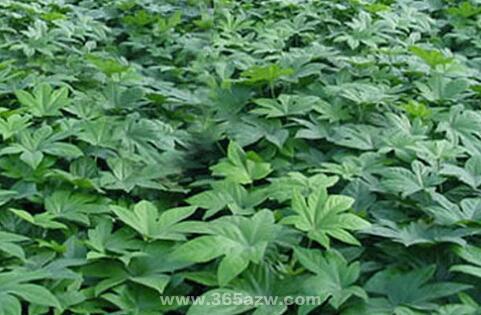
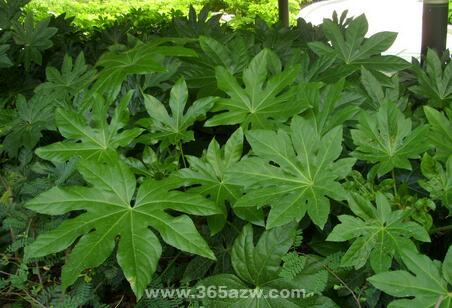
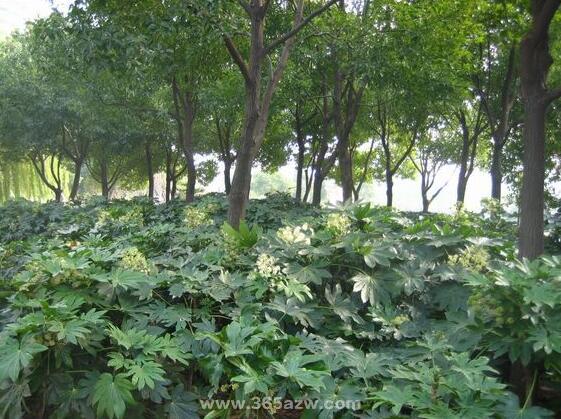
Fatsia japonica, as the name suggests, refers to its palm-shaped leaves, which have about 8 lobes and appear to have 8 corners. Its foliage is glossy and green in all four seasons, and the leaves look like green palms. It is shade-tolerant, often planted in gardens beside rockeries or large trees, and can also be used as a foliage plant indoors, in halls and meeting venues.
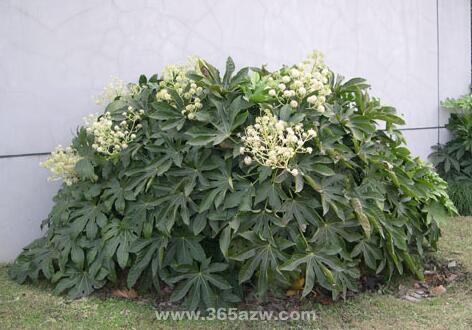
The flowering period of Fatsia japonica is generally between summer and autumn, and some can continue until late autumn and early winter. The flowers are white and borne in terminal conical cymes; as one batch fades another opens, making it very ornamental. After flowering, it produces black berries containing seeds. Fatsia japonica is a strongly shade-loving plant, evergreen in all four seasons, and can be kept indoors for viewing year-round.
Characteristics
Evergreen shrub, 4-5 m tall, often with multiple stems clustered together. Leaves large, palm-shaped, with five to seven deep lobes; lobes oblong-elliptic, base heart-shaped or wedge-shaped, glossy, margins serrated or wavy. Petioles long, enlarged at the base. Flowers from October to November, white, in umbels arranged into terminal panicles. Fruits ripen in late April of the following year; berries nearly spherical, purple-black, covered with white outside.
Propagation methods: Fatsia japonica is mainly propagated by sowing, cuttings, and division. For sowing, harvest seeds in late April, pile them until ripe, wash them clean with water, and sow immediately after harvesting, but the germination rate is relatively low. Cuttings are taken from March to April, using sandy soil as the substrate; select two- to three-year-old branches, cut the base into 15 cm lengths, insert 2/3 into the soil, press firm, water thoroughly, keep the soil moist, build a shade frame, and strengthen management; the survival rate is relatively high. Cuttings taken in June-July root quickly, but management is difficult. Division is carried out in combination with repotting in spring: take the plant out of the pot, trim the rotten root system, divide the original plant into several plants, plant them into suitable pots, and place them in a ventilated and cool place for care; after 2-3 weeks they can be returned to normal management. For propagation by division, divide and plant immediately to improve the survival rate.
Temperature and light: The optimal growth temperature for Fatsia japonica is 18-25°C. When the temperature reaches above 35°C, if ventilation is poor, the leaf margins of Fatsia japonica will scorch and wither. The overwintering temperature for Fatsia japonica is preferably 7-8°C, and must not be lower than 3°C, so as to avoid freezing damage to the plant. Potted Fatsia japonica is shade-tolerant, and it is best placed in a humid, well-ventilated semi-shaded area inside a shed, avoiding direct sunlight. Especially in summer, appropriate shading should be provided to avoid yellowing of the leaf surface and even scorching of the leaves.
Soil: Fatsia japonica is native to warm coastal mountain forests in Japan. For potted Fatsia japonica, a culture soil mixed from humus soil, peat soil, a small amount of fine sand, and base fertilizer can be used, generally planting in 12-20 cm pots. Fatsia japonica can grow luxuriantly in well-drained, fertile, slightly acidic loam, and it can also adapt to neutral soil.
Watering: During the new leaf growth period of Fatsia japonica, the amount of watering can be appropriately increased, keeping the soil moist at all times. Its plant leaves are large, so water evaporation is also great. Especially in midsummer, the potting soil is best kept on the moist side, and watering in the morning and evening should be sufficient. When the air is too dry, water should also be sprayed on the leaves and around the plant to keep the air humid and prevent the leaves from turning yellow or falling off. During the rest of the growing period, watering should follow the principle of watering when dry and stopping when wet. In winter, the frequency of watering should be reduced to improve its cold resistance.
Fertilization: Summer and autumn are the peak growing seasons for Fatsia japonica. It is best to apply a sufficient amount of fertilizer once every half month. Fertilization can use dilute decomposed cake fertilizer water or human manure and urine. When fertilizing, the potting soil is best kept slightly dry, so as to facilitate sufficient absorption of nutrients by the plant and good growth.
Repotting: When cultivating Fatsia japonica, it is advisable to repot every year, usually from March to April each year. When repotting, first place a layer of base fertilizer at the bottom of the pot, and combine repotting with appropriate pruning to remove excess or poorly growing roots, so as to maintain the graceful plant shape of Fatsia japonica. If you do not want to keep seeds when cultivating Fatsia japonica, you can cut off the flower stalks immediately after flowering to reduce nutrient consumption.
Precautions
1. Causes of yellow-brown spots on Fatsia japonica leaves
Through observation, we found yellow-brown spots on the leaves, petioles, and stems of Fatsia japonica. The lesions on the leaves were round, then expanded into irregular large patches. After reaching a certain number, the leaves began to curl and wither. At the same time, we also found that the spots were contagious, and the Fatsia japonica beside the diseased plants were also infected with spots. Through observation, consulting materials, and asking experts, we learned that the Fatsia japonica had anthracnose.
2. Small insects on Fatsia japonica
During field observation, we found small red insects on the backs of Fatsia japonica leaves. Through investigation and verification, we believe these are scale insects. Scale insects pierce and suck sap on the backs of leaves and at petioles, causing damage. Affected plants have shallow leaf color, appearing yellow-green. The secretions of scale insects can cause sooty mold, reducing ornamental value.
3. Causes of drooping leaves in Fatsia japonica
For various reasons, Fatsia japonica leaves can droop. The possible causes of drooping leaves in Fatsia japonica are introduced below:
1. The potting soil is too dry, causing leaves to droop. Because Fatsia japonica is not drought-tolerant, keeping the potting soil moist is key. But you should also follow the rule of not watering when the surface soil is not dry, and watering when the surface soil just begins to look white.
2. The potting soil is too wet, causing root rot. You can take the plant out of the pot, remove the soil, cut off the rotten root system, replace with new soil and replant, water thoroughly, and place it in a cool place.
3. Fertilizer is too concentrated, causing root burn. Take the plant out of the pot, wash the roots with clean water, rinse continuously several times, then soak the roots in clean water. After the leaves recover, replace with new soil and replant.
That is all for today's introduction to Fatsia japonica cultivation methods. I hope it is helpful to you.
Appearing yellow-green. The secretions of scale insects can cause sooty mold, reducing ornamental value.3. Causes of drooping leaves in Fatsia japonica
For various reasons, Fatsia japonica leaves can droop. The possible causes of drooping leaves in Fatsia japonica are introduced below:
1. The potting soil is too dry, causing leaves to droop. Because Fatsia japonica is not drought-tolerant, keeping the potting soil moist is key. But you should also follow the rule of not watering when the surface soil is not dry, and watering when the surface soil just begins to look white.
2. The potting soil is too wet, causing root rot. You can take the plant out of the pot, remove the soil, cut off the rotten root system, replace with new soil and replant, water thoroughly, and place it in a cool place.
3. Fertilizer is too concentrated, causing root burn. Take the plant out of the pot, wash the roots with clean water, rinse continuously several times, then soak the roots in clean water. After the leaves recover, replace with new soil and replant.
That is all for today's introduction to Fatsia japonica cultivation methods. I hope it is helpful to you.