How to grow Ruby Crabapple? Detailed guide to cultivation methods
Ruby Crabapple is a common deciduous tree, mostly planted as a landscaping plant. What issues should be noted when growing Ruby Crabapple? Here is a detailed introduction for everyone.

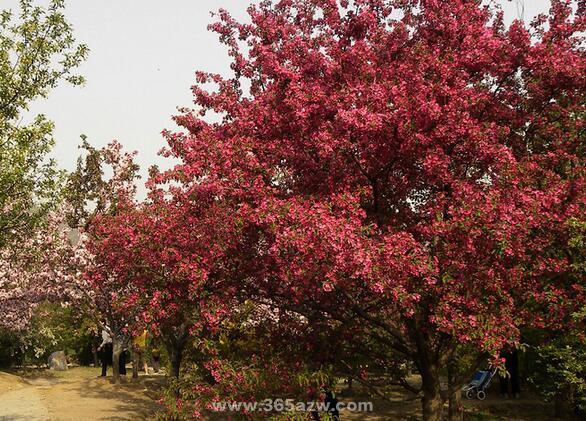
Ruby Crabapple is a deciduous shrub or small tree, a greening and color-enhancing tree species whose leaves, flowers, fruit, branches and tree shape can all be enjoyed together. With its graceful tree shape and rich, varied ornamental effect, this species has become a rare colored urban greening tree in the country today.
Characteristics of Ruby Crabapple
Ruby Crabapple is widely used in gardens, tourist sightseeing parks and other places, mainly playing a role in beautifying the environment. Its whole-body brilliant red color forms a landscape of its own, with an excellent ornamental effect. Moreover, Ruby Crabapple has outstanding characteristics and is an excellent colored-leaf variety for urban planting.
1. Good color perception
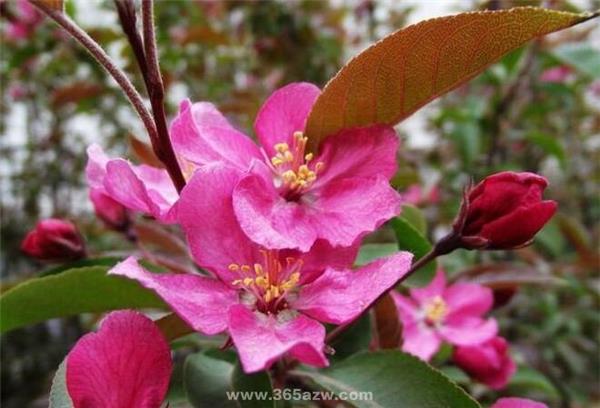
Throughout its entire growth period, Ruby Crabapple shows a whole-body red state, and the red is layered distinctly. Its new buds are blood-red, the branches are bright red, the leaves are purple-red, the fruit is also purple-red, and the flowers are pink. The whole plant has good color perception and a waxy luster.
2. Strong adaptability
Ruby Crabapple has very strong adaptability and can grow well even in poor soil; it is tolerant of mild salinity and alkalinity, and can still grow vigorously below a pH value of 8.5; it is also cold-resistant and easy to prune and shape.
3. Easy propagation
Ruby Crabapple is generally propagated by sowing and grafting, and the grafting time is flexible, as it can be done in spring, summer or autumn.
4. Simple planting
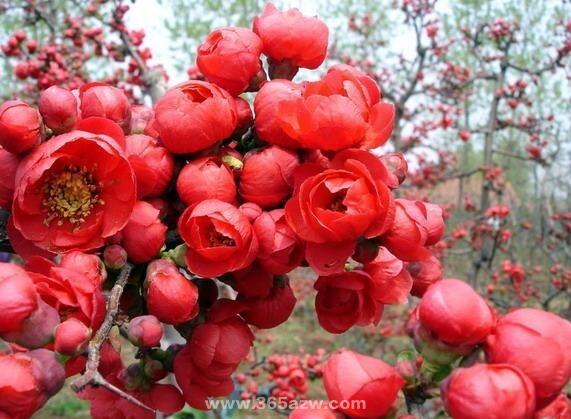
Ruby Crabapple has strong adaptability and does not have great requirements for soil, water, sunlight, fertilizer or temperature. Generally, as long as it is planted in the soil and given some water, it can survive.
Cultivation methods for Ruby Crabapple
Ruby Crabapple is generally planted in the ground, and can also be grown in pots to make bonsai. Plant in spring; because it dislikes waterlogging, it should be planted in a slightly elevated, sunny place that does not easily accumulate water. The soil should be neutral to slightly alkaline, with a pH value not lower than 7. The soil quality should be loose, but not overly fertile, as overly fertile soil easily causes excessive vegetative growth and reduces flowering. The planting hole should be determined according to the size of the root system, and should not be too deep or too large; it is best if the root system can spread out. The planting depth should be about 10 cm from the ground. It is best to plant with a soil ball.
Ruby Crabapple is suitable for growing in an environment with sufficient light, and grows poorly in shaded environments. If grown in a pot, it should be placed in a well-lit place during the growing season. In winter, it will not suffer cold damage even at a low temperature of -15°C, and can overwinter outdoors in the open ground. However, in exceptionally cold winters, cold protection measures need to be taken.
Watering and fertilizing
Watering and fertilizing for Ruby Crabapple cultivation are carried out together. After leaf fall each autumn, apply 1 heavy fertilizing to replenish the nutrients consumed by flowers and fruit, preferably with decomposed organic fertilizer. At the same time, combine this with winter irrigation. Before the spring buds sprout, apply 1 application of organic fertilizer and water once thoroughly. The fertilization method in autumn and winter varies with tree age: for young trees, apply fertilizer in a ring-shaped trench, with the ring within 100 cm of the tree root; for older trees, dig radial trenches for fertilizing; for old trees, combine with inter-row weeding and broadcast organic fertilizer under the canopy, then turn the fertilizer into the ground 30 cm deep. After the flowers fade, apply phosphorus and potassium fertilizer 2 times as a top dressing to ensure a certain fruit set rate. At the same time, pay attention to watering.
Shaping and pruning
Ruby Crabapple buds are mostly formed by differentiation of terminal buds, and medium and short fruit branches are the main flowering branches, so medium and short fruit branches should be retained. Long branches should be shortened, and at the same time overly dense branches, dead branches, and diseased and pest-infested branches should be cut off, then prune according to the desired tree shape. If you want a full and rounded canopy, thin out where dense and preserve where sparse, cutting away overly dense branches, while for areas with sparse branches, cut downward to encourage more lateral branches and fill the gaps.
Precautions for cultivating Ruby Crabapple
1. After planting Ruby Crabapple, a water-retaining ring about 20 cm high should be made at the outer edge of the planting hole, and water should be poured inside it.
2. The water must be applied thoroughly in one go, to the extent that it no longer seeps down immediately. After watering, the soil sinks, so soil must be added and leveled. When frequent watering is no longer needed, remove the water-retaining ring and bank the ring's soil around the root zone of the Ruby Crabapple plant.
3. When the Ruby Crabapple planting stock arrives at the site, if it cannot all be planted the same day, the roots must be covered. If it cannot be planted in place for the time being, the soil ball can be heeled in upright, and the soil ball's wrapping material need not be removed. Unless the weather is dry, watering is generally not necessary.
That is all for the introduction to Ruby Crabapple today. I hope everyone will enjoy the content of today's article.
I hope everyone will enjoy the content of today's article.