What is the flower language of grape hyacinth? A detailed guide to growing it
Grape hyacinth is a special plant. What issues should be noted when growing grape hyacinth? Today we will introduce them in detail for you.
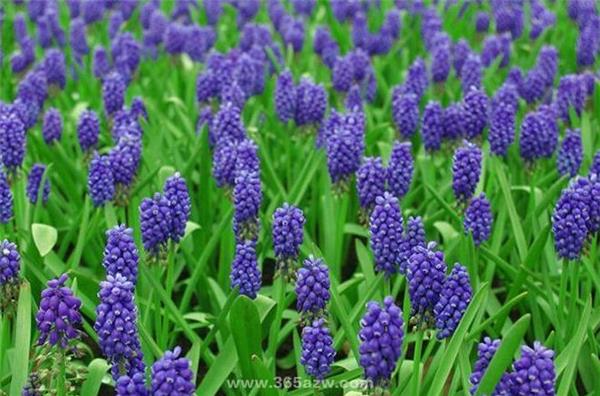
Grape hyacinth, also known as blue jug flower, grape lily, grape musk hyacinth, blue bottle flower, and grape daffodil, is an excellent flowering ground cover introduced from Europe. It is a perennial herbaceous plant of the genus Muscari in the family Liliaceae. The small bulbs are ovoid; the leaves are fuzzy, lanceolate, and tufted; the plant is short. The flower scape is 15 to 20 cm tall, with 10 to 20 small urn-shaped flowers clustered at the top. The whole inflorescence resembles a string of blue-purple grapes, elegant and refined. The flowering period is April to May. Flower colors: blue-purple, white, pink. Grape hyacinth is native to central Europe, including France, Germany and southern Poland. It prefers a warm, cool climate, likes light and also tolerates shade, with a suitable growing temperature of 15°C to 30°C, and is suitable for growing in loose, fertile, well-drained sandy loam.
Ecological habits
It is a small bulbous flower of the genus Muscari in the family Liliaceae. The plant height is 15-30 cm. Underground there is a bulb covered with a white skin, with a bulb diameter of 1-3 cm and a height of about 1.5 cm. Native to central Europe, it prefers fertile, well-drained sandy soil, tolerates partial shade, and is cold-hardy. The flower stem emerges from the leaf cluster, is cylindrical, about 15 cm long, and is densely covered with many small bell-like flowers; the pedicels droop, and the flowers are blue-purple, light blue, white, etc. The flowering period is March-May. The leaves are basal, linear, slightly fleshy, dark green, with margins often curling inward, 15-30 cm long and about 0.6 cm wide.
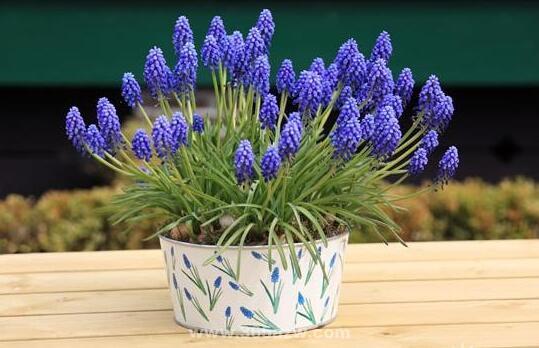
Grape hyacinth has strong adaptability and is easy to cultivate and manage. It can be transplanted at any time and can also be used for winter forcing cultivation. At the end of August, place the bulbs in a refrigerator at 6°C to 8°C for 50 days of cold storage, then take them out and place them in a cool, ventilated room. In early December, plant them in pots used for chrysanthemums, with 8 to 12 bulbs per pot. Maintain them at 15°C to 25°C, and they can bloom at New Year's Day and Spring Festival, and can be used as indoor hanging potted flowers. Grape hyacinth can be used as ground cover under trees, and can also be used for flowerbed edging or arranging flower borders, with a distinctive charm.
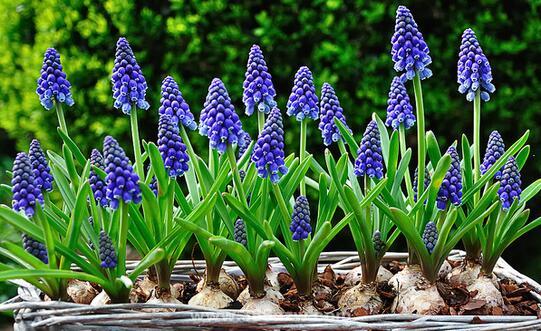
The flower language of grape hyacinth: sadness, jealousy, melancholy love
Grape hyacinth, also known as blue bottle flower, blue jug flower, musk hyacinth, and grape daffodil, is a bulbous plant of the genus Muscari in the family Hyacinthaceae. It is an excellent flowering ground cover introduced from Europe, and a perennial herbaceous plant of the genus Muscari in the family Liliaceae. The small bulbs are ovoid; the leaves are fuzzy, lanceolate, and tufted; the plant is short. The similarities and differences with hyacinth are that both hyacinth and grape hyacinth are perennial bulbous flowers of the family Hyacinthaceae, and are different varieties of the same kind of plant.
Furthermore, the two are not in the same genus botanically, yet each has a series of varieties. As ornamental flowers, they both have low plants, colorful and rich inflorescences, and strongly fragrant flowers. Under artificial cultivation conditions, they can also bloom during New Year's Day and Spring Festival, and are suitable for placement on desks, windowsills and other places for viewing. They are fashionable and novel, and can also add a festive atmosphere. In addition, landscaping departments can also plant them in large areas in the ground to arrange spring flowerbeds; brilliantly colorful, very beautiful.
Because grape hyacinth has a relatively long flowering time and strong cold resistance, it is usually mostly used to accent rocks, or as a potted plant for viewing. Because grape hyacinth has a short plant and an early flowering period, and a long blooming time, it is a good flowering ground cover under trees and is also suitable for potted viewing.
Classification of grape hyacinth varieties
Purple grape hyacinth
The color of this type of grape hyacinth is purple, the flowers are grape-like, and the flower tips are white, with blue and white alternating, very charming and moving.
Sky-blue grape hyacinth
The flowers of this type of grape hyacinth are sky blue, the flowers are relatively small and grape-like, very elegant and moving.
Phinisi grape hyacinth
This type of grape hyacinth has densely clustered small grape-like flowers; the flowers are light blue and slightly reflective silver, producing a dreamlike color.
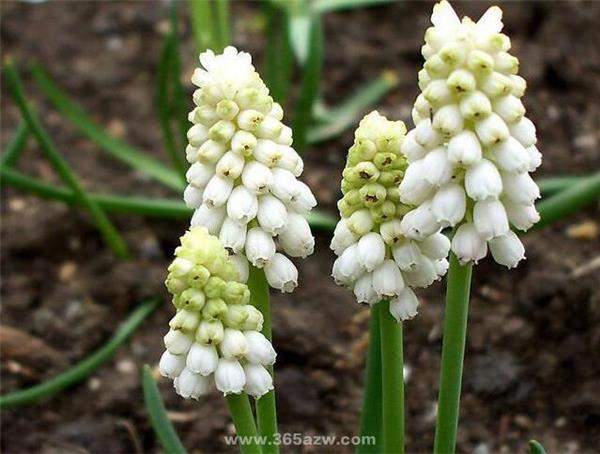
White grape hyacinth
This type of grape hyacinth belongs to the white-flowered variety; its plant is short, the flowers are white, shaped like a bunch of grapes, and the floral fragrance is fresh and elegant.
White Beauty grape hyacinth
This type of grape hyacinth also belongs to the white-flowered variety; its leaves are strap-shaped, and the flowers are small grape-like blooms. They complement the green stems and branches beautifully.
The above is the relevant introduction to grape hyacinth. I hope it is helpful to you.