How to grow a billbergia? Detailed guide to cultivation methods
Billbergia nutans is a flower variety introduced from abroad, with gorgeous blooms that are deeply loved by people. What should be noted when growing Billbergia nutans? Here is a detailed introduction for everyone.
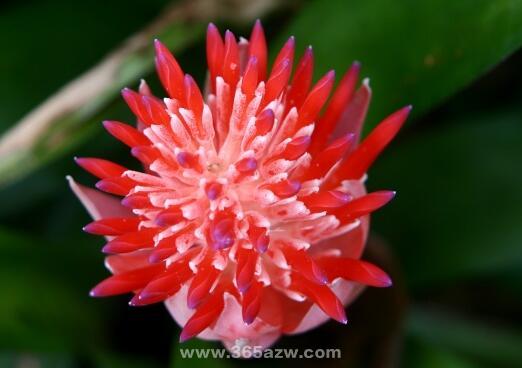
Billbergia nutans is native to South America. The leaves are sword-shaped, hard in texture, with fine teeth. The inflorescence is slender, a spike, with several large rose-red bracts. It is relatively cold-tolerant and can withstand short periods of 2°C low temperatures. Generally, after 3 years of cultivation or when the plant's bulb diameter exceeds 8 cm, it can bloom and bear fruit. Seeds can be collected for sowing and propagation, with a high germination rate and easy management of young plants, making it suitable for potted ornamental display.
Billbergia nutans belongs to the genus Billbergia in the Bromeliaceae family. It is a perennial evergreen herbaceous plant, a small bromeliad, often growing in clusters of multiple plants. The plant is rosette-shaped, composed of 12-15 leaves.
Billbergia nutans has an extremely short stem. The leaves grow in a rosette cluster, up to 50 cm long and 15 mm wide, with drooping tips and sparse small spines along the leaf margins; the flower scape is 30 cm long, with a drooping tip, bearing 4-12 flowers, hairless, with the inflorescence axis bent in a knee-like zigzag; the involucral bracts are narrow, closely appressed to the flower scape, pink to pale red; there are 3 sepals, 1.3-2.7 cm long, orange-red with blue-purple margins; 3 petals, 3.6-4 cm long, green with blue-purple margins, acute at the tip, reflexed; 6 stamens; anthers 7 mm long, protruding beyond the flower; the ovary is inferior, green, 1 cm long, with axile placentation, and the stigma is twisted. Seeds are numerous and small.
The benefits and effects of billbergia
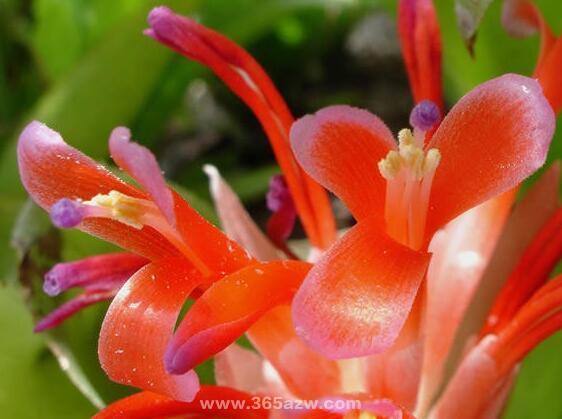
1. The billbergia is not tall, and the center of its leaf rosette is a tubular structure that often holds water inside, just like a water tower. Even when the outside temperature is at its highest, the water inside does not decrease. It is the most important water source for many insects. In addition, the billbergia's leaves are emerald green and its flowers are brightly colored and attractive, making it a highly ornamental potted flower suitable for placement on balconies or windowsills, where it can serve to decorate the space.
2. Billbergia is also a plant that can be used medicinally. The leaves of this plant contain a variety of medicinal chemical components, such as flavonoids, gums, and tannins, all in high amounts. It also contains aspartic acid, serine, and glutamic acid. These substances are natural medicinal components that can serve anti-inflammatory and disinfecting functions.
3. When the leaves of billbergia are used for their medicinal value, they are mostly used fresh, and can be directly crushed and applied to the surface of the affected area. Its greatest effect is reducing swelling and discharging pus, with a clear therapeutic effect on suppurative symptoms caused by traumatic infection in humans. It can also be used for swelling and pain caused by bruises and injuries. After poking small holes in billbergia leaves and directly bandaging them onto the injured area, it can also play a role in reducing swelling and eliminating pus.
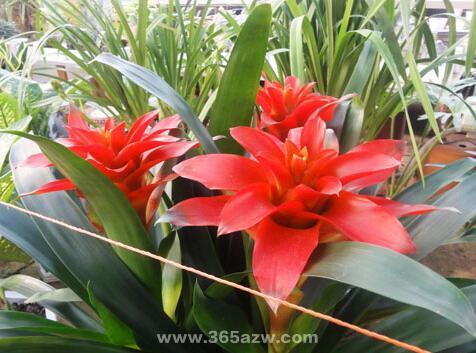
Precautions for Billbergia nutans:
Billbergia is a semi-shade flower, requiring good ventilation and preferring acidic sandy loam rich in humus with good drainage and aeration. You can use leaf mold, sphagnum moss, and garden soil mixed together, plus a small amount of bone meal as base fertilizer. During the growing season, apply a dilute liquid fertilizer once every half month. Before flowering, apply 1-2 additional applications of 0.2% potassium dihydrogen phosphate, and the flower colors will be even more striking.
Fertilization should be stopped during the flowering period, after flowering, and during the dormant period. The suitable growth temperature is 20-28°C. When the temperature exceeds 30°C in hot summer, do a good job of ventilation and cooling. In winter, keep it above 15°C and provide more light to promote robust growth.
Pest and disease control for Billbergia nutans
Generally, pests and diseases rarely occur. Only when the relative air humidity is low and ventilation is poor are red spider mites and scale insects prone to infesting and causing harm.
Common problems in cultivation
1. Withered and scorched leaf tips: ① The air is too dry; ② Insufficient watering causes the potting soil to become too dry.
2. Root rot or stem rot: Often caused by excessive watering, especially more likely to occur in winter when temperatures are low and conditions are wet and waterlogged.
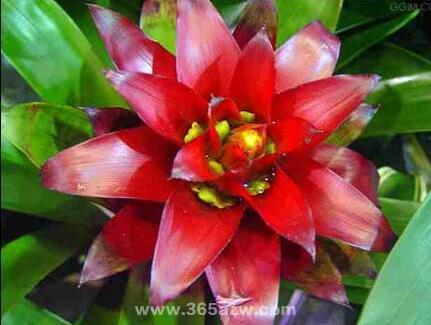
The above is the relevant introduction to Billbergia nutans. I hope it is helpful to you.