How to Grow Yellow Velvet Orchid? A Complete Guide to Care Techniques
Yellow Velvet Orchid is a plant in the orchid family. This article summarizes care techniques for the Yellow Velvet Orchid, which friends who grow it can use as a reference for caring for their own Yellow Velvet Orchid.
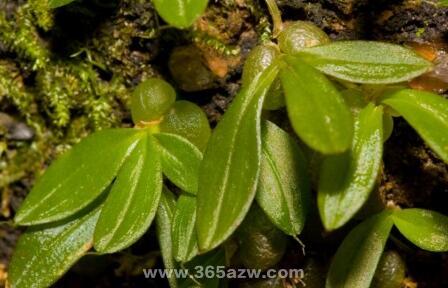
Yellow Velvet Orchid is a plant in the genus Eria of the orchid family (Orchidaceae). It has well-developed rhizomes, blooms from April to May, and fruits from August to September. It grows as an epiphyte on trees or rocks at altitudes of 800-1500 m.
Description of the Yellow Velvet Orchid's Appearance:
The rhizome is well developed, about 5 mm thick; between two pseudobulbs there are 4-5 nearly funnel-shaped membranous sheaths, which fall off when old; the pseudobulb is elliptical, slightly flattened, 2-7 cm long and 1.5-2.5 cm thick, usually with 2-3 nodes, with 2-3 membranous sheaths at the base and 3-4 leaves borne at the apex. The leaves are relatively thick, sometimes fleshy, elliptical or oblong-lanceolate, 10-24 cm long and 1-5 cm wide, acute at the apex, gradually narrowed at the base, with a joint; the petiole is about 1-1.5 cm long.
Morphological Characteristics of the Yellow Velvet Orchid
Rhizome
The Yellow Velvet Orchid has a well-developed rhizome, about 5 mm thick; between two pseudobulbs there are 4-5 nearly funnel-shaped membranous sheaths, which fall off when old; the pseudobulb is elliptical, slightly flattened, 2-7 cm long and 1.5-2.5 cm thick, usually with 2-3 nodes, with 2-3 membranous sheaths at the base and 3-4 leaves borne at the apex.
Leaves
The leaves of the Yellow Velvet Orchid are relatively thick, sometimes fleshy, elliptical or oblong-lanceolate, 10-24 cm long and 1-5 cm wide, acute at the apex, gradually narrowed at the base, with a joint; the petiole is about 1-1.5 cm long.
Flowers
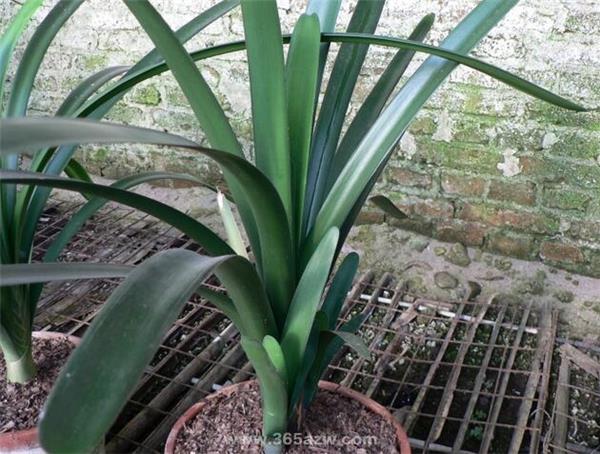
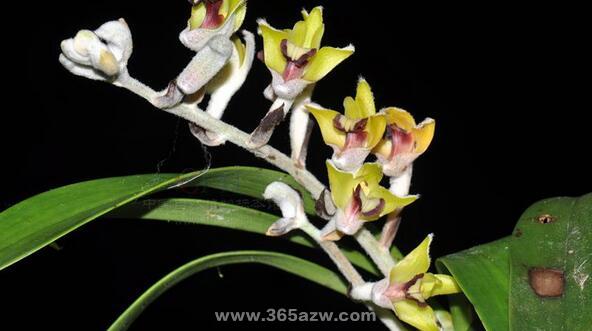
The inflorescence of the Yellow Velvet Orchid is stout, emerging from near the base of the pseudobulb, 10-30 cm long, rising above the leaves, densely covered with yellow-brown velvety hairs (the hairs become sparser when fruiting), with 6-7 funnel-shaped sheaths at the base, bearing more than 10 flowers or more; the floral bracts are ovate or ovate-lanceolate, 1.2-2 cm long, acuminate at the apex, rather densely covered with yellow-brown velvety hairs on the back and sparsely covered with short soft hairs on the upper side; the pedicel and ovary are 3-4 cm long and densely covered with yellow-brown velvety hairs; the sepals are densely covered with yellow-brown velvety hairs on the back and are slightly thick; the dorsal sepal is oblong-lanceolate, 10-15 mm long and about 3 mm wide, shortly acuminate at the apex; the lateral sepals are obliquely ovate-lanceolate, nearly as long as the dorsal sepal, 4-5 mm wide, acuminate at the apex, their bases united with the column foot to form a mentum.
Propagation Methods of the Yellow Velvet Orchid
Division Propagation
The Yellow Velvet Orchid can be divided in both spring and autumn, generally once every three years. Any plant that is growing vigorously with densely clustered pseudobulbs can be divided, and after division each clump must retain at least 5 pseudobulbs connected together. Before division, watering should be reduced so that the potting soil is fairly dry. When repotting after division, first cover the drainage hole at the bottom of the pot with broken tile pieces, then spread a layer of coarse gravel to make up 1/5 to 1/4 of the pot's depth, then add coarse-grained soil and a small amount of fine soil, and finally plant in sandy loam rich in humus. The planting depth should be such that the pseudobulbs are just buried in the soil; leave a 2 cm rim at the edge of the pot, cover the surface with Selaginella uncinata or fine gravel, and finally water thoroughly, place in a shady spot for 10-15 days, keep the soil moist, then gradually reduce watering and carry out normal care.
Pest and Disease Control for the Yellow Velvet Orchid
Sheath Rust Fungus
Usually on the upper and lower surfaces of the leaves, and less often on the stems, raised small pustules appear, containing yellow, orange, rust-colored, or even purplish-black powdery spores. Rust disease is not fatal, and the leaves will not die either, but it weakens the plant's growth. In addition to cutting off diseased leaves, the control method is to spray with a 500-600 times dilution of 65% zineb powder or a copper-containing fungicide.
Southern Blight
It mostly occurs during the rainy season. At the initial stage of the disease, the leaf bases are covered with white mycelium, causing the rhizome to rot. Control method: remove the infected potting soil and sprinkle on pentachloronitrobenzene powder or lime. Fundamental control method: pay attention to ventilation and light transmission, and ensure good drainage of the potting soil. Severely diseased plants should be burned.
Anthracnose
It occurs year-round, and is more rampant in hot, rainy seasons, with Cymbidium ensifolium being especially susceptible. The lesions first extend from the leaf tip toward the rhizome, initially brown, then gradually expand and increase, with many dry black spots appearing, and in severe cases causing the death of the whole plant. Control method: in addition to actively improving environmental conditions, during the disease period you can first spray with a 800-1500 times dilution of 50% thiophanate-methyl wettable powder, once every 7-10 days; then supplement with a 1% equal-amount Bordeaux mixture, once every half month, spraying continuously 3-5 times.
That is all for today's introduction to Yellow Velvet Orchid care techniques. I hope everyone enjoys the content shared today.