How to grow Notocactus uebelmannianus? Practical care tips shared
Notocactus uebelmannianus is a cactus-family plant and can be propagated in several ways. Here are the key points to keep in mind when growing it, introduced in detail below.
How to grow Notocactus uebelmannianus
Notocactus uebelmannianus, scientific name: Notocactus uebelmannianus, family Cactaceae, genus Notocactus. Native to Brazil. It originally belonged to the genus Notocactus (often placed in Parodia), and was only discovered in 1970. Because the whole of the genus was merged into Notocactus, its scientific name was changed to Notocactus uebelmannianus in 1998.
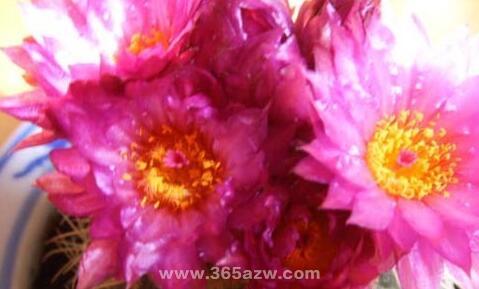
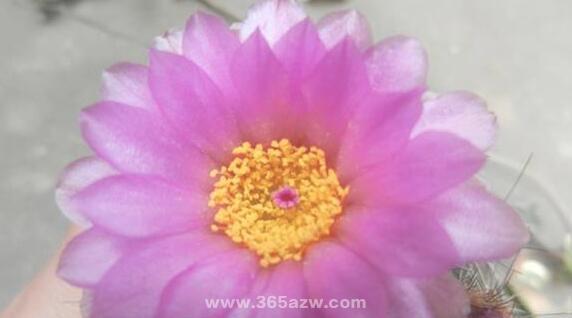
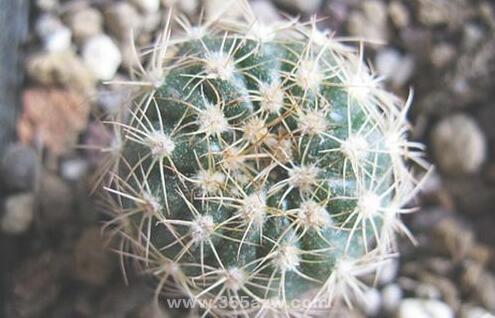
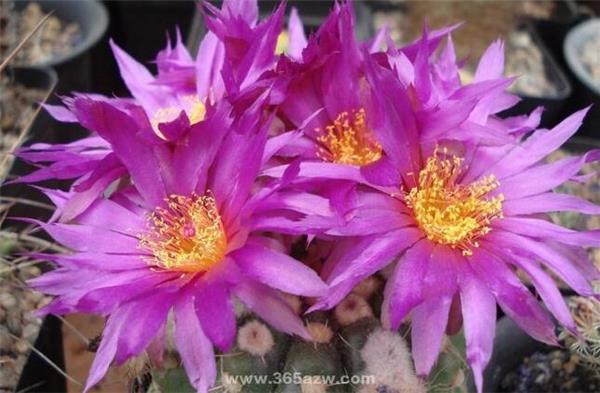
The plant is solitary, flattened spherical to spherical, with a body diameter of 8-12 cm. The epidermis is dark green and glossy, with 12-16 rounded ribs, each rib divided transversely into tubercle-like segments. It has 6-8 radiating radial spines, no central spine, white to greyish white, and some reddish brown. In spring and summer it bears apical red to purplish red, or purple, bell-shaped flowers that open in the early morning and close in the afternoon; a single flower can stay open for more than 4 days. The flowers are fairly large, 5 cm in diameter, with a silky sheen, and the floral tube has light brown wool and a few brown bristles.
This genus likes a growing environment with plenty of sunlight, but in summer, when temperatures are high, it should be shaded appropriately, and during the growing period it needs relatively high air humidity. To keep the plant body clean and attractive, it is best grown in a greenhouse, a glass case, or with the plant covered by a transparent plastic film bag. It adapts to sandy loam rich in humus and with good water permeability. In winter keep the potting soil slightly dry; it can tolerate a low temperature of 3°C.
Notocactus uebelmannianus likes a sunny growing environment and a fairly fertile, well-drained growing medium. During the growing period it needs a certain amount of air humidity. April-May each year is its period of vigorous growth; at this time it should also be given more than 2 applications of dilute liquid fertilizer, and the light should be increased as much as possible. In midsummer, shade it appropriately, and after winter begins, place the potted plant in a sunny spot indoors and keep the potting soil somewhat moist. The pot used for planting should not be too large, and the plant should be repotted and have its roots trimmed every year to prevent the lower part of the body from aging.
A seed-grown Notocactus uebelmannianus can flower when the body is still very small (3.5-4.5 cm), and the flowers produced are 4-5 cm across, so the flower is bigger than the body, and sometimes only the flower is visible and not the body. Or it gives the peculiar look of a small body with a large flower.
How Notocactus uebelmannianus is propagated
Notocactus uebelmannianus is commonly propagated by sowing and cuttings. Grafting propagation.
Sowing
Because Notocactus uebelmannianus flowers abundantly and sets fruit easily, the seeds collected can be sown the same year; the germination rate is high, and the seedlings do not grow too slowly. If the seedlings are grafted early to speed up growth, they grow quickly and can flower earlier.
Carry out in April-May; the suitable germination temperature is 20°C-24°C; they germinate 1-2 weeks after sowing, the seedlings grow fairly quickly, and by the next year the diameter can reach more than 1 cm. Cuttings: best done in spring and autumn; cut off the offsets growing beside the mother plant, let the wound dry, then insert them in a sand bed, and they can root after 25-30 days.
Grafting
Most Notocactus uebelmannianus plants do not readily produce offsets, so grafting is usually used: the top of a grafted seedling body is cut off to encourage offsets, and then the offsets are removed and grafted for propagation.
Carry out in May-June; the rootstock can be Hylocereus undatus or Opuntia, and the scion can be a two-year-old seedling or an offset growing beside the mother plant. About 15 days after grafting it can heal and take, and after surviving it grows rapidly.
Disease and pest control for Notocactus uebelmannianus
Notocactus uebelmannianus rarely suffers from pests and diseases. Sometimes root rot, anthracnose, red spider mites and other problems occur, which can be controlled according to the symptoms.
That is all for today's introduction to growing Notocactus uebelmannianus; I hope it is helpful to you.