Recommended Cultivation Methods and Tips for Golden Chestnut Orchid
Golden Chestnut Orchid is mostly cultivated artificially and grown as an indoor ornamental plant. What issues should be noted when cultivating Golden Chestnut Orchid? Here is a detailed introduction for everyone.
Ecological Habits of Golden Chestnut Orchid
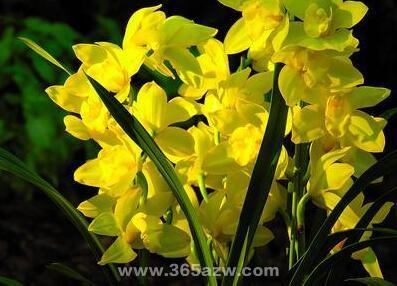
Golden Chestnut Orchid prefers warm, humid, shaded environments and fertile soil. The suitable growth temperature is 20-25°C, and in winter it should be kept above 10°C. In East China, it must be potted, and in winter it needs to overwinter in a greenhouse.
Golden Chestnut Orchid grows on hillsides and under dense forests in valleys, at an altitude of 150-990 m, but wild ones are relatively rare, and it is now mostly cultivated in various places. It prefers warm, humid and well-ventilated environments, prefers shade, and avoids scorching sun. It requires loose, fertile, humus-rich, well-drained soil.
Cultivation Techniques for Golden Chestnut Orchid
Key Cultivation Points
Water
Golden Chestnut Orchid prefers humidity. In summer, it needs watering every day, and in dry weather, it should be watered frequently on the leaf surface. In the rainy season, watering should be controlled, and waterlogging should be avoided. When it rains, the water in the pot should be poured out.
Fertilizer
Golden Chestnut Orchid prefers fertilizer. Apply light fertilizer frequently. During the flowering period, topdressing can be applied frequently, preferably with diluted decomposed cake fertilizer.
Soil
Golden Chestnut Orchid requires loose, fertile, humus-rich, well-drained sandy loam. When using general cultivation soil, mix in 20% river sand.
Temperature
Golden Chestnut Orchid prefers warmth. The suitable growth temperature is 15-30°C, and it should overwinter above 5°C.
Light
Golden Chestnut Orchid prefers sunlight, but avoids direct scorching sun, and in summer it needs shading.
Cultivation Methods for Golden Chestnut Orchid
For the potting soil of Golden Chestnut Orchid, local conditions can be used to appropriately mix mountain soil, leaf mold, peat soil, pine needle soil, plain sandy soil, carbonized rice hulls, vermiculite, etc. Because the plant clump is short and small and its growth vigor is relatively weak, it has poor fertilizer tolerance and is also afraid of excessive moisture. During maintenance, moderate dryness and moisture should be maintained. The relative air humidity should be around 80%, and the soil moisture content should preferably be 25% to 30%. Each year in autumn and early spring, apply dilute liquid fertilizer once to twice; there is no need to repot and change soil every year.
In summer, Golden Chestnut Orchid should be placed in a shade shed or a cool, ventilated place, generally with 30% light transmittance as suitable. Before the rainy season arrives, water should be sprayed into the air every day to increase the ambient air humidity, but do not frequently spray it on the leaf surface, otherwise the leaf surface will become rusty and lose its luster. During the flowering period, it can be placed indoors for display. In early October, it should be moved indoors for overwintering maintenance, where it can receive direct light, and the minimum room temperature must not be lower than 5°C.
For household potting, it is advisable to choose common Milan; its flowering period is long, the inflorescence is dense, and the floral fragrance is like that of a secluded orchid, and it is relatively commonly cultivated. Under household cultivation conditions, generally as long as the minimum indoor temperature in winter can be maintained no lower than 5°C, it can safely overwinter. Even if some leaves fall from the branch tips, after pruning and repotting in early spring and strengthening water and fertilizer management, new leaves can quickly sprout and it can bloom again. Or on particularly cold nights, put two layers of plastic bags over the plant for insulation, and after the temperature rises at noon the next day, open the bags for ventilation. If conditions permit, an electric heater can also be installed indoors to warm the Milan placed indoors, with particularly good results.
Propagation Methods for Golden Chestnut Orchid
Golden Chestnut Orchid is commonly propagated by layering, cuttings and division; division, cuttings and layering propagation are all possible.
Division
This is carried out in early spring, when the temperature must not be lower than 5°C. For cuttings, in the plum rain season, take 6-10 cm robust 2-year-old branches; in autumn, take current-year young branches for cuttings. The substrate is mixed with coarse river sand, leaf mold, etc., maintaining humidity, and rooting occurs in 40 days.
Layering propagation can be carried out in all four seasons except in excessively cold or hot weather.
Layering
In the plum rain season, gather 2-4 leggy branches together and slightly notch them. Bury them 3-4 cm in soil, and after about 2 months they can be cut from the mother plant and planted separately. Cuttings are carried out from May to July, selecting branches with internodes, 5-7 cm long. They root about 30 days after insertion. Division is often carried out in spring when repotting.
In South China, it can be cultivated in open ground; in the central and northern regions, it is potted, and moved indoors in winter, maintaining a temperature above 10°C. Propagate by division, cuttings and layering. Division is mostly carried out when repotting after flowering. For cuttings, in spring take 2-year-old mature branches for cuttings, or in autumn take current-year branches for cuttings.
Layering can be carried out except in excessively hot or cold seasons. During the growth period, topdressing should be applied frequently. In summer, it needs to be placed under a shade shed and watered every day, and direct sunlight should be avoided. Repot once every 2-3 years.
The introduction to Golden Chestnut Orchid cultivation ends here. I hope it is helpful to you.