How to grow pothos well? Create a good growing environment and go with the flow
How to grow pothos well? Pothos is a plant that is quite easy to grow and care for, with strong adaptability to the environment and strong vitality, so we can often see this plant by the roadside. However, although pothos is easy to grow, to grow it well we still need to understand its living habits and then go with the flow.
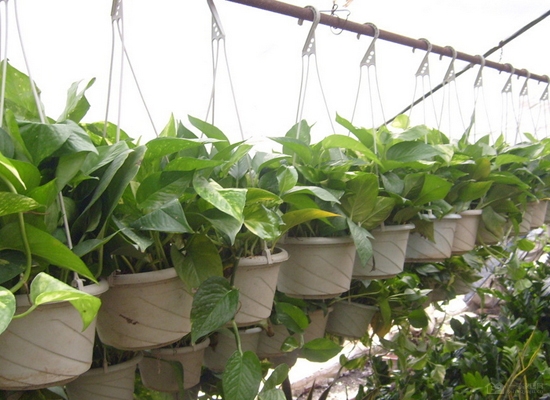
Pothos has the following growth habits: it likes a humid, semi-shady environment, is not tolerant of cold, and its suitable growing temperature is 15°C to 30°C. Around its growth habits, we need to create a good growing environment for it from the sunlight, soil and water that are essential for plant growth.
1. Soil
For potted plants, choose loose, breathable soil with good drainage. It can be mainly leaf mold, mixed with 20-30% planting soil, or made by mixing peat soil and perlite.
2. Water and humidity
Midsummer is the peak growth period. When the potting soil turns white, water it thoroughly, and it is best to keep the potting soil moist regularly. Never let the potting soil dry out, otherwise it easily causes yellow leaves and a poor plant shape. But watering too much causes waterlogging in the potting soil, which easily causes root rot and withered leaves. Every day, spray the aerial roots and leaf surfaces several times to increase the air humidity of the micro-environment. In autumn and winter, the amount of watering should be strictly controlled according to room temperature. In winter, when room temperature is relatively low, pothos is in a dormant state, so water less and just keep the potting soil from drying out. Before heating is turned on, the temperature is relatively low, the soil of the plant evaporates more slowly, so reduce watering. Even after heating is turned on, watering must not be too frequent. When watering, pour less into the pot, and water should seep through the coir. For winter watering, water that has been left to stand for a day after being drawn is better. Water that is too cold easily damages the roots and leaf surfaces.
3. Fertilizer
Fertilize mainly with nitrogen fertilizer, supplemented by potassium fertilizer. In spring, apply a 0.3% urea solution once about every 15 days, and apply a 0.5‰-1‰ urea solution once as a foliar feed. During the growing season from June to August, apply liquid fertilizer once every 2 weeks. Before winter begins, apply and spray the above urea solution once. After winter begins, when room temperature is above 15 degrees, fertilize mainly by spraying a 0.5‰ urea solution on the leaves. The fertilizer is absorbed through the stomata on the leaf surface, and the fertilizer effect can act directly on the leaf surface.
4. Light
Indoors, place it in a bright place with very little direct sunlight, and it can be kept there for a long time. If it is placed in a dark place for a long time, its leaves will become smaller and the internodes will become longer, affecting its ornamental value. Usually, after 2-4 weeks it should be moved to a place with stronger light to restore its arrangement. It can also be moved outdoors to a semi-shady place after spring warms up, and then moved back indoors for care in late autumn. In the north in autumn and winter, to make up for the lack of temperature and photosynthesis, its light exposure should be increased. The method is to place the pothos in the brightest spot indoors, or move it to a sealed balcony at noon to bask in the sun. At the same time, when the temperature is low, open windows as little as possible; in an extremely short time, the leaves may be frostbitten.
5. Temperature
Pothos likes heat and humidity, and its optimal growing temperature is between 20°C and 25°C. In the north, when room temperature is above 10°C, pothos can safely overwinter, and when room temperature is above 20°C, pothos can grow normally.
The strong environmental adaptability of pothos makes its survival rate quite high. However, if you want the pothos you grow to be more vigorous and more ornamental, necessary care is still indispensable.