What are the cultivation methods for the Stenocactus?
The Stenocactus is a common type of cactus plant. What problems should be noted when cultivating Stenocactus? Next, we will introduce them in detail for everyone.
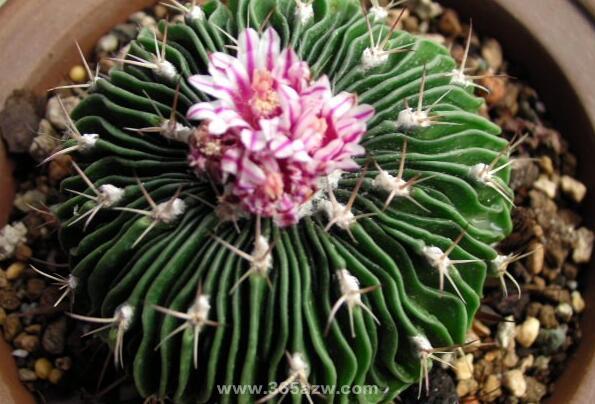
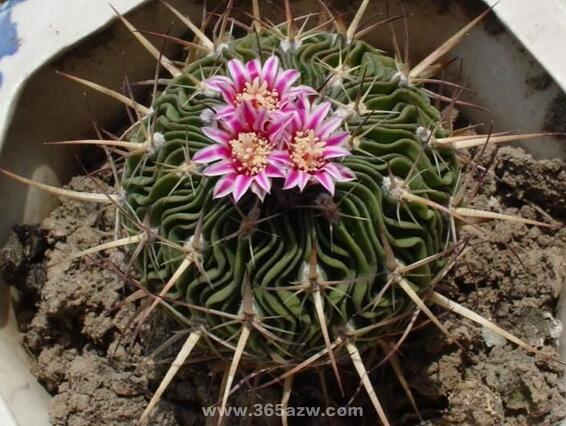
The Stenocactus has ribs that are extremely thin, wavy, with 2 areoles on each rib. The spines are yellow, later turning gray. It blooms in spring, with flowers borne at the top of the body, bell-shaped, white, with purple veins. The fruit has papery scales and splits longitudinally. The seeds are black. It likes plenty of sunlight, but in summer it prefers partial shade. In winter it requires cool conditions, and the potting soil should be kept dry. The environment should be well ventilated.
Cultivation techniques for the Stenocactus
Pot cultivation management
For potting the Stenocactus, the soil can be made by mixing equal parts leaf mold, coarse sand, and loam, plus a little calcareous material. When a grafted seedling grows to a certain size, the rootstock can be cut off and the body re-cuttaged to develop its own root system. The spines of own-root seedlings develop slightly weaker, so calcareous material can be added to the pot to promote spine development.
Except for the high-temperature period in midsummer, when partial shade is preferable, it can receive full light in spring and autumn. However, the light should not be too intense, and in winter the light must be sufficient. The plant blooms in early spring, and repotting can be done after flowering or in early autumn. Autumn care is very important for flowering; if not repotting, loosen the soil and apply phosphorus and potassium fertilizer. A certain air humidity must be maintained, otherwise the epidermis will lack luster. After the beginning of summer, attention must be paid to the prevention and control of red spider mites. The cultivation site must be well ventilated. In winter, the potting soil can be kept slightly dry, and in early spring watering can be resumed as early as late February.
Cultivation methods for the Stenocactus
Key points for cultivation
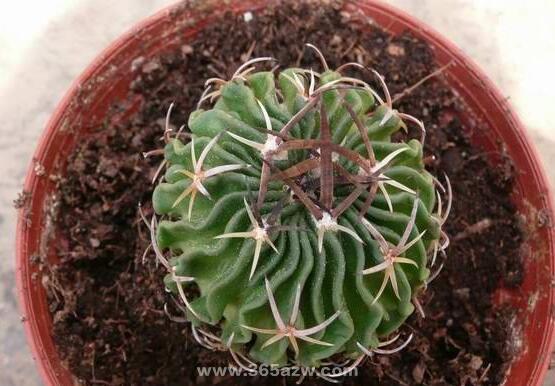
The Stenocactus likes plenty of sunlight, but in summer it prefers partial shade. In winter it requires cool conditions, and the potting soil should be kept dry. The environment should be well ventilated. The Stenocactus blooms in early spring and likes full sun all day, but in the hot summer it needs shading; keeping it dry in winter allows it to tolerate -5 degrees.
The Stenocactus body has too many wrinkles and is prone to mealybugs. Seeds germinate at 21-27°C, germinating in 7-14 days in spring. Once germination occurs, gradually remove the glass cover (completely remove it in about 1-2 weeks), and keep it ventilated; seedlings must not be exposed to strong sun.
In summer, avoid the scorching sun in the afternoon; in winter, pay attention to ventilation, reduce watering, and keep the potting soil slightly dry to prevent frost damage.
Types of cactus balls
The Ferocactus, called left-right spiral, belongs to the genus Hamatocactus in the Cactaceae family. It is a spherical to cylindrical plant and is outstanding among cactus flowers. The Ferocactus is native to southern Texas in the United States and northern Mexico, where the climate is hot, there is frost at night in winter, the sunlight is intense, and the dry period is long. This special geographical environment has created its distinctive morphological characteristics.
The Mammillaria hahniana, a perennial succulent herb, grows singly, round-spherical to oval, with bright green body color. It belongs to the Cactaceae family, genus Mammillaria. Its place of origin is Mexico. It is commonly propagated by sowing, cuttage, and grafting. Its propagation and cultivation methods are the same as those for the Golden Barrel Cactus and the Gymnocalycium mihanovichii. It is a plant for potted viewing.
The Echinocactus is a perennial succulent plant. When young, the stem is spherical, and later, as it ages, it gradually becomes cylindrical, with a diameter of 20 cm and a height of more than 5 m. It tends to cluster, the body is blue-green, and the ribs are 11-15 cm long. Dense hairs grow at the top of the plant.
The Golden Finger is also a type of Cactaceae, shaped like a human finger, with golden-yellow spines. Its appearance is beautiful and charming, making it an ideal home decoration. It can bloom, with common orange and white flowers. The flowering period is generally in late spring and early summer; if well grown, it will bloom sporadically all year round. It likes light and heat. In winter, special attention must be paid to keeping it warm.
Among the types of cactus balls, there is also one called the White Sandalwood cactus, also known as the Cactus Whip, commonly called the Golden Ox Palm Gourd Fist. It belongs to the genus White Sandalwood in the Cactaceae family, and its place of origin is northern Argentina. It especially likes environments with plenty of sunlight, dryness, and good ventilation.
The Golden Victory Ball is also called the Glass Ball; its body is yellow-green, belongs to clustering types, originates from Brazil, and likes light. The Golden Victory Ball has relatively high requirements for flowering. Besides the age of the Golden Victory, another very important condition for flowering is to undergo an appropriate amount of sufficient light and temperature. The flowers are very beautiful, and the flowers are large and white.
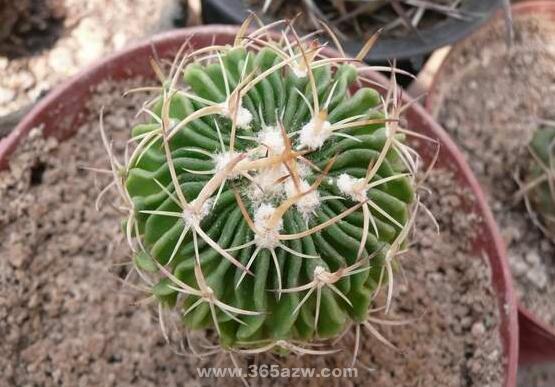
That is all for today's introduction to Stenocactus cultivation methods. I hope it is helpful to you.