How to grow red fittonia? Detailed guide to cultivation methods
The leaves of red fittonia are dark red and have high ornamental value. It is mostly grown as a potted plant. What issues should be noted when cultivating red fittonia? Next, a detailed introduction is provided for everyone.
Morphological characteristics of red fittonia
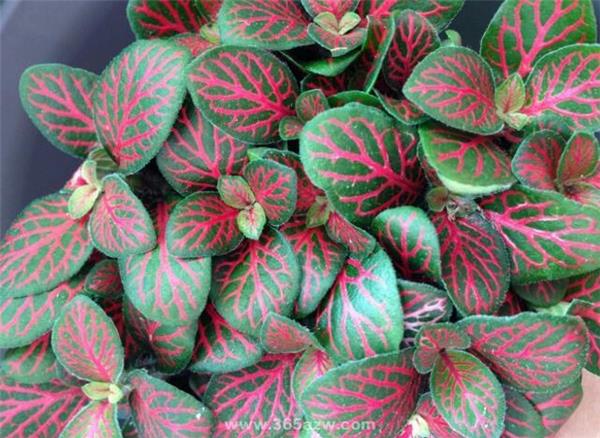
Red fittonia is a perennial herb of the Acanthaceae family, creeping, with red straight veins that are very distinct and are the main ornamental trait. Its flowers are small and yellow, in upright or inverted inflorescences, and it blooms more from April to June. It is native to the tropical rainforests of Peru and South America. It likes a high-temperature, high-humidity, and semi-shaded environment, is afraid of cold and drought, avoids dryness, and also fears waterlogging.
Cultivation techniques for red fittonia
Pot and soil selection
The planting pot for red fittonia should not be large, and a shallow pot is best. The potting soil can be prepared with 1 part each of peat, sand, and leaf mold; a drainage layer must be placed at the bottom of the pot.
Watering
For red fittonia, water it normally by preferring moist over dry, watering before the soil dries out completely, but do not cause water to accumulate in the pot. On cloudy and rainy days, control water appropriately so the potting soil is slightly drier. If the leaves wilt and droop due to temporary lack of water, you can water and spray, and cover with a bag to increase humidity, and it can recover, but after a plant goes through this several times, the root system is damaged, and later with the slightest improper care, the leaves will wilt.
Humidity
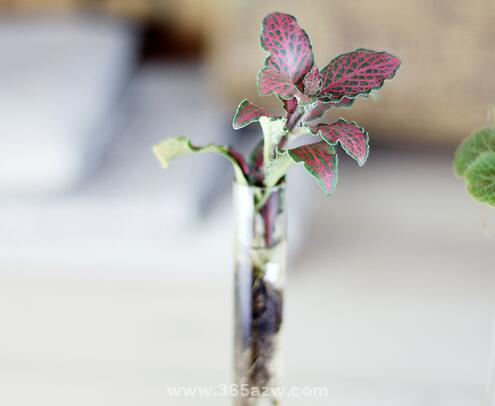
Red fittonia has a high requirement for air humidity, and it can be placed in places with higher humidity such as beside a water basin. When the climate is dry, it can also be covered with a glass jar or plastic bag so that dry air does not come into contact with it much, ensuring relatively high air humidity, but when the temperature is high, it is necessary both to shade it and to pay attention to opening it for ventilation.
Fertilizing
During the growing season, red fittonia should be given a dilute fertilizer twice a month.
Keeping warm in winter
After red fittonia is moved indoors in winter, the temperature should be kept no lower than 15°C, otherwise it is easily damaged by frost and dies. During this period, special attention should be paid to the water temperature when watering, and water that is too cold must not be used. The soil should be kept relatively moist, and it is best to cover it with a plastic bag to keep it warm, which is more beneficial for overwintering.
Disease and pest control for red fittonia
Disease control
Red fittonia is often harmed by leaf rot and root rot.
Leaf rot: spray with a 1000-fold dilution of 25% carbendazim wettable powder.
Root rot: soak the roots with a 1000-fold dilution of streptomycin to sterilize.
Pest control
Pests include scale insects, red spider mites, and snails. For scale insects and red spider mites, spray with a 1500-fold dilution of 50% malathion and a 2000-fold dilution of 20% miedejing wettable powder respectively. Snails can be caught by hand or lured and killed with metaldehyde.
Uses and purposes of red fittonia
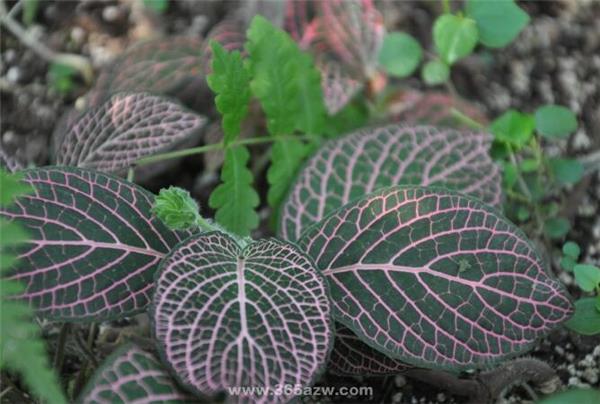
Red fittonia has fresh and beautiful leaves and is especially suitable for potted display. Using it to decorate rest rooms, display windows, and lobbies of hotels, shopping malls, and airports, whether placed singly or in groups, can achieve good effects. Potted plants or hanging baskets used to accent rooms, placed on desks, coffee tables, or windowsills, are emerald green and elegant, light and soft, making people feel fresh and comfortable. Small-leaf fittonia is also often used in Europe and America to make bottle gardens or box gardens for display, which is also unique.
The above is the relevant introduction to red fittonia cultivation, and I hope it is helpful to you.