Can Aloe Vera Be Put in the Sun? Understanding Its Growth Habits to Make It Grow Better
Can aloe vera be put in the sun? The sun is the main source of the "light" that plants use for photosynthesis. But many friends also report that after being in the sun, their aloe vera went limp and turned yellow... its growth actually did not improve. Why exactly is this? To answer this question, perhaps we need to start with aloe vera's growth habits.
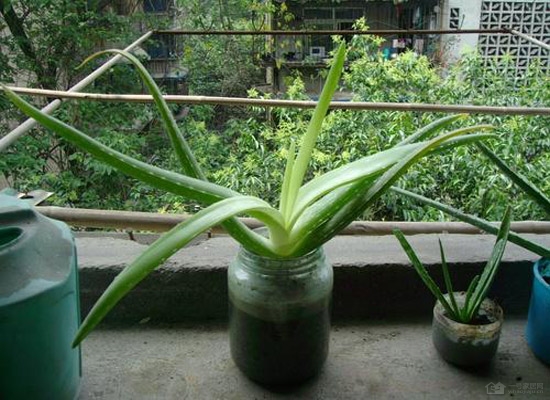
Aloe vera is a perennial evergreen herbaceous plant of the Liliaceae family, a plant that combines edible, medicinal, cosmetic and ornamental uses in one. Many households like to keep a pot of aloe vera. However, because they do not know much about aloe vera's growth habits, various problems arise during the process of growing and caring for it.
I. Propagation of Aloe Vera
(1) Division propagation is the main method of propagating aloe vera. The young aloe vera plantlets are separated from the mother plant and planted separately, forming new aloe vera plants that live independently. Division propagation can be carried out throughout aloe vera's entire growing period, but the temperature conditions are most suitable for division propagation in spring and autumn.
(2) Cuttage propagation is also a commonly used method in the propagation of fine aloe vera varieties. The difference between cuttage propagation and division propagation is that division propagation involves separating complete aloe vera seedling plants with roots from the mother plant for propagation.
II. Habits of Aloe Vera
1. Soil: Aloe vera requires good water and air permeability, high organic matter content, and a pH value of 6.5-7.2.
2. Light: It likes light, tolerates partial shade, and avoids direct sunlight and excessive shading.
3. Temperature: The suitable growing environment temperature is 20-30°C, and the optimal nighttime temperature is 14-17°C. Below 10°C it basically stops growing, and below 0°C the leaf pulp of aloe vera freezes and all of it wilts and dies.
4. Water: Aloe vera has a relatively strong drought resistance; aloe vera removed from the soil can be kept dry for several months without dying. During the growing period, aloe vera needs sufficient water, but it does not tolerate waterlogging.
5. Ecological environment: Aloe vera's ecological environment (air, water, soil, etc.) must not be polluted; pay attention to ventilation.
6. Aloe vera not only needs nitrogen, phosphorus and potassium, but also some trace elements. To ensure that aloe vera is a green, natural plant, use fermented organic fertilizers as much as possible, such as cake fertilizer, chicken manure and compost. Vermicompost is even more suitable for growing aloe vera.
Now that you understand aloe vera's growth habits, you can basically make your own judgment about whether aloe vera can be put in the sun: aloe vera likes light, but avoids direct sunlight; it tolerates partial shade, but cannot be excessively shaded. Therefore, aloe vera that is in its growing season is best placed outdoors in a ventilated spot with good light, but in the hot summer season it needs appropriate shading. As for small seedlings, that is, newly planted seedlings that have been grown for about half a month, they should not be put in the sun.