How to propagate a banyan tree? Introduction to common propagation methods
The banyan tree is also known as the small-leaved fig, Wannianqing, banyan aerial root, etc. It can be used as a street tree; the bark fiber can be made into fishing nets and rayon; the aerial roots, bark and leaf buds are used as a heat-clearing and exterior-releasing medicine. Common propagation methods include cuttings, layering, and burial layering. In greenhouses in the north, it is mostly done between late spring and summer and in combination with shaping and pruning, with occasional seed propagation or field collection, etc. Now let us take a look at these propagation methods for the banyan tree!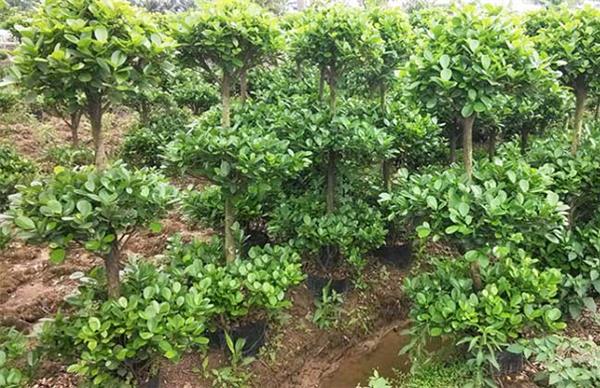
Cutting propagation
After the temperature warms up in spring, cut 1-2 year old branches into 5-15 cm long sections, each containing 3-4 bud nodes, remove the lower leaves and keep 1 upper leaf. If the leaf is large, roll it into a tube shape and tie it tightly with fine string. Insert the cuttings in a sand bed or flower pot, with the depth accounting for 1/3 of the cutting. After insertion, cover with plastic film to retain moisture and warmth, and keep the temperature at about 25°C. After 30-45 days, roots and shoots form, and they can be transplanted into pots. Treating with ABT No. 1 rooting powder before cutting can promote rooting.
Layering propagation
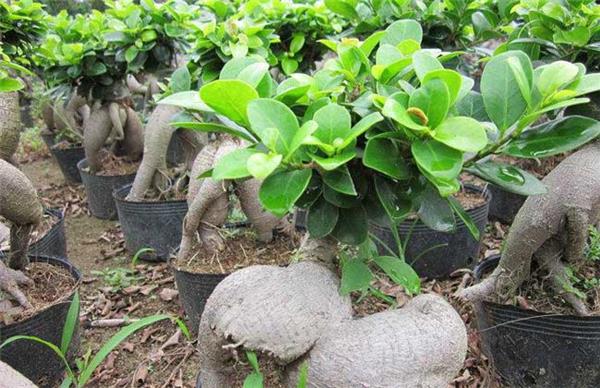
For home cultivation of the banyan tree, layering or air layering can be used for propagation. Bury part of a branch in the soil, press it firm and water it, and roots will generally form after about 30 days. The air layering method is to select a 2 year old branch, make a ring cut on a smooth part of the branch with a width of 1.0-1.5 cm, wrap the wound with moist peat, moss, etc., then wrap it tightly with plastic film, tie the upper and lower ends, and poke several small holes in the film for ventilation. After roots grow, cut it off and pot it.
Seed propagation
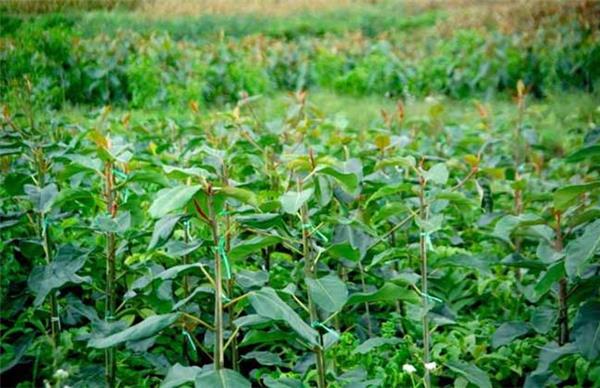
Seedling trees of the banyan tree have well-developed root systems and are easy to shape, so seed propagation is often used. Sowing should be done as the seeds are collected, processed and sown. First wrap the ripe berries in cotton gauze, rub and wash them in clean water until mushy, air-dry for 2-3 days, then sow directly in a prepared sand bed or flower pot, broadcast, without covering with soil, and spray with clean water 1-2 times a day to keep the bed surface moist. At a temperature of 25-30°C, they will germinate and emerge one after another 10 days after sowing. After sowing, a plastic arched shed should be built over the bed surface to prevent heavy rain from washing it away. After 15 days of growth, spray the leaves with 1% urea or potassium dihydrogen phosphate solution. When 6-7 leaves have grown, transplant into pots.
Grafting propagation
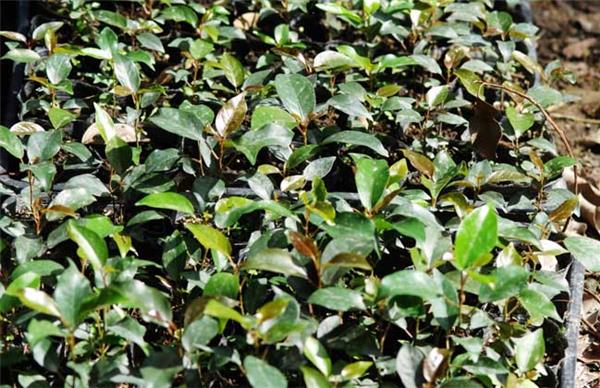
1. Green branch grafting: choose healthy young shoots of the current year that are still growing but have not yet capped as the rootstock, and use relatively mature young shoots of superior varieties as the scion for grafting. Stop watering several days before grafting to reduce excessive bleeding during grafting. The thickness of the rootstock and scion must be the same. The scion should be 2-3 cm long, retain the terminal bud and the top 2 leaves, and cut the lower end into a "V" shape. Remove the top of the rootstock, and use a blade to cut vertically downward along the pith to 1 cm. Insert the scion into the "V" shaped slot of the rootstock, align the cambium on both sides, and tie it tightly with plastic film. Finally, cover it with film, water thoroughly, place it in a ventilated and bright place, and uncover the film once a day for ventilation. Generally after about 45 days it will survive and the binding can be loosened.
2. Hardwood grafting: graft before budbreak and growth in spring. The diameter of the rootstock trunk stem should be more than 1 cm. The base diameter of the scion should be about 0.8 cm, length 5 cm, retain a single bud, and leaves may be left off. When grafting, cut the rootstock interface flat, and according to the diameter of the scion, cut vertically downward at an appropriate position at the rootstock interface. Then insert the wedge-shaped lower end of the scion into the cut slit of the rootstock, align the cambium of both, and tie it tightly with plastic film. Finally, seal the interface tightly with film to prevent water loss. After grafting, remove the leaves below the grafting site on the rootstock to promote scion budding and branching.
That is all the editor has to introduce about banyan propagation methods. I hope it is helpful to you!