Detailed explanation of Impatiens cultivation techniques, easily master the planting method
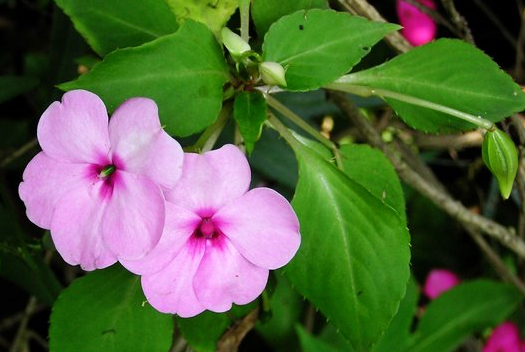
Impatiens is also known as henna, Jixingzi, daughter flower, golden phoenix flower, etc. It belongs to the Balsaminaceae family and is an annual herb. The stem is upright, and the plant height ranges from 30 to 80 cm. The stem is thick, juicy and smooth, with swollen nodes, and is green or dark brown. The stem color is related to the flower color. The leaves are alternate, narrowly lanceolate, with fine serrations along the edges. Flowers are single or several clustered in the leaf axils, with 3 sepals; the two lateral ones are smaller, and the rear one is large and extends outward to form a spur. There are 5 petals, with two pairs fused, appearing like 3 petals, or double-petaled, in white, pink, red, purple or variegated colors, sometimes with stripes and spots on the petals. The flowering period is from June to October. The capsule is pointed-ovate, and the seeds are round and yellowish-brown, easily splitting open by themselves when mature.
Impatiens likes heat and fears cold, has strong adaptability, and can reproduce by self-sowing. The whole plant can be used as medicine; the flowers mainly treat snake bites and pulling pain in the waist and ribs; the roots and leaves can disperse blood and promote menstruation.
Most of the plants now on the flower market are New Guinea impatiens. New Guinea impatiens is a perennial evergreen herbaceous plant in the Balsaminaceae family, Impatiens genus. It has rich flower colors, bright and cheerful colors, blooms in all four seasons, with abundant flowers and a long flowering period; the plant is full, the leaves are clean and beautiful, and the leaf color and leaf shape are uniquely characteristic; it grows quickly and can naturally form its shape, making it suitable as a fashionable potted flower supplied year-round.
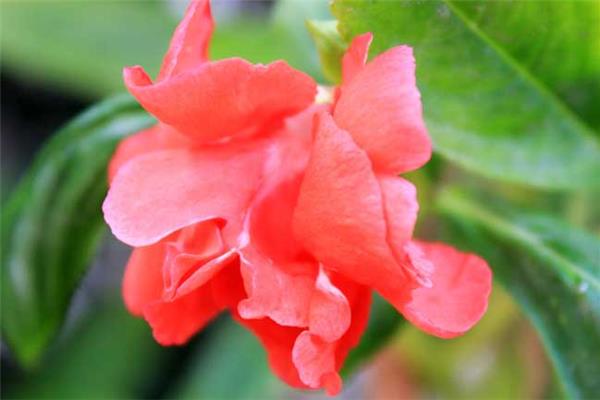
Growing conditions
The ideal temperature for vegetative growth is 22°C to 25°C during the day and 20°C to 21°C at night; after 5 weeks, for tall plants, 24°C to 26°C during the day and 18°C at night, and for compact plants, 20°C to 21°C during the day and 18°C at night; a night temperature of 18°C is the ideal temperature for flower differentiation and development, especially under low light; when the daytime temperature exceeds 28°C to 29°C, shading should be provided, otherwise the flower size will be reduced. Temperatures below 15°C or above 32°C will affect normal growth. Sufficient light is needed, but strong light should be blocked in summer.
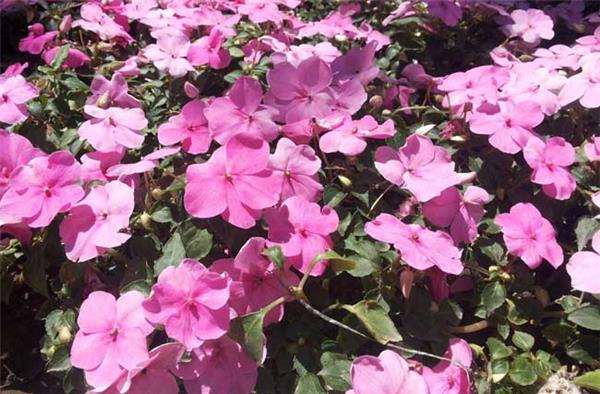
Cultivation techniques
Finished flowers are usually planted in 10 to 15 cm pots; the substrate should be loose and breathable, and have a certain water-holding capacity. It is very sensitive to salt damage, so it is advisable to apply thin fertilizer frequently. Avoid overwatering or drought. The optimal pH is 5.8 to 6.5. To make the plant shape full, pinching and shaping should be carried out.
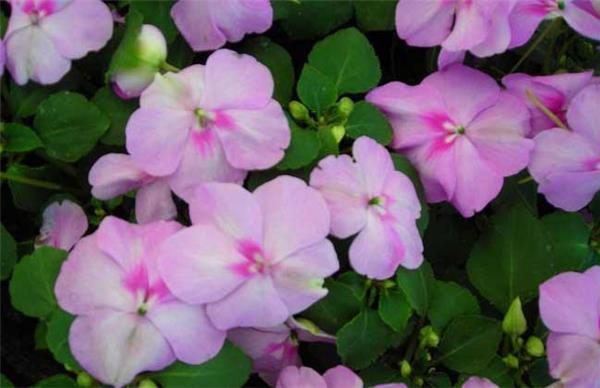
Fertilization and watering
Use 50 to 100 ppm nitrogen fertilizer for the first three weeks, then 100 ppm nitrogen fertilizer for the next three weeks, then fertilize according to soil analysis, and water once every two weeks to avoid salt damage. Twisted, dark green and curled leaves are a sign of excessively high salt levels. The application of slow-release fertilizer and micronutrients often leads to toxicity.
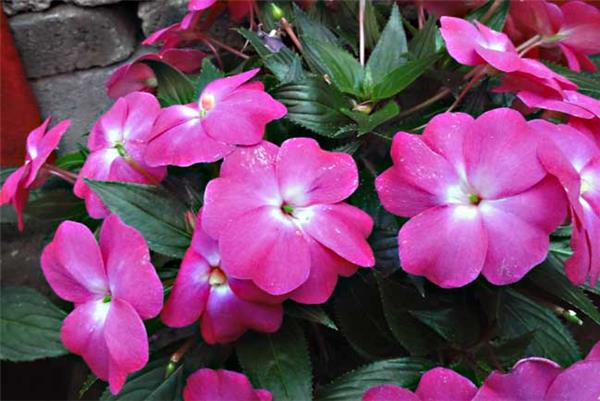
Pest and disease control
Diseases are mainly gray mold, pythium rot, rhizoctonia and powdery mildew. Low salt and appropriate watering can avoid pythium rot. Pests: before flowering, always pay attention to the control of thrips, spider mites (curled growing points) and fungus gnats, otherwise the application of insecticides during the flowering period will affect flower development. Drenching the roots with 35 oz/100 GAL of pesticide can control fungus gnats.
Precautions
The problems that easily occur during cultivation mainly manifest as delayed flowering or no flowers: lack of light, excessively high night temperature (above 20°C), and excessively high nitrogen fertilizer application. The above three causes often exist at the same time; failure to root or initially not growing, root rot, substrate too wet, and often low temperature (below 20°C), sometimes excessive salt; if only some plants do not grow, fungi and gnats may be one cause. Sterile flowers or few flowers: usually caused by low light and high night temperature (night temperature above 20°C), and it becomes more serious when they occur at the same time; high nitrogen fertilizer, especially high ammoniacal nitrogen fertilizer, can also cause it, and it will be more serious when the above conditions occur at the same time.
That is all the editor has to introduce about Impatiens cultivation techniques. I hope it is helpful to you.