How to Grow Night-blooming Jasmine? Detailed Guide to Cultivation Methods and Precautions
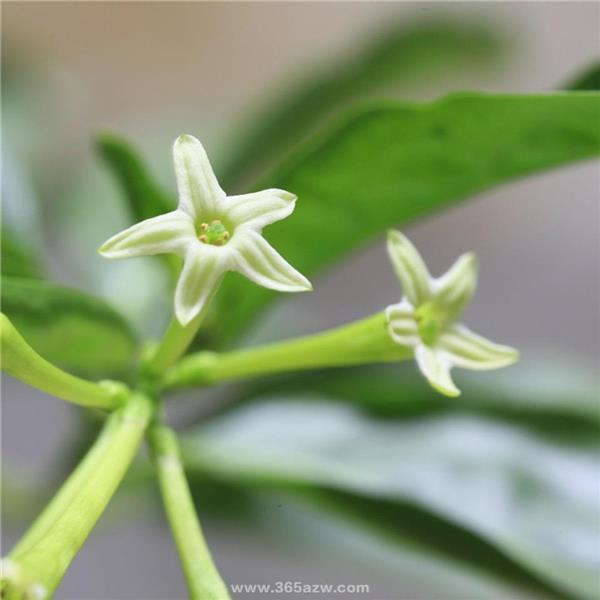
Night-blooming jasmine (Cestrum nocturnum) is a fairly common flowering ornamental plant, often grown in home courtyards and similar places. It mainly blooms at night, and its fragrance is very strong. It works quite well as an ornamental arrangement in courtyards and other places, so many homeowners grow it as a potted plant for viewing. So, how do you grow night-blooming jasmine?
Cultivation Methods for Night-blooming Jasmine
Soil: Night-blooming jasmine likes loose, well-drained, organic-rich, slightly acidic soil. For potting soil, you can mix 3 parts peat soil or leaf mold with 2 parts coarse river mud and a small amount of farmyard manure. When planting, fill the bottom about 1/5 deep with granular crushed brick pieces to help drainage, then add the prepared growing medium.
Watering: Summer is the peak growing season for night-blooming jasmine, and the potting soil must be kept consistently moist; when necessary, water twice a day. If it is a seedling, spray the leaves once to twice a day. Temperature: In mid-to-late October each year, night-blooming jasmine should be moved indoors, and the indoor temperature is best kept at 8°C to 12°C. If the temperature drops below 5°C, the leaves will turn yellow and fall off, or the plant may even die.
Light: Night-blooming jasmine prefers a sunny, well-ventilated environment. From early May to the end of September, it should be kept outdoors in a sunny spot or on a balcony. However, at midday in summer, avoid exposing it to scorching sun. Fertilizing: During growth, night-blooming jasmine needs a liquid fertilizer every 10-15 days. Starting in late April, apply a dilute liquid fertilizer once every half month. From mid-May onward, this can ensure continuous blooming. If high-efficiency humic acid liquid fertilizers such as Chunquan 883 or Huimanfeng are used, the results will be even better.
Repotting: Night-blooming jasmine is best repotted in early April in spring before it is moved outdoors. When repotting, remove some of the old soil and old roots, replace with fresh growing medium, and prune heavily to encourage new branches. After repotting, keep the potting soil moist, but there must be no standing water in the pot. If the young leaves droop slightly after repotting, water promptly.
Pruning: In cultivation and management, a trellis should be set up for night-blooming jasmine. After it climbs onto the trellis, pinch the tips promptly to encourage more branching. After the flowers open, promptly cut off the spent flower stalks and apply additional fertilizer. After the flowers fade, cut away dead branches, leaves, and overly dense branches, and shorten leggy growth.
Pests and Diseases: Night-blooming jasmine commonly suffers from sooty mold and ring spot disease, which can be controlled by spraying a 500-fold dilution of 50% thiophanate-methyl wettable powder.
Precautions for Growing Night-blooming Jasmine
Night-blooming jasmine is best placed outdoors. As an ornamental plant, its fragrance can make patients with high blood pressure and heart disease feel dizzy, depressed, and uncomfortable, causing symptoms such as chest tightness and difficulty breathing. Therefore, night-blooming jasmine is not suitable for indoor placement. If kept indoors for a long time, it can cause dizziness, coughing, or even asthma and insomnia, so growers should prioritize safety.
Uses of Night-blooming Jasmine
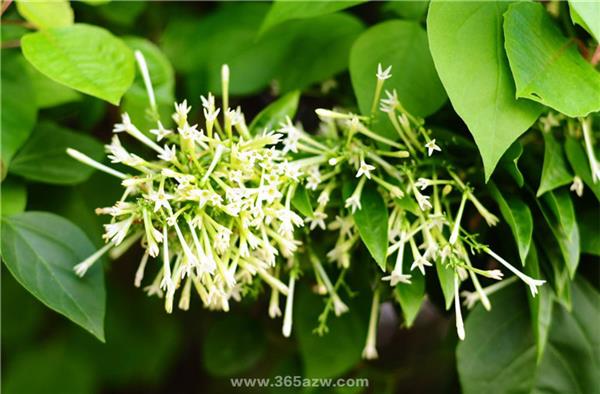
1. Ornamental. Night-blooming jasmine has slender branches and blooms in summer and autumn. Its yellow-green flowers open in the evening and release wave after wave of strong, penetrating fragrance. In the south, it is often used to decorate courtyards, windowsides, pond edges, and pavilions, and it has a certain ornamental value.
2. Medicinal. Night-blooming jasmine can be used as medicine and has the effect of clearing the liver and improving eyesight. It can treat red, swollen, and painful eyes, measles affecting the eyes, corneal opacities, and similar conditions.
3. Edible. Night-blooming jasmine can be eaten, mainly its fresh flowers and flower buds. It is a semi-wild vegetable.
4. Mosquito repellent. Night-blooming jasmine has a fairly strong fragrance and is somewhat toxic, so it can repel mosquitoes, which is also a convenience in daily life. Usually, a screen is fitted over the window, and the plant is grown outdoors.