What plant is pothos? Detailed explanation of its cultivation requirements
Is pothos two different plants? Many friends get confused when they see this name. However, some netizens point out that pothos refers to pothos (Epipremnum aureum), since it is a climbing plant whose hanging vines resemble spider plants. So what are the requirements for cultivating pothos?
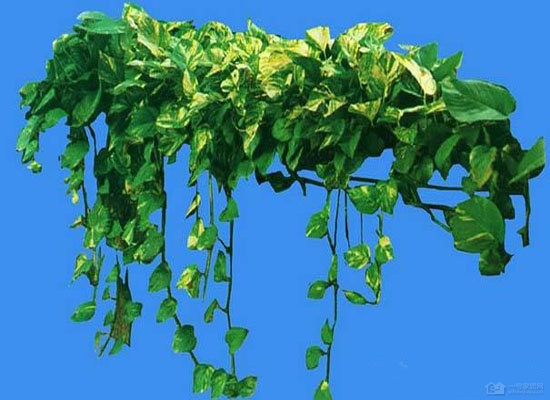
Pothos belongs to the Araceae family, genus Philodendron, and is a climbing vine foliage plant native to Central and South America. Pothos vines can grow several meters long, with aerial roots at the nodes; as the plant ages, the stems thicken and the leaves grow larger.
I. Physiological characteristics
It prefers warm, humid environments and requires loose, fertile, well-drained soil. Potted pothos should use fertile, loose, well-drained leaf mold soil, preferably slightly acidic. Pothos is extremely shade-tolerant and can be placed in a sunny indoor spot year-round; in dimmer indoor areas, it should be moved to a brighter environment every half month to recover for a period, otherwise the internodes tend to elongate and the leaves become smaller. The overwintering temperature for pothos should not be below 15°C; the potting soil should be kept moist, and water should be sprayed on the leaves frequently to increase air humidity and promote the growth of aerial roots. During the vigorous growing season, a liquid fertilizer can be applied once a month. For plants kept indoors for viewing over a long period, the leaves at the base of the stems tend to drop, reducing their ornamental value; in May and June when temperatures warm up, pruning and renewal can be done along with cuttings to encourage new buds to sprout from the base of the stems.
II. Temperature
In winter, pothos can safely overwinter above 10°C, and generally grows normally above 20°C. Therefore, a normal home environment is quite suitable for pothos growth. In the north, with a room temperature above 10°C, pothos can safely overwinter; with a room temperature above 20°C, pothos can grow normally. Note that large temperature differences should be avoided, and leaves should not be placed near heating equipment. Also, when temperatures are low, windows should be opened as little as possible, because leaves can be frostbitten in a very short time.
III. Light
The original growing conditions of pothos are in forests shaded by towering trees, so its heliotropism is not strong. But in the north during autumn and winter, to compensate for the lack of temperature and photosynthesis, its light exposure should be increased. The method is to place the pothos in the spot with the best indoor light, or move it to a sealed balcony to sunbathe at noon.
IV. Water
When growing pothos, do not water too much; you can spray water at the rooting areas, which can reduce the evaporation rate of water. Water daily to keep the soil moist, but do not let water accumulate and breed mosquitoes. The amount of watering in autumn and winter should be strictly controlled according to room temperature. Before heating is turned on, temperatures are lower and the soil of the plant evaporates more slowly, so watering should be reduced, with the amount controlled between 1/4 and 1/2 of the original. Even after heating is turned on, watering should not be too frequent, and water should be poured sparingly into the pot. Water used in winter is best after being left to sit for a day, as water that is too cold can easily damage the roots.
V. Fertilizer
For fertilizing pothos leaves, since ordinary inorganic fertilizers are hard to absorb, a specialized fertilizer should be used. In the autumn and winter in the north, most plants grow slowly or even stop growing, so fertilization should be reduced. Before winter begins, mainly apply liquid inorganic fertilizer by watering or spraying, about once every 15 days. After winter begins, fertilization should mainly be done by spraying through the stomata on the leaf surface; fertilizer is absorbed through the stomata on the leaf surface, and the fertilizer effect can act directly on the leaf surface.
Pothos is quite hardy and can survive without much care. Whether it can be as lush as spider plants, with large, emerald-green leaves, may require scientific cultivation methods.