How to Grow Tradescantia zebrina? A Detailed Guide to Cultivation and Propagation
The stems of Tradescantia zebrina are weak and brittle, creeping along the ground in a trailing growth habit. Because its leaves resemble bamboo and are beautifully colored, it is often grown in pots hung indoors to admire its stems and leaves that cascade softly in all directions, hence the name "hanging bamboo plum."
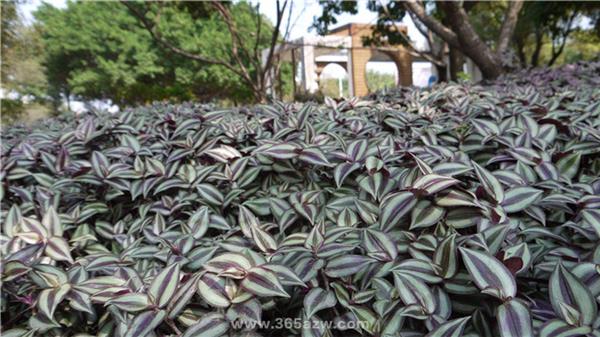
According to records, plants of the genus Tradescantia are native to tropical Mexico in Central and South America. Since the climate of South China is similar to that of its tropical place of origin, it propagates very quickly when planted in South China. It can be seen everywhere not only in gardens, campuses, institutional green spaces, and around residential homes; some have spread and grown into a wild or semi-wild state. Because it likes warmth, as long as this condition is met, it is highly adaptable to other conditions. It is a herbaceous foliage plant very suitable for use where investment is limited but fast and effective ground cover greening is desired.
Tradescantia zebrina prefers a warm, humid climate, is relatively shade-tolerant, not cold-tolerant, tolerant of waterlogging, and suitable for fertile, loose humus soil. It is also relatively tolerant of poor soil but not of drought, and has no strict requirements for soil pH. The overwintering temperature must not be lower than 10°C, but spending a long time in excessively shady places often leads to leggy stems and leaves and faded leaf color.
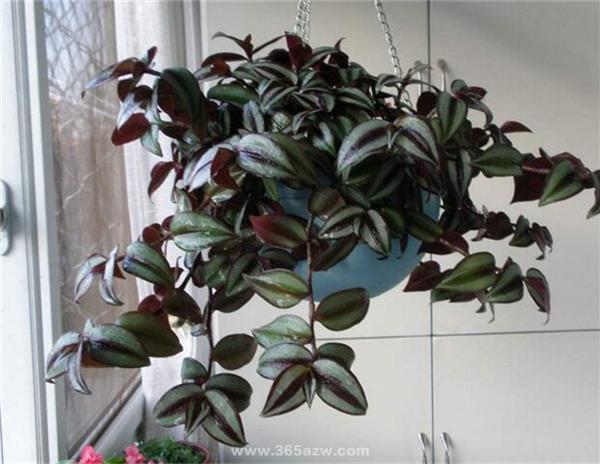
Flowering period of Tradescantia zebrina: July-August.
How to Grow Tradescantia zebrina
Tradescantia zebrina prefers a warm, humid environment, is shade-tolerant, fears direct sun exposure, and is suitable for loose, fertile sandy loam. To make the stems and leaves of Tradescantia zebrina full and lush, the following points should be observed:
① The growing medium should be a mix of 40% leaf mold soil, 40% garden soil, and 20% river sand. Keep the potting soil moist during the growing period, and apply a dilute liquid fertilizer or compound chemical fertilizer once every 15-20 days.
② In spring and autumn, it is best placed indoors near a south-facing window. In summer, it is best placed in a well-ventilated indoor spot with bright, diffused light. If light is insufficient for a long time, the stems and leaves tend to become leggy, the internodes lengthen, and it blooms little or not at all.
③ Tradescantia zebrina requires relatively high air humidity. If the air is dry, the leaves often dry out easily and the leaf tips become scorched. Therefore, during the growing season, attention should be paid to frequently spraying water on the stems and leaves to maintain air humidity.
④ To keep its stems and leaves full and lush, when the stems grow to about 20-30 cm, pinch off the growing tips to encourage branching; otherwise the branches grow thin and long, affecting the ornamental effect.
⑤ In winter, keeping the room temperature above 5°C is enough for safe overwintering. During overwintering, the plant is in a dormant state and needs little water. If watered too much at this time, the potting soil stays wet for a long time, which can easily cause root rot and yellow leaves. In winter, it should be placed on a south-facing windowsill so it gets more sunlight.
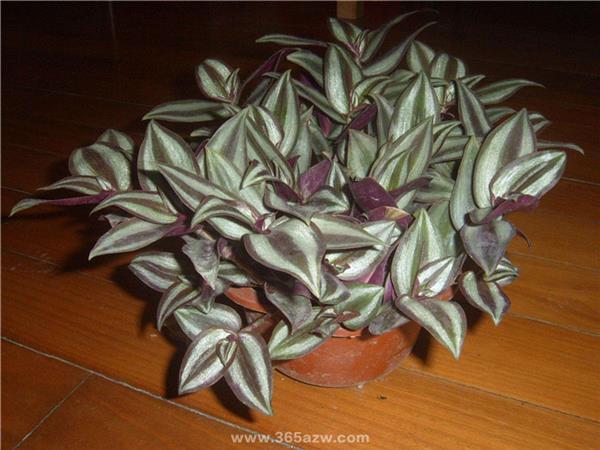
Propagation Methods for Tradescantia zebrina
Tradescantia zebrina is mostly propagated by cuttings and division, and this can be done throughout the year. For cuttings, you can combine this with pinching: cut healthy shoot tips as cuttings, insert them into plain sand, place them in semi-shade, and keep them moist; they root very easily. The stems of Tradescantia zebrina creep along the ground, and after roots form at the nodes, they can be separated and planted to become new plants.
During the growing period, Tradescantia zebrina needs sufficient watering. In brighter spots, the leaf stripes are more vivid. Avoid exposure to intense sun; in summer, moderate shading is needed, and it must overwinter in an environment above 10°C.
Propagation by Cuttings
Propagation by cuttings is the most commonly used method for Tradescantia zebrina and can be done throughout the year, but spring and autumn are best. Cut the main stem or side stems as cuttings, 8-10 cm long, with 2-3 internodes, and insert them into a sand bed or directly into the potting soil. They root 7-10 days after insertion. Plant 3-4 rooted cuttings per pot. The potting soil should not be too wet; keep them in a shaded place for care. After new shoots grow, place them in sunlight. Apply a dilute liquid fertilizer once a month to promote the growth of branches and vines. When the new stems grow to a certain extent, pinch them promptly as needed to encourage branching and form a full plant shape.
Cutting Substrate
This refers to materials such as nutrient soil, river sand, or peat soil used for cuttings. For home cuttings, it is difficult to obtain an ideal cutting substrate due to limited conditions. It is recommended to use the ready-mixed and sterilized cutting substrate provided by this site; medium-coarse river sand can also be used, but it should be rinsed several times with clean water before use. Do not use sea sand or river sand from saline-alkali areas; they are not suitable for the growth of flowers and plants.
Selection of Cutting Branches
The branches used for cuttings are called cuttings. Cut the stems into sections 5-8 cm long, each with more than three leaf nodes. The top shoot can also be used as a cutting.
The flower language of Tradescantia zebrina: simplicity, purity, and elegance.
Tradescantia zebrina has leaves shaped like bamboo and beautiful foliage, with purple, green, and silver intermingled in dazzling colors; it is admired for its stems and leaves that cascade softly in all directions. Place Tradescantia zebrina above a windowsill and let it hang down to form a green curtain.