Can the successful model of sugar apple exports be replicated? Seeking alternatives beyond exporting to China
Sugar apple (Annona squamosa), whether it is the pineapple sugar apple that is the main force sold to the Chinese market, or the new variety durian sugar apple, can only be described as "naturally beautiful and uniquely blessed." Its super-sweet taste, unique appearance, and harvest period around the Spring Festival (suitable for gift-giving), plus the fact that China cannot "replicate" it (because grafting pineapple sugar apple has a certain threshold and difficulty, and most of southern China grows the "Big Eye" (Atemoya) variety),have made the pineapple sugar apple the runner-up after the Golden Diamond pineapple in sales to the Chinese market。
However, can the successful model of exporting sugar apple to the Chinese market be applied to other fruits? Sugar apple exports have hit new highs year after year, but what crises are lurking within?
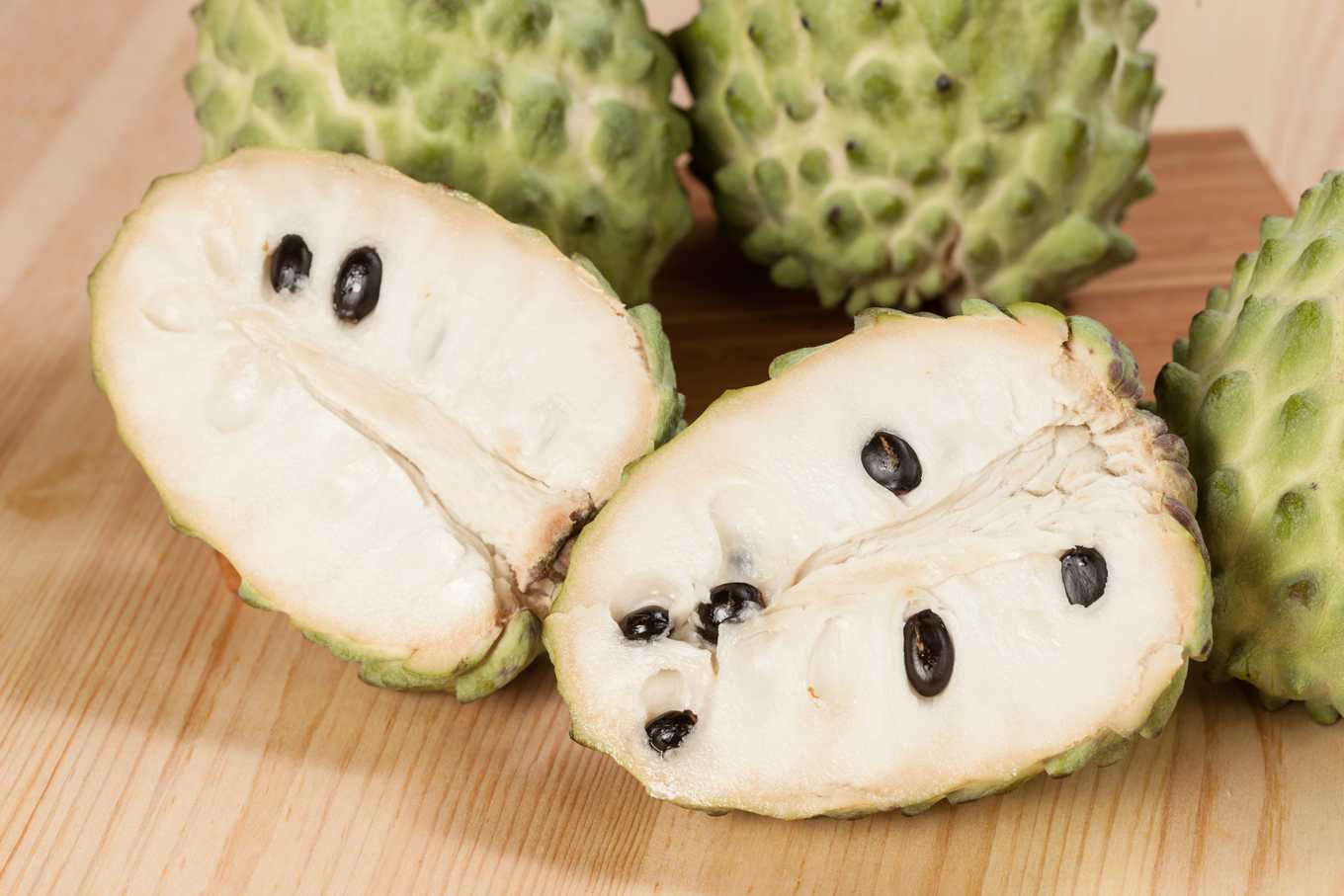
Sugar apple: A gift from heaven to Taitung
Changhua and Taitung are the two important sugar apple producing areas in Taiwan; among them, Taitung is the most famous, mainly for three varieties: Soft Branch, Big Eye, and hybrid (also known as pineapple sugar apple). In recent years, agricultural research stations have introduced new varieties from Southeast Asia with an appearance similar to durian, called "durian sugar apple." Among these, pineapple sugar apple is the main force for export to the Chinese market, and in the past year or two, durian sugar apple has also begun to enter the export market.
From production statistics, the domestic market is mainly dominated by Big Eye sugar apple. In 2017, the Agriculture and Food Agency statistics showed Big Eye sugar apple production at about 30,000 metric tons, and pineapple sugar apple at about 23,000 metric tons. The average export volume over the past five years accounted for about 20% of production, and of Taiwan's total sugar apple area of 5,407 hectares, 5,103 hectares are in Taitung, making Taitung truly uniquely blessed.
The Chinese market prefers sweet foods; pineapple sugar apple sweetness reaches as high as 26 degrees
The reason Taitung is uniquely blessed is that the pineapple sugar apple harvest period runs from July each year to April of the following year, requiring an environment with high temperatures not exceeding 28°C and low temperatures not below 8°C; the western plains of Taiwan experience northeast monsoons and cold damage in winter, so the leeward Taitung Rift Valley has become an excellent production area for pineapple sugar apple. However, affected by abnormal climate, abnormal high temperatures or cold damage in Taitung winters have caused serious fruit drop of pineapple sugar apple, which is heard of from time to time, and this is also the biggest potential crisis.
Pineapple sugar apple, with sweetness reaching as high as 26 degrees, has basically seen domestic market sales decline significantly, because people's dietary habits have changed and they do not favor overly sweet fruits; yet coincidentally, consumers in the Chinese market strongly prefer sweet foods, and the extremely sweet with slight tartness taste of pineapple sugar apple happened to catch up with the dietary habits of Chinese consumers. Therefore, the first reason pineapple sugar apple sells "especially well" in the Chinese market is absolutely its high sweetness.
What makes pineapple sugar apple naturally beautiful is that it not only has a unique appearance, but also possesses characteristics that make it easier to store than Big Eye sugar apple (relatively speaking, it is also less prone to "mute fruit"), plus no matter which variety of sugar apple is grown in the southern provinces of China, its appearance, shape, taste, and flavor cannot compete with the imported Taiwan sugar apple.
Rapid rise to popularity after 2013, a win-win for importers on both sides of Taiwan and China
Because of the excellent market uniqueness of pineapple sugar apple, in the absence of homogeneous competitors, it quickly became popular starting in 2013 at Guangzhou's Jiangnan International Wholesale Market; from the table below, it can be seen that in the past sugar apple exports were still transshipped through Hong Kong, but by 2013 they were already being sold directly into Chinese wholesale markets, growing rapidly.
There is a phenomenon not known to outsiders here: for the fruit pineapple sugar apple, the trade rules between Taiwan's exporters and China's importers follow the "price varies with the market" model familiar in mainland China, rather than the "fixed price" sales adopted by most Taiwanese traders for exports; that is, "whatever price the Chinese distributor sells at, after deducting the due profit (at a ratio agreed upon in advance by both parties), the remaining amount is the income of the Taiwan exporter."
To put it plainly, Taiwan's exporters must "cooperate" with Chinese importers to "gamble on market risk": once the product sells well and consumers are willing to pay big money, both buyer and seller make money; conversely, if the product does not sell and loses money, it is the Taiwan exporter that bears the loss.
Fairly speaking, this business model is entirely a win-win situation for both buyer and seller beyond political intervention; after all, Taiwan's exporters saw the business opportunity in the pineapple sugar apple product and were willing to use China's rules of the game to "bet against the market" and bear such market risk. In the end, the numbers proved that pineapple sugar apple was indeed greatly welcomed by consumers in the Chinese market, and year after year its consumption results grew positively (except for 2017, when weather affected production and caused a sharp drop in exports), making one unable to not give a thumbs-up to the fruit pineapple sugar apple.
The successful pineapple sugar apple model is hard to apply to other fruits
However, the successful export model of pineapple sugar apple should be very difficult to apply to other Taiwanese fruits, and also very difficult to replicate in other countries; the most worth discussing and learning from is that the exporters, following the rules of the game of the Chinese market, were willing to stake the pineapple sugar apple on a market gamble with a "businessman's nature," and that is the deeper reason the pineapple market was able to gain a firm foothold in exporting to the Chinese market without political inducements.
In fact, Hong Kong, China, Macao, China, Singapore, and Malaysia -- these important Chinese-speaking world markets -- also adopted such trade transaction models! But in Southeast Asian markets, the product differentiation of Taiwan's fresh fruits and vegetables is still not as good as Japan's, so the willingness of traders to invest and take a gamble is naturally not high.
From the table below, pineapple sugar apple exports are almost entirely sold to China:
How to establish product standardization and diversify market risk
From the above analysis in this article, it is already very clear that the most fundamental essence of trade is still "product"; as long as the product is right, the business is half successful! Establishing product standardization is also a slogan that agricultural authorities have shouted for decades; the main role of Taiwan Agricultural Development Company, the "agricultural national team" established by the Tsai Ing-wen government at the end of 2016, is also this.
However, seeing pineapple sugar apple "successfully conquer the world by its own hands," if government agencies now provide resources from the sidelines, one misstep and they will not only be ridiculed as adding flowers to brocade, but may also cut the feet to fit the shoes: demanding that Taiwan Sugar release land and convene local sugar apple farmers to expand planting, if they do not first solve "opening new markets" and continue to lock onto exporting to China, will only hurt the traders who have finally gained a firm foothold.
If, from the perspective of guidance, they solve the problem of serious fruit drop due to abnormal climate, the problems of pesticide residues and pest and disease control, unify export packaging specifications following the Japanese apple model, and assist in developing marketing channel strategies to build a "Taiwan Sugar Apple" high-end brand image outside the Chinese market, perhaps these are more the things Taiwan Agricultural Development Company should do.
Finally, what everyone should think about together is how to stay ahead of market changes and climate change, and through the energy of government agricultural research units, allow the pineapple sugar apple industry to continue to thrive and stabilize in Taitung. This is where agricultural authorities should put in more effort.
Series reading:2019 Agricultural Political Trade War series reading
(Series description: The 2005 "Lien-Hu meeting" thawed cross-strait relations and created a wave of Taiwanese fruit sales to China; the boom-and-bust political procurement brought multiple impacts on Taiwan's agriculture. In 2019, China's agricultural political trade war against Taiwan rose again. How should Taiwan respond? "Upstream and Downstream" invited experts to analyze, and the special topic will continue to be published)