How do you tell whether your soil is acidic or alkaline when growing flowers? In 1 minute, I'll teach you how to choose the right soil
Judging the acidity or alkalinity of soil is a skill every plant lover wants to get. If you give your potted flowers soil with the opposite acidity or alkalinity, do you think your flowers will still grow well?
Below are several of the most commonly used methods of judging it.
1. Based on the plants
First, you can judge the acidity or alkalinity of soil based on the plants growing in it.
The editor has summarized some of the flowers and plants that are suited to growing in acidic soil and alkaline soil respectively:
Acidic soil: rhododendron, camellia, sasanqua, red maple, white Michelia (Michelia alba), Aglaia odorata, gardenia, Chloranthus spicatus, Malus and Chaenomeles species, begonias, dove tree (Davidia involucrata), golden camellia, potted citrus, cherry blossom, five-needle pine, Buddhist pine (Podocarpus macrophyllus), and the vast majority of foliage plants, etc.
Happy Farm Succulent Plant Soil Flower Soil Green Zeolite Kanuma Soil Akadama Succulent Nutrient Soil Planting Soil Akadama Soil 500ml Akadama Soil (pot bottom soil or top dressing soil) water retention and aeration
Alkaline soil: pomegranate, elm-leaved spirea, oleander, forsythia, banksia rose, goji berry, rose of Sharon, seaside rose of Sharon, wisteria, winter jasmine, lilac, Pyrus betulifolia, silk tree, paulownia, fig, tamarisk, black pine, apricot, pear, Chinese rose, dragon juniper, Zhou cypress, ball cactus, Chinese arborvitae, staghorn sumac, etc.
2. Based on the source
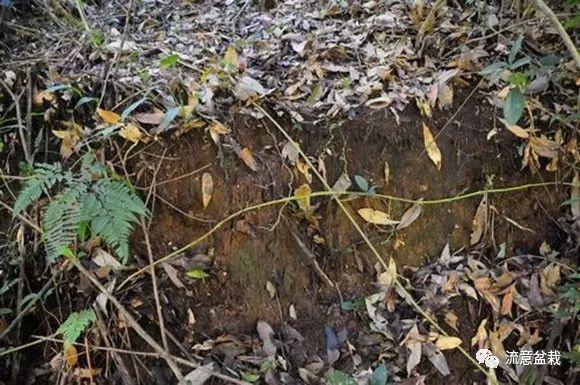
According to general experience, leaf mold soil from forests, mountains and ravines is mostly dark brown, fairly loose and fertile, and has very good permeability, making it a fairly ideal acidic leaf mold soil. Common examples include pine needle leaf mold soil, peat leaf mold soil, etc.
3. Based on color
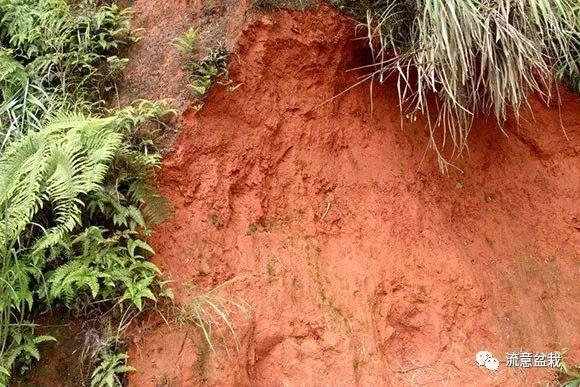
Generally, soil with a darker color is acidic soil, mostly dark brown. Alkaline soil, however, is mostly light in color, such as white or yellow. In some saline-alkali land, the soil surface is often covered with a layer of white powdery alkaline matter. From this, we can also make a rough judgment about the acidity or alkalinity of the soil.
4. Based on texture
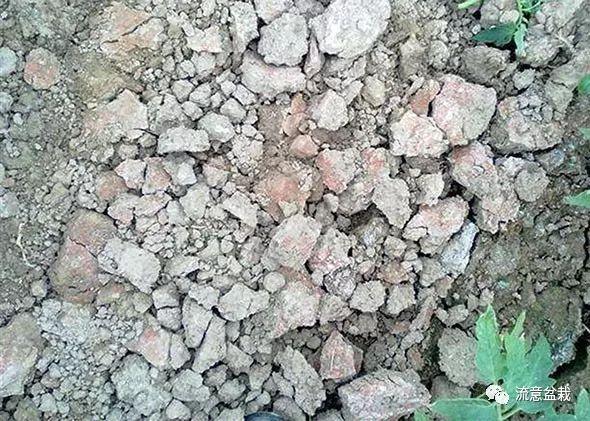
Alkaline soil has a very hard texture and easily compacts into clods, so when it is used to grow flowers and plants, its water permeability is also very poor. Acidic soil, by contrast, has a loose texture and also has strong aeration and water permeability.
5. Based on feel
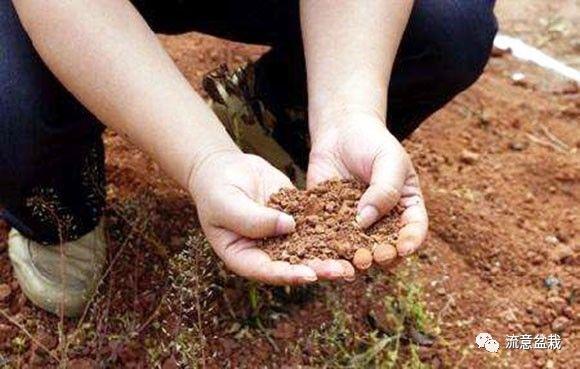
Because the texture of soil differs, the way it feels to the touch is bound to differ too. Hold acidic soil in your hand and it gives you a soft, loose feeling. After you open your hand, the soil also breaks apart very easily and does not clump easily. Hold alkaline soil in your hand, however, and it gives you a hard, solid feeling. After you open your hand, it clumps very easily and does not break apart easily.
6. Based on the reaction to watering
When you water acidic soil, you will find that the water seeps down fairly quickly, no white bubbles appear, and the water surface is fairly cloudy. When you water alkaline soil, however, the water seeps down fairly slowly, white bubbles and white foam appear on the water surface, and at the same time a layer of white alkaline matter appears around the outer edge of the flower pot.
7. Based on test paper
Using pH test paper to judge the acidity or alkalinity of soil is fairly reliable.
First, take some soil sample and soak it in cooled boiled water, dip part of the test paper into the soaking liquid, then take it out. Observe the change in its color, then compare the test paper with the color chart. If the pH value = 7, the soil is neutral; if the pH value is less than 7, it is acidic; if the pH value is greater than 7, it is alkaline.
Friends are welcome to leave comments below and share the flower-growing problems you have encountered. Operator: liuyi21a